Best Istanbul Food Tours 2026: Street Food to Fine Dining
Affiliate disclosure: Some links in this guide are affiliate links. If you book a tour or an experience through one of them, this site may earn a commission at no extra cost to you. Nothing here is paid placement, and no operator has been given the right to review or approve a line of this text.
Istanbul Food Tours at a Glance: Which Format Fits Your Trip
Pick by neighbourhood and format: a street-food walk, an evening meyhane route, a private tour, or a cooking class.
| Format | Where it goes | Time of day |
|---|---|---|
| Street-food walk | European peninsula markets and back streets | Morning or late afternoon |
| Small-group neighbourhood tasting | One district, usually on the European side | Daytime, with an evening version |
| Private food tour | The district you choose | Timed to your own schedule |
| Evening and meyhane route | Meze lanes and meyhane streets | Evening, often after eight |
| Cooking class and market visit | A market, then a teaching kitchen | Market first, in the morning |
| Kadıköy (Asian side) route | Kadıköy market quarter and waterfront | Market morning, ferry across |
The table above sorts the six formats the way a booking page does, so you can compare them at a glance. Format matters more than operator: two companies selling the same shape of day will give you broadly the same experience. Two travellers on the same route can have very different days simply because of the particular group they happen to join. The four classic shapes also get their own table further down, with duration, group size and inclusions. For the indoor half of a rainy day, see our guide to Istanbul museum tickets and timed entry instead of guessing.
Start with the format, then the side of the city, and only then the hour of the day you actually eat. A morning walk and a long evening meyhane route in the very same district feel like two different cities. Before you book, check two things on the listing: exactly where the group meets, and how dietary needs are handled. Both halves of the city keep their own eating hours, and the format you choose usually follows that same rhythm. Two formats on the same day, one at each end of the city, is the pairing that works out most often.
Istanbul is the rare city where lunch is a geography lesson. Sit down to mantı on the European side and you are eating dumplings that travelled from Central Asia; cross the Bosphorus by ferry to Kadıköy and the same afternoon turns into a lesson in market culture that the tourist peninsula never quite shows you. A food tour is the fastest way to compress that education into a few hours — not because guides have secret restaurants nobody else can find, but because someone who eats here every week can explain what you are looking at while it is still on the plate.
This guide exists to help you choose between the formats rather than sell you one. There are four basic shapes of Istanbul food tours — the street-food walk, the small-group neighbourhood tasting, the private tour, and the hands-on cooking class — and they suit very different travellers. Pick the wrong shape and you will spend four hours doing something you do not enjoy; pick the right one and the rest of your trip gets easier, because you will know how to order, what to try, and which neighbourhood to go back to.
It is written as a decision tool, and it is built from criteria you can check yourself. Every format below is described by the things that are visible on a booking page before you pay: how long it runs, how many people share it, how many tasting stops it includes, which side of the city it covers, and how it handles dietary requirements. I do not quote prices anywhere in this guide, on purpose — rates move with the season and the exchange rate, and a number frozen into an article is wrong within months. Instead, each section explains what moves the price up or down, so you can read the booking page with a clearer head.
One practical note before the detail. Istanbul food tours are not one product but a family of products, and the differences between them matter more than the differences between operators selling the same format. The sections that follow are ordered the way most travellers actually decide: which format first, which part of the city second, and what to book early third.
How We Picked These Tours
Every “best of” page has to answer one question honestly: best according to what? Some sites answer it by claiming they booked a dozen tours and tested each one. I did not, and I am not going to pretend otherwise. What follows is a selection made from published, checkable criteria — the same criteria you can apply yourself once you know which ones matter.
Five criteria, in the order they change the experience:
1. Group-size cap. A walking tasting with twelve to sixteen people stops being a conversation and becomes a lecture you happen to eat during. The tours described here are the ones whose own listings state a cap — usually eight to twelve for small-group walks, or private. 2. Tasting count measured against duration. Ten stops in three hours is a tasting; ten stops in five hours is a tasting with two long restaurant pauses. Both can be good, but they are different products, and a listing that will not say how many stops it makes is telling you something. 3. Cancellation terms. Plans change, and Istanbul is a city where a ferry cancellation or a delayed flight can rewrite an afternoon. A listing that states a clear change-and-cancel window before payment is a lower-risk booking than one that stays quiet about it. 4. Route geography — which side of the water. European-side routes (Eminönü, Karaköy, Beyoğlu, Sultanahmet) trade in density and iconic bites. Asian-side routes (Kadıköy, Üsküdar) trade in market depth and a distinctly local rhythm. A few operators cross the Bosphorus mid-tour by ferry, which changes the shape of the day entirely. 5. Dietary handling. The question is not whether an operator “can cater for vegetarians” but how specifically they answer. A reply that names the dishes you will be served instead is worth more than a promise to sort it out on the day.
What this guide deliberately does not do. It does not publish prices — rates shift with season and group size, and the live listings on this page always show the correct figure. It does not rank operators by name, because quality inside a format varies by guide as much as by company. And it does not claim the tours below are the only good ones in Istanbul; they are the formats that answer the needs most travellers actually have, described well enough that you can recognise a good example when you see one.
How to read the rest of this page. If you already know you want a street-food walk, go straight to the section on formats and then to the travel-style picks. If you are choosing between the European and Asian sides, read the Kadıköy section before anything else — it is the single biggest fork in the road. And if you are travelling with children, with dietary restrictions, or with a limited number of evenings, start with the sections on formats and evening tours, because those are the two decisions that are hardest to reverse once you have booked.
Why a Food Tour Is the Fastest Way to Understand Istanbul
Most visitors arrive with a list of monuments and no plan for eating, which is a little like visiting Venice and skipping the water. Istanbul’s table is not a side attraction to the city’s history — it is one of the clearest surviving records of it. In a single afternoon of eating you can move through Central Asian dumplings, Anatolian home cooking, Ottoman palace refinement, Levantine mezze and Black Sea fish, and none of it feels like a theme park, because none of it is staged for you.
Two Continents, Two Kitchens
The Bosphorus is not just a view. It is a border between two food cultures that share a language but not a rhythm. On the European side, and especially in the old city, you eat in the shadow of a thousand years of imperial provisioning: spice bazaars, charcoal grills, pastry shops stacked with baklava, waiters who have worked the same corner for decades. Cross to the Asian side and the emphasis shifts towards the market and the home kitchen — pickle shops, olive stalls, cheese counters, lokantas serving whatever was cooked that morning, and a street life that builds around the ferry timetable.
A guide who knows both sides can make the difference legible in a way a menu never does. Understanding why the fish is better on one shore, or why the meze tradition clusters in particular lanes in Beyoğlu, turns a pleasant meal into a way of reading the city.
The City Where Cuisine Is a Language
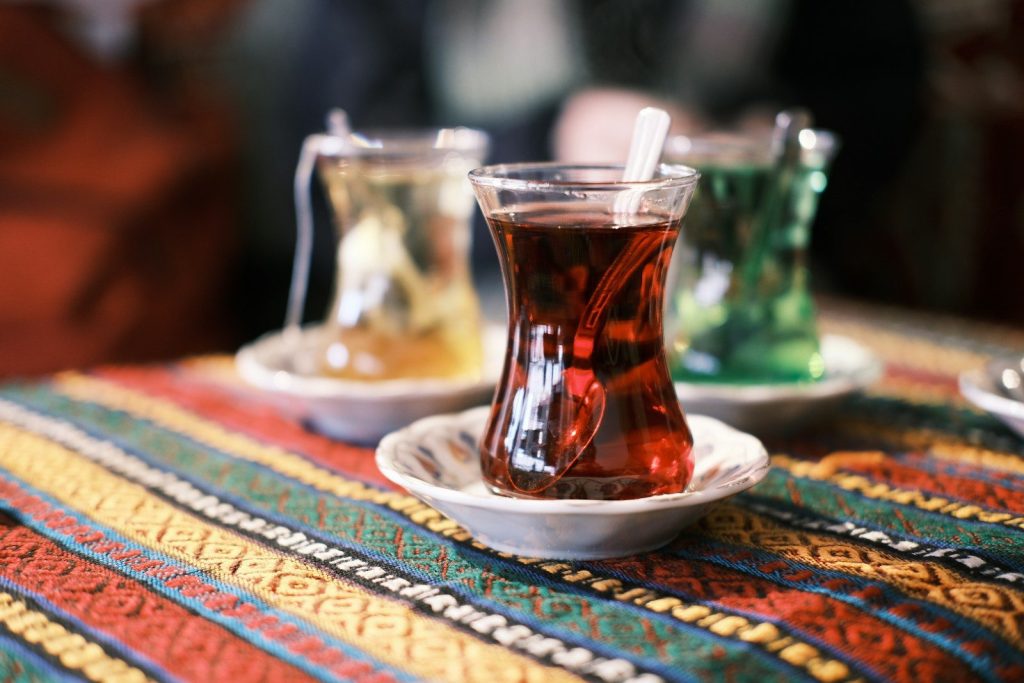
Istanbul’s cooking is unusually legible once someone decodes it, and the decoding takes hours, not weeks. Consider the humble order of a single dish. Ordering mantı properly means knowing that the yoghurt comes first and the butter-and-paprika oil goes on top, that the dried mint is not decoration, and that the sumac on the table is meant for it. Ordering a pide means knowing the difference between the long boat-shaped one and the round one, and understanding that the correct moment to eat it is the moment it arrives. Ordering tea means learning that the glass is small because it is meant to be drunk hot and replaced often.
None of this appears in a phrasebook, and most of it is invisible to a visitor who eats three restaurant meals and leaves. It is exactly the kind of knowledge a food tour transfers: not secrets, but grammar.
What You Learn in Four Hours That Would Otherwise Take a Week
A good food tour is a compression of the learning curve. Travellers who take one early in their trip consistently describe the same benefits, and they are rarely about the food itself:
- You learn to order. Once someone walks you through a lokanta counter and explains what each tray holds, every subsequent meal on your trip gets better — including the cheap ones.
- You learn where to go back to. Guides point out the neighbourhood you did not know existed and give you the names of the streets worth returning to in the evening.
- You learn what things cost in a sane way. Even where a guide does not discuss money, seeing portions, formats and settings teaches you what a fair deal looks like for the rest of your stay.
- You learn the timing. When the fish market is worth visiting, when the bread comes out, when the alleys change personality after dark — timing is the difference between a good food city and a great one.
- You learn the dietary vocabulary. “No meat” and “no dairy” are easy words to say and easy to misread on a menu. Hearing them used in context is what makes a vegetarian week in Istanbul comfortable rather than anxious.
There is also a quieter benefit. Eating with a guide is a form of local contact that does not depend on the guide performing. The best moments on these tours are usually small: an explanation of why a particular pickle is served with that particular grilled fish, or a stallholder handing over something to taste because the conversation was going well.
A Brief History of Turkish Cuisine — Why It Matters on Your Tour
You can enjoy Istanbul’s food without knowing a word of its history, and plenty of people do. But the history explains why the food looks the way it does — why a city best known for kebabs also produces such refined vegetable cooking, why the pastries are so architectural, and why the same dish can appear in five forms within a single neighbourhood. The following is the short version, framed around the things you will actually eat.
Ottoman Palace Kitchens: Where the Cuisine Became a Cuisine
For centuries the Ottoman court functioned as a research kitchen at imperial scale. Palace kitchens fed thousands of people daily and employed specialist brigades — one group for rice, one for kebabs, one for sweets, one for sherbets — in a system closer to a modern professional kitchen than to a royal household. The effect on the city was lasting. Techniques developed for the palace filtered down into the households of the capital, and from there into the repertoire cooks across the empire would carry with them.
That inheritance is visible in dishes that still read as courtly. Hünkar beğendi — a purée of grilled aubergine under slow-cooked meat — is a palace dish that survives on ordinary menus. Dolma and sarma, vegetables and leaves stuffed with rice or meat, descend from the same kitchen culture of precision and layering. The taste for sweet-and-savoury combinations, for fruit cooked with meat, for nuts and dried fruit in savoury dishes, all of it belongs to this lineage.
When you sit down to a long meze table in Beyoğlu, you are eating a descendant of that system: small, technically demanding plates, each one an argument about balance.
The Spice Route and the City’s Pantry
Istanbul sat at the end of the trade routes that brought silk, coffee, pepper, cinnamon, saffron and rice into the Mediterranean. The city’s bazaars were the machinery of that trade, and one of them still defines how the whole region cooks: the Egyptian Bazaar, the spice market at Eminönü, established in the seventeenth century and still trading in the same purpose today.
This is the reason Istanbul’s pantry looks different from a European one. Dried and roasted peppers in half a dozen grades, pul biber in flakes and in oil, sumac, dried mint, cassia rather than Ceylon cinnamon in much of the everyday cooking, mastic, rose, and a coffee culture that predates the European café by centuries. The bazaar is not a souvenir destination; it is a working wholesale market with a tourist aisle attached, and understanding the difference is one of the small revelations of a food tour that starts there.
Migration, Memory and the Layers on Your Plate
Modern Istanbul was built by movement. The late Ottoman period and the population exchanges of the early republic brought families from the Balkans, the Aegean islands, the Black Sea coast, the Caucasus and Anatolia’s interior into the city, each group with its own kitchen. The result is a capital where a single street can hold a Circassian pastry shop, a Kurdish grill house, a Black Sea fish restaurant frying anchovy in season, and a Syrian kitchen serving a cuisine that arrived only in the last decade.
This is why asking “what is Turkish food?” in Istanbul produces a longer answer than visitors expect. Lahmacun, börek, içli köfte, anchovy, stuffed mussels, offal soups eaten at breakfast, and a hundred regional breads are all Turkish, and they come from places that are hundreds of kilometres apart.
Why This History Shows Up on the Plate
Three practical consequences matter when you are choosing a tour:
- Diversity is concentrated. Because these traditions all coexist in central neighbourhoods, a well-planned route can cover several of them in one walk — but only if the operator chooses stops for contrast rather than convenience.
- Seasonality is real. Istanbul cooks with the seasons not out of fashion but out of inheritance: anchovy and other oily fish in the cold months, aubergine and tomatoes in high summer, pickles and preserves in winter. A tour that ignores the calendar will serve you the same menu in January and July.
- The best food is often not the fanciest. The cooking that carried these traditions forward survived in lokantas, market stalls and family kitchens. Anything that promises a shortcut to this has usually just moved a good dish into a nicer room.
The Four Types of Istanbul Food Tours
Almost everything sold as an “Istanbul food tour” is one of four products. They differ in structure far more than in subject matter, and the structure is what determines whether you spend the day eating or spend the day sitting. Read the table first for the shape of each format, then the notes underneath for the trade-offs that do not fit into a grid.
| Format | Typical duration | Group size | Stops & tastings | Usually included | Best for | Cancellation norm |
|---|---|---|---|---|---|---|
| Street-food walk | Half a day, often morning or late afternoon | Small group, frequently capped at eight to twelve | Many short stops, mostly standing | Food and drink at the stops, guiding, ferry or tram fare on some routes | Travellers who want volume, variety and street life | Free change or cancel up to a stated window before start |
| Small-group neighbourhood tasting | Half a day, occasionally full day | Small group, usually capped | Fewer, longer stops, some seated | Tastings, guiding, sometimes one sit-down course | Travellers who want context with their eating | Free change or cancel up to a stated window before start |
| Private food tour | Half or full day, timed to you | Your party only | Flexible — built around pace and dietary needs | Guiding and tastings, transport arranged | Families, dietary complexity, slow eaters, photographers | Free change or cancel up to a stated window before start |
| Cooking class or market-to-table experience | Half a day, with longer options | Small group or private | Market visit plus a cooked meal you made | Ingredients, tuition, the meal | Travellers who want to take something home | Free change or cancel up to a stated window before start |
Street-Food Walks
The classic Istanbul food tour is a walk with a high cadence: simit from a cart, a stuffed mussel stall, a charcoal grill, a pickle shop, a pastry counter, a tea garden, and a full stop at a street-side place for one proper dish. The strength of the format is variety — you taste across the whole grammar of the city in a few hours — and the weakness is that the day depends on the weather and on how well the group keeps moving.
Choose a street-food walk if you enjoy being on your feet and want breadth over depth. Check two things before booking: whether the route is anchored on one side of the water or includes a ferry crossing, and whether the listing tells you how many tastings you will actually eat. A walk with a stated count of stops is almost always a better booking than one that describes the experience only in adjectives.
Small-Group Neighbourhood Tastings
Where the street-food walk samples widely, the neighbourhood tasting goes deep into one district — usually Beyoğlu, Karaköy, Kadıköy or the bazaar quarter — and trades the rapid cadence for seated courses and conversation. You will eat fewer items but understand more of them, and the guide has time to explain what you are eating while you are eating it rather than while walking to the next stop.
This is the format that suits travellers who want the cultural argument as much as the food. The trade-off is geographical: because the route commits to one district, you see less of the city’s spread. If you are in Istanbul for only a day or two, pair it with a separate evening on the other side of the water.
Private Food Tours
A private tour is the same city with the schedule attached to you instead of to a group. In practice this changes three things: the guide can respond to what you like in real time, the pace can be slowed for children or for anyone who does not want to eat standing up, and dietary requirements can be handled as a design constraint rather than as an exception.
Private formats are also the practical answer for families with small children, for travellers with allergies or serious dietary restrictions, and for anyone whose interests sit outside the standard route — a photographer who wants to spend twenty minutes on one street, for example, or a traveller who cares about pastry and nothing else. If that is what you are looking for, the private-tour format is described in more detail in our guide to private guided tours in Istanbul, and the section on choosing a format below compares it directly with the small-group alternative.
Cooking Classes and Market-to-Table Experiences
The hands-on option inverts the usual rhythm: instead of eating your way through the city, you shop for a meal in a market, cook it under instruction, and then sit down to eat what you made. The best versions begin at a market or a produce street, because the shopping is where most of the learning happens — what a good aubergine looks like, how the spice counter works, what a household would actually buy for a family dinner.
Choose this format if you cook at home and want techniques you will use again, or if you are travelling with teenagers who will engage more with a stove than with a monument. Choose it with caution if you are in Istanbul for only a full day, since half of that day will be spent indoors.
Best Istanbul Food Tours by Travel Style
Travel style matters more than taste. The traveller who wants to eat twelve things in three hours and the traveller who wants to understand one district properly should not be sold the same product, and the traveller with a stroller or a nut allergy should not be sold it either. The following groupings are the ones that come up most often in Istanbul, with the format that answers each one best.
The selection below is drawn live from our partner’s catalogue, and it is worth reading it the same way you would read any listing — against the five criteria above rather than against the photographs.
For Culture Seekers
This is the traveller who reads the menu as a historical document. The neighbourhood tasting on the European side is the natural fit: a route through the bazaar quarter and Beyoğlu that moves from Ottoman palace cooking through meze culture to modern Istanbul, with enough time at each stop for the explanation. Aim for a route that includes at least one seated course, because the seated part is where the conversation happens.
For First-Time Visitors
If this is your first visit and you have three days or fewer, take the street-food walk early. The point is not the specific bites you eat but the orientation: you leave knowing which streets feel alive in the evening, what a normal portion looks like, and how to order in a place with no English menu. Book it for your first full day so that everything after it is easier.
For Luxury Escapists
The premium end of the market is less about gold leaf than about privacy and control: a private guide, a route that includes a serious meze table or a chef-led tasting, and a pace that allows a long dinner rather than a sequence of snacks. The format to look for is a private tasting built around a small number of high-quality stops — a curated meze spread, a fine-dining interpretation of Ottoman cooking, or a long lunch in a district with a market attached — rather than a longer list of cheaper tastings.
For Families with Children
Families need three things a standard group tour rarely offers: flexibility on timing, stops with somewhere to sit, and a guide who treats children as participants. The private format covers all three, and a cooking class covers the engagement problem. Two practical notes: mornings are easier than evenings with small children, and the Grand Bazaar area is more stroller-friendly than the steep lanes between Galata and Karaköy.
For Night Owls
The evening versions of both the street-food walk and the neighbourhood tasting exist, and they suit travellers who want to see how the city eats after dark. The meyhane tradition — a long table of small plates with conversation that runs late — is the centrepiece of most evening routes. The section on evening and night food tours below explains what changes when the sun goes down, including the two questions that decide whether an evening tour is right for you.
For Deep-Dive Foodies
If you have already eaten your way through a few cities and want the version of Istanbul that locals argue about, choose an Asian-side route, a market-led morning, or a class built around one technique. The Kadıköy district in the next sections is where the depth is: market culture, a fish market that is a market rather than a display, and a lokanta tradition that rewards the traveller who wants to understand how the city actually eats.
Evening Food Tours in Istanbul: Night Tastings and Meyhane Routes
Evening food tours are the fastest-growing category in the city, and the ones travellers ask about most. They are also the category where expectations most often miss the product, because “evening food tour” can mean a long meyhane dinner, a street-food crawl under lights, or a walk that starts at four in the afternoon and finishes before dark in winter. This section separates those cases and answers the two questions that decide whether the format is right for you.
What Actually Changes After Dark
Three things change, and only one of them is about the food.
The menu changes. Evening eating is built around different dishes from morning eating. Breakfast in Istanbul is its own institution — cheese, olives, tomatoes, cucumber, eggs, bread, honey and endless tea — while the evening table turns to meze, grilled fish and meat, seasonal stews in winter, and the kind of slow eating that a lunch break does not allow. A guide who works evenings is working with a different repertoire.
The venues change. Some of the best evening eating happens in rooms that do not open at lunchtime: meyhanes that fill after eight, kebap houses that light the grill at dusk, fish restaurants whose tables only come out when the day’s catch has arrived.
The atmosphere changes. Daylight tours are about navigation — you are learning the streets. Evening tours are about settling in. If your goal is orientation, an evening tour is a poor substitute; if your goal is to understand how the city socialises, it is the better product.
One practical consequence: in winter, an “evening” tour may begin in daylight and end in the dark, while in mid-summer it may finish long before the city’s tables have filled. Check the start time against the sunset for the month you are travelling, not against the label.
Is an Evening Tour Worth It If You Already Took a Daytime One?
This is the most common question about evening tours, and the honest answer is that it depends on what you want from the second booking. The two formats overlap less than travellers expect:
- If your daytime tour was a street-food walk, an evening tour adds the seated half of the city — meze, grilled fish, a long table — which the daytime format by design cannot cover.
- If your daytime tour was a neighbourhood tasting, an evening tour is more likely to feel repetitive unless it moves to a different district or a different side of the water. The value then comes from the venue type, not the food vocabulary.
- If you have only one free evening, the decision is usually between an evening tour and eating well without a guide. A good evening route answers that by spending its time in the parts of the city where a visitor without Turkish would struggle to order — a meyhane, for example, where the ordering is done by conversation rather than by menu.
The trap to avoid is booking two tours that are the same product with different lighting. Look for contrast in the listing: different district, different vessel of eating (counter versus table), or a specific theme — a fish route, a meyhane route, a dessert route.
Is It Dark, Is It Safe? The Practical Answer
Istanbul is a large city and it is not a city without risk, but the areas where evening food tours operate are among the busiest and best-policed parts of it. Beyoğlu, Karaköy, Kadıköy and Beşiktaş all host dense evening crowds of residents and visitors, and a guided group moves through well-lit streets with a local who knows which alleys to skip.
The realistic risks on an evening tour are not crime but logistics: the streets between Galata and Karaköy are steep and uneven, winter rain makes them slick, and a group that lingers in one venue can miss the last convenient ferry or the last metro connection if the guide is not watching the clock. If you are travelling alone or in a pair and this is your concern, an evening tour is in most respects the safer way to spend a night out than setting off on your own, because someone else is responsible for the route home.
Two practical preparations matter more than the theoretical ones: charge your phone, and confirm where the tour ends, so you can plan your return without depending on the group.
Meyhane Culture: The Reason Evening Tours Exist
The meyhane is the institution that makes Istanbul’s evening food culture distinctive: a tavern built for long, slow tables of small plates, where the ordering is conversational, the raki is poured with water, and the meal has no natural finishing time. A meyhane dinner is not a tour of many venues — it is one long sitting with a sequence of cold and hot meze, fish or grilled meat, and fruit at the end.
For a visitor, the meyhane is also the hardest place to negotiate without help, which is precisely why so many evening routes are built around one. The conventions are unwritten: how plates are ordered for the table rather than for individuals, how the cold meze tray works, why the bill is settled late and slowly. Learning that once, in the company of someone who does it often, pays for itself on every remaining night of your trip.
How Evening Routes Differ by Neighbourhood
- Beyoğlu, İstiklal and Asmalımescit. The classic evening route: meze lanes, live music spilling into the street, and a dense cluster of restaurants that keep late hours. The busiest and most sociable version of the format.
- Karaköy and Galata. Smaller, sharper and more contemporary — a mix of long-established counters and newer kitchens, with the spice and fish markets nearby for a route that starts in the afternoon and ends in a dining room.
- Kadıköy. The Asian-side evening: the fish market’s meyhane alley, tables that fill with residents rather than tour groups, and a local mood that is markedly different from Beyoğlu. Worth the ferry crossing precisely because it feels less like a night out for visitors.
- Sultanahmet and Eminönü. Evening options exist but the district empties earlier than the others. This is a better area for daytime routes.
Practical Notes for an Evening Booking
Confirm the finish time and the finish location, not just the start. Ask whether drinks are included, since meyhane routes are often priced around food with drinks settled separately. If you do not drink alcohol, say so when booking rather than on the night — a meyhane route can be planned around tea and sherbet, but only if someone knows in advance. And eat something small in the afternoon: a good evening route is a full dinner in disguise, spread across hours.
Kadıköy Food Tours and the Asian Side: Where the City Actually Eats
If you only cross the Bosphorus once during your stay, cross it for this. Kadıköy is a working district rather than a sightseeing one: a market quarter where the produce is sold in crates on the pavement, a fish market with tables wedged into the alleys around it, lokantas that serve what was cooked that morning, and a waterfront that turns into a promenade in the evening. It is also where many Istanbul residents go when they want to eat well without ceremony.
Getting to the Asian Side
The approach is part of the pleasure. Ferries run from Eminönü, Karaköy and Beşiktaş to Kadıköy throughout the day, and the crossing takes roughly twenty minutes on the water — long enough for tea and a simit, short enough that the district is a realistic half-day rather than an expedition. The commuter rail line under the Bosphorus connects the European side to the Asian side in minutes, which is the fastest option in bad weather, and the metrobus serves the Söğütlüçeşme hub for travellers coming from further west.
Use a stored-value transit card rather than buying single tickets; it works across ferries, rail, trams and buses, and it removes the need to work out a fare on a dock. Ferries run late into the evening, but they thin out after the peak, so check the last convenient sailing for your date if you plan to return after dinner.
The Market Quarter, Stop by Stop
A productive Kadıköy walk has a natural sequence, and it is worth knowing it even if you are joining a guided route:
1. The market district around the pedestrianised centre. Start where the district’s daily shopping happens — narrow streets of produce stalls, crates of aubergine, peppers, herbs and seasonal fruit, and vendors calling prices to passers-by. This is the part of Istanbul that has least in common with a postcard. 2. The fish market and its surrounding alleys. A working fish market with the day’s catch on ice, flanked by small restaurants and meyhanes that put tables into the lane. Mornings are for buying; the evening is for sitting down. 3. The pantry and speciality shops. Pickle shops with barrels of vinegar-brined vegetables, olive and cheese counters, dried-fruit and nut merchants, and spice shops where the shopkeeper will talk you through the grades of pepper if you show interest. 4. A lokanta counter. The quick-lunch tradition of cooked dishes displayed in trays behind glass: you point, and you get a plate. It is one of the most useful eating skills you can pick up in Istanbul. 5. Moda and the waterfront. Finish by walking south along the shore — tea gardens, benches, fishermen on the railing, and a view back towards the old city that reframes everything you saw in the first half of your trip.
If your visit includes a Tuesday, the district’s weekly street market is worth planning around, but it also means the ordinary produce streets are quieter that morning.
What to Eat in Kadıköy
The district rewards appetite in a specific way. Come for the market, not for one famous dish, and eat in the order the neighbourhood does:
- From the market: seasonal fruit in summer, bitter greens and pickled vegetables in the cold months, and olives or dried fruit to carry with you.
- From the fish market restaurants: grilled seasonal fish, small fried fish in the cold months, and meze plates ordered for the table.
- From a lokanta: whatever is in the trays — vegetable stews cooked in oil, stuffed vegetables, rice dishes, and a bean or lentil soup that is a meal rather than a course.
- From the sweets counters: künefe served hot in its own small pan, and, in winter, salep — a hot, thick milk drink thickened with orchid root and dusted with cinnamon.
- From a tea garden on the waterfront: the two-glass pause that makes a walk into an afternoon.
When to Go and How to Time It
Mornings are for the market: the produce is fresh, the fish counters are active, and the streets are full of residents doing their shopping. Late afternoon shifts the district towards its other life, with the fish-market lanes and the waterfront filling up. Evening is for tables, not for shopping — if your aim is to buy things, arrive before lunch.
Allow three to four hours for a self-guided version and half a day if you are stopping to eat properly in the middle of it. This is one of the rare parts of Istanbul where a guide’s value is not access but translation: the market runs on conversation, and the vocabulary you need is not in a phrasebook.
European Side or Asian Side? How to Decide
Choose the European side if this is your first visit and time is short. Eminönü, Karaköy, Beyoğlu and Sultanahmet concentrate the icon dishes, the historical pantries and the classic markets within walking distance of each other, and the format is easier to slot into a sightseeing day.
Choose the Asian side if you have already seen the peninsula, if you have a spare half-day, or if you want to understand how the city eats rather than what it serves to visitors. The ferry crossing is part of the experience and the pace is more residential.
Choose both if you have three or more days. The two sides are not rivals but a sequence: the European side teaches you the grammar, and Kadıköy is where you use it. A common and effective plan is a European-side tasting early in the trip and an Asian-side market morning on the last full day, so that the trip closes with the version of the city that residents actually live in.
Istanbul Food Walking Tours, Private Tours and Small-Group Options
The single decision that changes an Istanbul food tour most is not which operator you book but which format you book. Two tours can visit the same streets at the same hour and produce completely different days, because one is designed for a group moving at group speed and the other is designed for you. This section compares the realistic trade-offs, including the ones the booking pages leave out.
The Small-Group Walk
The default format, and for many travellers the right one. You walk, you taste widely, you meet people, and you pay a share of a guide’s fee rather than the whole of it. The format works because the economics work: a guide can be excellent at a reasonable per-person rate when eight or ten people share the booking.
Where it breaks down is at the edges. A group of ten moves at the speed of its slowest member, and a route with a dozen tasting stops has very little slack. If the group includes someone who wants to photograph every shopfront, the day stretches; if one traveller has a serious allergy, the guide has to handle it in public. Neither problem is fatal, but both are real, and the good operators mitigate them with smaller caps rather than with more promises.
Take a small-group walk if: you are comfortable on your feet for three to five hours, you enjoy the company of strangers, and your dietary needs are straightforward.
The Private Tour
A private tour moves the schedule from the group to you, and in practice that changes four things:
- Pace. You can spend twenty minutes in one shop, or skip a stop entirely because you are full. Nothing has to be negotiated with anyone.
- Dietary design. Vegan, gluten-free, halal, nut allergies and children who eat almost nothing become planning constraints instead of exceptions. The honest test of a private operator is whether they can describe the substitutions before you book — not promise to “sort something out”.
- Access to conversation. With a guide for your party alone, the explanation is continuous rather than periodic, and questions are answered in the moment.
- Custom geography. A private route can be built around a district you care about, a market morning, or a specific technique, and it can cross the Bosphorus without losing the group.
Take a private tour if: you are travelling with children, you have dietary restrictions that need certainty, you have a specific interest, or your time in the city is short enough that efficiency matters more than the per-person cost. If that description fits you, the wider category is covered in our guide to private guided tours in Istanbul.
Walking Versus Vehicle-Based Routes
A smaller distinction, but one that shapes the day. Walking routes cover less ground and spend more time inside the food: markets, alleys, counters, a couple of sit-down stops. Vehicle-based routes cover more ground — the old city plus the Bosphorus shore, or a market on one side and a lunch on the other — at the cost of time spent in traffic.
For a first visit of two or three days, a walking route in a dense district will usually teach you more. For travellers with limited mobility, or for a one-day overview that includes the Bosphorus, a vehicle-based route makes sense. Istanbul’s traffic is genuinely unpredictable, so a route that promises both breadth and a fixed number of tastings in a short window is making a promise it may not keep.
Groups, Caps and the Number on the Booking Page
Two numbers matter more than any adjective in a listing:
- The cap. If the listing gives a maximum group size, treat it as the single most useful piece of information on the page. If it does not, assume the operator will sell to the market rather than to you.
- The tasting count against duration. A three-hour tour with many tastings is a walk with food. A five-hour tour with the same count is a walk with food and a long dinner. Both are legitimate products; only one of them is what you may have pictured.
Ask also what happens if a stop is closed. Markets close on certain days, a fleet can be grounded in bad weather, and a restaurant can be taken over by a private event. A good operator has a stated alternative and will tell you about it before you notice.
The Trade-Offs at a Glance
- First visit, short stay, no dietary restrictions: a small-group walk gives you the most variety per hour at the lowest commitment.
- Children, dietary needs, or one specific interest: a private tour, because the pace and the menu can be built around you.
- You cook at home and want technique: a market-to-table class, where the shopping teaches as much as the kitchen.
- You want the conversation as much as the food: a neighbourhood tasting — fewer stops, more explanation, seated courses.
- You have only one evening free: a meyhane route, which covers the part of the city that is hardest to order in alone.
What to Ask Before You Pay
Whatever the format, five questions sort good operators from adequate ones. They are the same five criteria used to build this guide, restated as questions you can send in a message:
1. What is the maximum group size, and how many tastings are included? 2. Which district or districts does the route cover, and does it cross the Bosphorus? 3. How do you handle a vegetarian, vegan or gluten-free guest — which specific dishes are substituted? 4. What is the cancellation and change window? 5. Where does the tour finish, and how do I get back from there at that hour?
An operator who answers all five in specifics is, in almost every case, an operator who will look after you on the day.
Istanbul Food by Neighbourhood — What to Eat Where
Istanbul’s food geography is not arranged by theme but by district, and each district has a personality that a single route cannot cover. What follows is a practical map of where to spend a meal, ordered by how useful each district is to a visitor with limited time.
| District | Character | Go for | Best time |
|---|---|---|---|
| Eminönü & the bazaar quarter | Working markets beside the old city | Spice and pantry shopping, street bites, ferry-side fish | Morning to early afternoon |
| Sultanahmet | Monument district with an early night | Breakfast spreads, simple lokantas, tea gardens | Daytime |
| Karaköy & Galata | Contemporary and sharp, on the water | Baklava and pastry counters, coffee, seafood, brunch | Morning to late afternoon |
| Beyoğlu & İstiklal | Dense, social, loud after dark | Meze, meyhanes, street food, live music | Afternoon into late evening |
| Beşiktaş | Residential and busy, market-led | Breakfast, grilled fish, the market streets | Morning and lunchtime |
| Balat & Fener | Old lanes, quieter, photogenic | Tea houses, bakeries, home-style cooking | Daytime |
| Kadıköy & Moda | Market district on the Asian side | Market shopping, fish-market meyhanes, lokantas | Morning or late afternoon |
| Üsküdar | Calm, waterfront, local | Breakfast spreads, tea gardens, fish | Morning |
Eminönü and the Bazaar Quarter
The densest concentration of food and markets in the city, and a strong place to start a trip. The spice bazaar, the alleys of the surrounding market district, and the ferry docks sit within a few minutes of each other, and the action is at its peak in the morning. Eat something small and salty from a stall, buy dried fruit and coffee beans to take home, and use the taste of the district to calibrate what things cost elsewhere.
Sultanahmet
The district around the great monuments is a pleasant place to eat breakfast well, and a poor place to hunt for dinner. Mornings bring generous spreads, cheese, olives, eggs and endless tea, with tables that encourage you to sit for an hour. By late afternoon the area becomes a corridor between sights, and the interesting kitchens are ten minutes away in Eminönü or Karaköy.
Karaköy and Galata
The historic harbour district has become the city’s most interesting place to eat pastry and drink coffee, with long-established counters standing beside new kitchens in the same block. Come for a slow brunch, a mid-afternoon stop at a baklava shop, or an early seafood lunch by the water. The lanes between the bridge and the tower are steep — wear shoes that grip.
Beyoğlu and İstiklal
This is the evening district: a concentration of meze tables, bars with live music, and street food that keeps selling long after the restaurants are full. Come without a strict plan, allow the meal to run late, and remember that the side streets off the main avenue are where the character is — the crowded avenue itself is a route to somewhere, not a destination.
Beşiktaş
A residential district with a strong morning market culture and some genuinely good cheap eating. It is one of the more useful areas if you are staying on the European side away from the old city, and the grilled fish and breakfast culture here is a fair representation of how the city eats on an ordinary day.
Balat and Fener
The old lanes above the Golden Horn are quieter, prettier and more residential than Beyoğlu, with tea houses, small bakeries and home-style cooking rather than a dining scene. It pairs well with a morning walk on the hidden spots of Istanbul that locals keep for themselves.
Kadıköy and Moda
The destination for travellers who want the market version of Istanbul. Covered in detail above, and worth a half-day on any trip of three days or more.
Üsküdar
The Asian-side waterfront district, calmer than Kadıköy, with a strong breakfast tradition and tea gardens facing the old city. A good alternative for travellers who want the Asian side without the crowds, especially in the morning.
The Bosphorus as an Evening
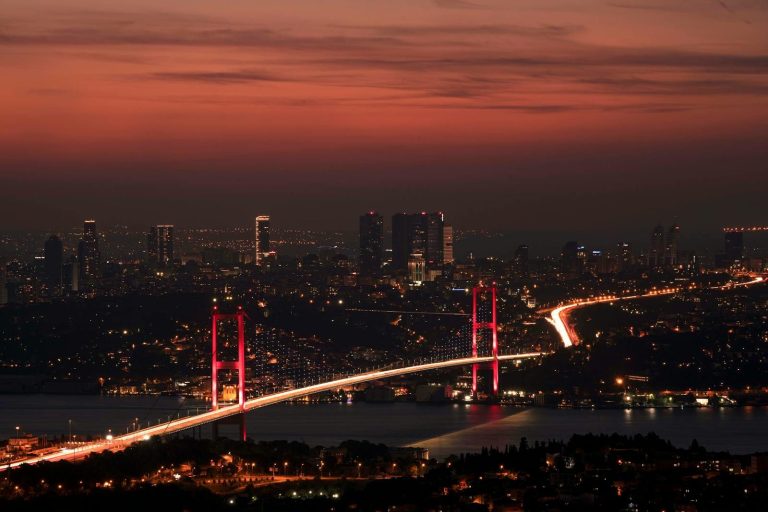
The strait is also an experience in its own right: an evening on the water, with the shoreline lit and the bridges overhead, is one of the few things in Istanbul that works as well for a family as for a couple. For travellers who want a dinner-plus-view format rather than another walking route, a Bosphorus dinner cruise is the straightforward way to do it, and it occupies the hours when you might otherwise be waiting for a table. If you take that route, eat lightly beforehand: the point of the evening is the view as much as the menu.
Picking Two Districts, Not Five
With limited days, the most common mistake is scattering meals across the city and eating nothing well. Two districts chosen for contrast will teach you more than five chosen at random. A reliable pairing is a market morning on the European side and an evening on the Asian side, or a bazaar-and-street-food day followed by a Kadıköy market morning. Whichever you choose, keep one meal unplanned: Istanbul rewards the traveller who walks into a place that smells good. And if you want a broader view of what the city offers beyond food, our complete Istanbul travel guide covers the rest of the itinerary.
If you would rather have someone arrange the eating, the best value in most cases is a guided route that already includes one of these districts; the sections above explain which format to ask for. If you would rather start from a shortlist, our Istanbul food tours selection gathers the formats described in this guide into one place so you can compare them against the criteria.
Istanbul Street Food Tours: The Classic Bites
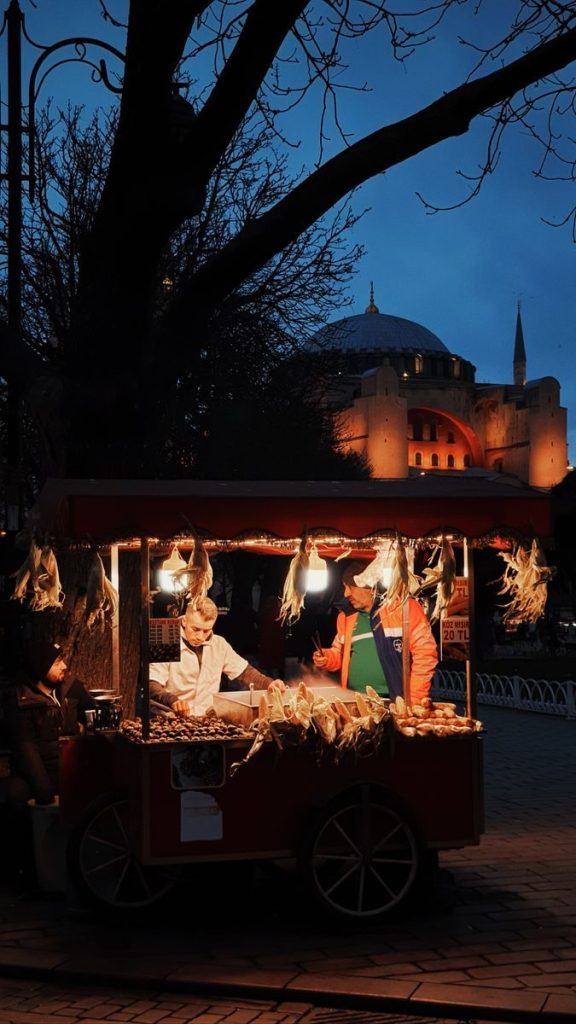
Street food is the entry point to Istanbul’s kitchen, and the street-food tour is the format that covers the most ground in the least time. It is also the format most often misunderstood: travellers picture a market crawl and end up on a three-hour walk between venues that serve, in sequence, what Istanbul residents eat on their way somewhere else. That is not a flaw — it is the nature of the genre — but knowing what the bites are makes the day considerably better.
What a Street-Food Route Actually Covers
A well-built route moves through three textures: something from a cart or a window eaten standing, something grilled and eaten at a counter, and something sweet or warm to close. Most routes also include a proper sit-down stop, usually a dish that cannot be eaten while walking. The geography is chosen for density rather than for distance — the old-city markets, the lanes around Galata, or the Kadıköy market quarter — because the point is to eat often, not to travel far.
Two structural notes. First, the best street-food routes run in the morning or late afternoon, when the stalls are at their busiest and the queues are made of residents rather than visitors. Second, the format works best for travellers who are comfortable eating on their feet and can handle a flexible menu; if you have a serious allergy or need certainty about ingredients, a private version of the same route is a different and better product.
The Bites Worth Knowing
The following table is not a menu to complete, it is a vocabulary to bring with you. Eat four or five of these on a route and you will have covered the range of the city’s everyday cooking.
| Bite | What it is | Best time | Where you meet it |
|---|---|---|---|
| Simit | Ring-shaped sesame bread, sold from carts and windows | Morning and late afternoon | Everywhere, especially near ferry docks |
| Balık ekmek | Grilled fish in bread, assembled at the waterside | Lunchtime | Eminönü and the ferry piers |
| Midye dolma | Mussels stuffed with spiced rice, sold by the tray | Afternoon and evening | Street corners and market lanes |
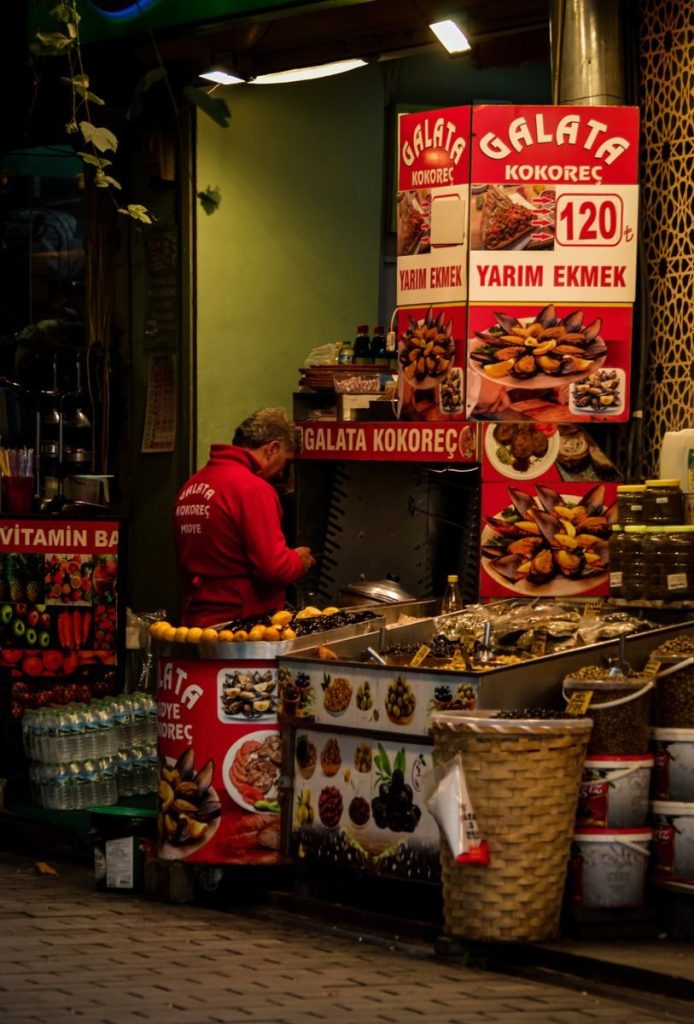
| Kokoreç | Chopped, grilled offal in bread with herbs and spice | Late afternoon into night | Beyoğlu, Kadıköy, market streets |
| Lahmacun | Thin flatbread with a spiced meat topping, rolled with herbs | Anytime | Grill houses and bakery windows |
| Dürüm and döner | Wrapped grilled meat with vegetables in flatbread | Anytime, best at lunch | Everywhere |
| Pide | Boat-shaped flatbread baked with cheese, meat or egg | Lunchtime | Pide shops and bakeries |
| Tantuni | Finely chopped spiced meat rolled in thin bread | Afternoon and evening | Regional counters, especially the south-east kitchens |
| Tavuk pilav | Chicken and rice, sold from carts and small shops | Lunch and late evening | Street corners near busy squares |
| Islak burger | A steamed, garlicky slider eaten standing at the counter | Late evening | Beyoğlu side streets |
| Kestane | Roasted chestnuts from a cart | Cold months | Street corners and squares |
| Salep | Hot thickened milk drink with cinnamon | Cold months | Carts, cafés, tea gardens |
| Boza | Fermented grain drink, thick and lightly sweet | Autumn and winter | Historic shops and dessert counters |
| Künefe | Hot shredded-pastry dessert with cheese, in a small pan | Afternoon and evening | Dessert shops, especially on the Asian side |
| Turkish coffee | Finely ground coffee cooked in a small pot | Anytime | Cafés and coffee houses |
| Çay | Tea in small glasses, refilled until you say stop | All day | Everywhere, without exception |
How to Eat Street Food Without Getting It Wrong
The etiquette is simple and forgiving. Buy from stalls with a queue of residents rather than from a cart with a photograph menu, and pay attention to turnover: a busy stall is a fresh stall. Eat what you buy within a few minutes, since almost everything in the list above is at its best hot. And treat the seating question as a local one: if everyone is standing at a counter, stand at the counter.
Two practical habits make the day easier. Carry small tokens or use a transit card for transport rather than hunting for change at every stop, and keep a bottle of water with you, because the food is saltier and the tea stronger than visitors expect. If you are vegetarian, the street-food basket is narrower but perfectly workable: lahmacun without meat, salads and vegetable dishes at lokantas, pastries, corn and chestnuts in season, künefe and sweets, and the tea culture that surrounds all of it.
Doing It Yourself: A Route Without a Guide
A self-guided version of the street-food tour is entirely possible, and it is the least expensive way to eat across the city — you pay only for what you eat, and you set the pace. The trade is knowledge: without a guide you will eat well but understand less, and you will spend part of your time working out what you are looking at.
If you want to try it, keep the following shape in mind. Start in the old city in the morning, at the bazaar district, and work your way from a warm bread or a pastry through a savoury stop and a grilled bite. Mid-afternoon, move to the lanes around Galata and Karaköy for a coffee and a sweet, then cross the water or walk to the evening district for a proper sit-down dish. One district per session is the rule that keeps a DIY day pleasant: three short walks in three districts will teach you far more than one long march between them.
The reason guided street-food routes remain popular is not access, it is translation — the conversation with a stallholder, the explanation of what a queue is for, the decision about which of four similar counters is worth your appetite. That is genuinely hard to substitute, and the reason a route with a good guide feels shorter than it is.
Cooking Classes and Market-to-Table Experiences
The cooking class is the only format where you leave with something other than a memory of a meal: a technique, a set of proportions, and usually a small notebook of dishes you have made with your own hands. It is also the format that families get the most out of, because a kitchen gives children something to do rather than something to watch.
The classes below are drawn live from our partner’s catalogue, and they are worth comparing on two things in particular: whether the market visit is included, and whether the menu can be adapted to your dietary needs.
How a Good Class Is Structured
The strongest classes begin in a market and end at a table. You shop for the meal with the instructor, who explains how to choose the produce and what a household would actually buy, then you cook a defined menu — typically a soup or a meze, a rice or bulgur dish, a vegetable cooked in oil, and a dessert — and then you eat what you made, usually with tea and a long conversation.
The weaker version of the same product starts in a kitchen with everything pre-chopped, teaches three dishes in two hours, and finishes before you have learned anything you will repeat at home. The difference is visible in the listing: a class that names a market visit, a dish count and a duration of at least four hours is almost always the more substantial experience.
What You Will Actually Learn
- How the pantry works. Which pepper, which oil, which yoghurt, and why the substitution you would make at home changes the dish.
- Technique that transfers. Filling and rolling, cooking rice so it stays separate, balancing a dish with yoghurt and butter, working with aubergine, and making a pastry by hand.
- Timing and sequencing. A Turkish table is a set of dishes that have to arrive together. Learning the order of operations is often the most useful part of the day.
- Ordering confidence. After cooking, the names on a menu stop being vocabulary and start being descriptions.
Choosing Between Half-Day and Full-Day
Half-day classes are the right choice for travellers who want one hands-on experience without giving up a sightseeing day, and they usually cover three or four dishes. Full-day versions add the market, a longer menu and a proper lunch, and they suit travellers who cook seriously or who are travelling in a family group and want an activity that everyone can join.
Whichever you choose, confirm three things before booking: whether the market visit is included or optional, whether the menu can be adapted for dietary restrictions, and whether the class is taught in a group or privately. A class that answers all three in specifics is one you can book with confidence, and a class that answers none of them is usually one that has been designed for throughput rather than for teaching.
Beyond Cooking: Other Hands-On Options
Istanbul also offers formats that sit between a tour and a class. Coffee sessions teach the preparation and the etiquette of Turkish coffee in an hour or two. Pastry workshops concentrate on one family of sweets. Market-and-breakfast mornings pair shopping with the long Turkish breakfast, which is a food experience in itself and one of the few that works well with very young children. None of these replaces a food tour, but any of them makes a good second food day — particularly for travellers who have already done a walking route and want something slower.
What Is Typically Included (and What Is Not)
Price is the part of a booking that travellers focus on and the part that explains the least. What matters more is what the figure covers, because two tours with very different prices can be the same product once the extras are counted. This section sets out what is normally inside the fee and what is normally outside it.
Usually Included
- Guiding, by a licensed guide, for the whole route.
- Food and drink at the listed tasting stops on almost every walking and small-group route.
- Entry to any market or venue the route visits, where an entry exists.
- Transport within the route on some tours — the ferry crossing or a tram segment is often part of the experience rather than an extra.
- The meal itself on cooking classes and market-to-table experiences.
Usually Not Included
- Transport to the meeting point and back from the finish.
- Additional drinks beyond the listed tastings, particularly in the evening, where a meyhane route may leave alcohol to be settled at the table.
- Gratuities for the guide, which are customary rather than obligatory, and should be treated as a personal decision rather than a hidden line in the fee.
- Souvenirs and market purchases, which are the traveller’s own business and can add up faster than the tour itself.
- Anything taken off-menu, which a good guide will tell you about rather than surprise you with at the end.
Dietary Restrictions and Allergies
The single most important question to ask before booking. Istanbul’s cooking is generous with nuts, dairy, wheat and meat, and a route planned without advance notice can leave a vegetarian guest eating bread and salad while the group eats a full menu.
What to look for: an operator who asks about restrictions at the time of booking rather than at the meeting point; a specific answer that names the substitute dishes; and — for serious allergies — a private format, where the guide can carry the conversation with each kitchen. In a street-food setting, cross-contamination is a real consideration and no responsible operator will promise otherwise.
Tipping and Extras
Tipping in Istanbul is appreciated and not obligatory. In restaurants it is customary to leave something for good service, and in a guided tour a gratuity for the guide is a normal courtesy rather than a requirement. The practical rule is the same as anywhere: nothing is expected, and the amount is your call. Bring some small tokens for market purchases and tea stops, since the smallest stalls may not accept anything else.
The Question Behind the Question
When travellers ask what a tour includes, they are usually asking what the day will feel like. The honest summary is this: a good food tour in Istanbul is a walking day with a lot of eating and a guide who keeps the logistics off your hands. Everything else — the size of the group, the number of tastings, the length of the sitting — is a design choice, and it is the one you are actually paying for.
When to Go — A Seasonal Food Calendar
Istanbul eats by the calendar, and the calendar changes what is on the table more than any other single factor. A route in February and a route in July visit the same streets and serve recognisably different food. If you are choosing between two travel dates and food matters to you, this is the section to read first.
Spring: Greens, Lamb and the Start of the Season
Spring arrives with an appetite for fresh things. Markets fill with wild greens and herbs — nettle, sorrel, purslane, watercress — and with artichokes, broad beans, peas and the first of the season’s lamb. This is the time when Istanbul’s vegetable cooking, the part of the cuisine that visitors most often miss, is at its most varied.
Weather in spring is variable: warm days alternate with rain, and a walking tour should be planned with a layer of clothing and an umbrella. Crowds are moderate outside the holiday weeks, which makes spring one of the better windows for a route that includes markets and outdoor stops.
Summer: Tomatoes, Aubergine and Long Evenings
High summer is hot and humid, and the city adjusts by eating late. Tomatoes, peppers and aubergines arrive in volume, mezze tables move outdoors, and the waterfront fills after sunset. A market morning in July should start early; by noon the produce streets are hot and the fish counters quieter.
This is the best season for evening tours, simply because the daylight lasts and the city stays outside until late. It is also the season when a route without shade — the bazaar district, for example — should be timed carefully. Late August brings figs, and the fruit stalls become the most interesting part of the market.
Autumn: The Best Season for Eating
If you can choose, choose autumn. The heat breaks, the markets fill with the best of the year’s produce, and the fish season turns to the species Istanbul cooks wait for: lüfer and other oily fish arrive as the water cools, alongside mussels, chestnuts, quince, pomegranate and grapes. It is the season when a fish-market route makes the most sense and when the meyhane tradition feels most natural, because the evenings are cool enough for long dinners and warm enough to sit outside.
Autumn is also the best compromise on crowds, with the summer peak behind and the winter quiet ahead. Expect occasional rain by late October and plan indoor stops accordingly.
Winter: Anchovy, Salep and Slow Cooking
Winter in Istanbul is cool, wet and occasionally snowy, and the kitchen responds with the food of the cold months: anchovy and other small oily fish, hearty bean and lentil soups, pickles and preserves, stuffed vegetables, and slow-cooked dishes that belong to the oven rather than the grill. The drink culture shifts too — salep, boza and spiced teas appear at carts and cafés.
Winter is a fine season for a food tour and a poor one for lingering outdoors. Routes that emphasise covered markets, lokantas, tea houses and a long seated meal will outperform routes built around standing at stalls in the rain. Snow, when it comes, is rare but disruptive: if your visit coincides with a snowfall, expect transport delays and confirm your meeting point with the operator.
Ramadan and the Holiday Weeks
Istanbul’s eating calendar is also shaped by Ramadan, when many restaurants adjust their hours and the city’s evenings move later, with the daily fast broken at sunset followed by a long, busy night. Ramadan moves earlier by roughly eleven days each year, so check the dates for the year you are travelling rather than assuming.
For a visitor this changes the texture of the day rather than the quality of the food: the late afternoon is quieter, the evening is fuller, and some venues open only after sunset. A food tour during Ramadan can be excellent, particularly an evening route, but a guide who understands the timing matters more than usual. The same applies to the long public holidays, when markets close and the city’s own residents travel.
Choosing a Date
If your priority is a specific food experience rather than a specific date, work backwards from the season: fish and long dinners in autumn and winter, markets and vegetables in spring, late evenings and fruit in summer. If your priority is comfort while walking, choose late spring or early autumn. And whichever date you pick, check the weather and the holiday calendar for that week — the general picture of a season is a poor substitute for knowing what is happening on the days you are actually in town. Our guide to the best time to visit Turkey sets out the weather, crowds and practical timing month by month.
How to Choose — A Five-Point Checklist
Most travellers choose a food tour the way they choose a restaurant: by the impression a listing makes. That is a poor filter, because the information that predicts whether you will enjoy the day — group size, tasting count, pace, dietary handling, cancellation terms — is exactly the information that listings tend to bury. Use the following five points in order, and the decision usually makes itself.
1. Start with the Group Cap
A stated maximum group size is the single most reliable indicator of the product you are buying. Small caps mean more conversation, a guide who can move at the pace of the people in front of them, and less waiting at each stop. A listing without a cap, or with a cap so high it will never be reached, is telling you the operator’s priority is volume.
2. Count the Tastings Against the Clock
Divide the number of tastings by the hours. A route with many tastings in a short window is a fast walk with food; one with the same count over a longer window includes sitting down and probably a full meal. Both are good products, but only one may be what you had in mind, and the mismatch between expectation and reality is the most common reason travellers come away disappointed.
3. Test the Dietary Answer
Send one message before booking and ask what a vegetarian, vegan or gluten-free guest would eat on the route. A good answer names dishes, states whether the substitutions cost extra, and tells you how the guide handles the conversation with each kitchen. A vague answer is not rudeness, it is information: the operator has not built dietary handling into the route.
4. Check the Route Against Your Trip
Look at the district or districts, the side of the water, and the start and finish points. A route that ends on the Asian side at night is a wonderful experience and a poor fit for a traveller staying near Sultanahmet with an early flight. The same applies to the hour: a late finish in winter can mean a long walk to transport in the cold.
5. Read the Cancellation Terms Before You Book
Confirm the change and cancel window, and what happens if a stop is closed or the weather turns. This is the policy that protects you when plans move, and operators who publish it clearly are usually the same ones who handle other problems well.
A Shortlist You Can Send
If you would rather ask the questions than read for the answers, send this to any operator you are considering:
1. What is the maximum number of guests, and how many tasting stops are included? 2. How long is the tour, and which districts does it cover? 3. How do you handle vegetarian, vegan, gluten-free and allergy requirements — which dishes are substituted? 4. What are your cancellation and rescheduling terms? 5. Where and when does the tour finish, and how do we get back from there?
The operators who answer all five points precisely are the ones worth booking. It is a filter that takes ten minutes and removes most of the risk.
A Tour or Going It Alone?
The honest division is this. A guided tour earns its place when you want translation, when you have limited time, when you are travelling with children or dietary complexity, or when you want the evening version of the city without negotiating a meyhane alone. Eating alone earns its place when you have time, when you enjoy wandering, and when you want to spend your appetite without a schedule.
For most travellers the best arrangement is both: one guided route early in the trip to acquire the vocabulary and the geography, then self-guided eating for the rest of the stay. The guided day pays for itself in every meal that follows, because you will know what you are ordering and where to sit down. If you are working out the overall budget for the trip, our guide to what a Turkey trip actually costs covers the wider picture — food, transport and everything around it — without pretending that a single number will hold for every traveller.
A Last Note on What Not to Optimise
Two things are not worth optimising: the number of tastings beyond a point, and the search for the one perfect tour. Past a certain count, more tastings mean smaller portions and less understanding. And past a certain point, comparing listings returns less than simply booking a well-run route in the right district with the right format. Choose the shape of the day, not the impression of the listing.
Which Istanbul Food Tour Is Right for You?
Choosing a food tour in Istanbul comes down to three questions asked in the right order. Which side of the city do you want to understand — the monumental European peninsula or the market life of the Asian side? Which format fits the way you travel — a fast walk with a group, a seated tasting, a private day built around your pace, or a kitchen? And which hour of the day suits you — the working morning, when the markets are at their best, or the evening, when the city eats slowly?
Answer those three and the product selects itself.
The travellers who get the most from a food tour in Istanbul are rarely the ones who booked the most expensive option. They are the ones who matched the format to their appetite and their pace, asked two or three questions before paying, and took the tour early enough in the trip that everything afterwards benefited from it. A guided route on the first full day turns the remaining days into better eating; a route booked for the last evening is a pleasant memory and little more.
If you have three days or more, the sequence that works most reliably is a market-led daytime route early in the trip and a long evening table later, ideally on the other side of the water. If you have one day, choose the format you will enjoy rather than the one that covers the most ground, and spend the rest of the day walking a single district properly. And if your trip is part of a longer route through the country, our ten-day Turkey itinerary puts Istanbul’s eating days in the context of the rest of the circuit, so you can see where the food time fits.
Whatever you choose, one thing is worth protecting: at least one unplanned meal. The food experiences travellers remember in Istanbul are frequently the ones that were not booked — a lokanta discovered on the way back to the hotel, a tea garden that turned into an afternoon, a market stall where the vendor decided you should try something. A good food tour teaches you how to find those moments; it cannot have them for you. For the wider picture of what to see between meals, the complete Istanbul guide covers the sights, the districts and the timing in the same practical spirit. And if you would rather work from a shortlist of the formats described here, you can compare current Istanbul food tours and check them against the five criteria in this guide before you book.
Food Tours in Turkey Beyond Istanbul
Most food tours in Turkey start in Istanbul, and for a first trip that is the right place to begin. The rest of the country eats differently, and the differences are regional rather than decorative. Outside Istanbul the day is built around other ingredients, other mealtimes and a slower table. A tour there is less a tasting list and more a way of eating.
İzmir and the Aegean Coast
Aegean cooking leans on olive oil, herbs, seafood and vegetables, and it eats earlier and lighter than Istanbul. A food tour here is often a market morning followed by a long lunch, with wine or rakı at the table. Many itineraries pair the market with the inland terraces of Pamukkale or the marble streets of Ephesus. Ask for a group that stays in one province rather than a coach day that touches three.
Gaziantep and the Southeast
Gaziantep is the country’s most concentrated eating city, known for pistachios, kebabs, lahmacun and baklava. The southeast eats later, spicier and in longer sittings, and hospitality is part of the format. A tour here is usually a market and workshop route rather than a walk between restaurants. If you are building a route, our ten-day Turkey itinerary shows where the southeast fits.
Cappadocia
Cappadocia cooks for a landscape where the day starts before sunrise and ends in a cave dining room. The tasting menu below ground is regional and slow, built around lamb, wheat, apricots and local wine. Most visitors arrive for the balloons and add a food evening afterwards. Our Istanbul to Cappadocia route pairs the two, and the balloon tour comparison covers the morning side.
Antalya and the Mediterranean
The Mediterranean coast eats earlier, with mezze, grilled fish, citrus and produce from the greenhouses. Antalya’s old town and harbour make a short tour easy to fit into a beach day. Our guide to an Antalya summer holiday covers the timing and the districts.
Food tours outside Istanbul are usually booked locally, through a hotel or a market guide, rather than months ahead. A few days of notice is normally enough. Travel between regions is the bigger constraint, since most food days are built for travellers already in the province.
FAQ — Istanbul Food Tours: Frequently Asked Questions
How much does an Istanbul food tour cost?
Rates depend on the format, the length, the group size and the season rather than on the city itself, and they move through the year, so this guide deliberately does not publish figures. A short street-food walk sits at the accessible end; a multi-stop neighbourhood tasting sits in the middle; private departures and hands-on classes sit above them. Current rates for each format are shown in the live Istanbul food tour listings on this page.
Are Istanbul food tours suitable for vegetarians?
Yes, with advance notice. Turkish cooking has a deep repertoire of vegetable dishes that most routes can build around: stuffed vine leaves and other dishes cooked in olive oil, smoked aubergine salad, lentil soup, cheese börek, vegetable stews and pastries, with baklava at the end. Tell the operator when you book rather than on the day, and they can adjust the stops. Vegans should ask specifically about dairy and egg content, since both appear in dishes that look vegetable-based.
Is Istanbul street food safe to eat?
Yes — street food here is daily food for millions of residents, and busy stalls turn over fast. The practical rule is to follow the queue: a stall with a line of local customers is a stall with fresh stock. Be cautious with anything raw or undercooked if you have a sensitive stomach, and buy stuffed mussels from busy, high-turnover vendors in Kadıköy or Beşiktaş. Tap water is treated but most visitors drink bottled water.
What’s the best neighbourhood for an Istanbul food tour?
Kadıköy, on the Asian side, is a particularly rewarding neighbourhood for a food-focused tour: the market quarter is large, the fish market is a working market rather than a display, and the concentration of specialist shops is hard to match elsewhere. For street food specifically, the Eminönü–Karaköy–Beyoğlu corridor on the European side packs the densest cluster of iconic bites. Several routes combine both sides by ferry.
Can kids join an Istanbul food tour?
Yes, but the format matters more than the tour. Cooking classes work best for families, because children take part rather than watch and the pace is unhurried. Walking routes suit older children who are comfortable on their feet for three or four hours. For younger children, look for private or family departures with shorter routes. Street-food walks are generally not stroller-friendly, so check before booking.
Do I need to book food tours in advance?
In spring and autumn, yes. Popular Kadıköy routes and the better cooking classes routinely fill several days ahead, and weekends and public holidays go first. Booking a week ahead is wise in the high seasons and a few days ahead is usually enough in the quieter months. Reserve early and read the cancellation terms before you pay — most operators allow a change or a cancellation within a stated window.
What should I wear on a food tour in Istanbul?
Dress for walking and for the weather. Comfortable shoes matter more than anything else, because the routes include cobbles, steep lanes and long hours on your feet. In summer, wear light clothing, bring a hat and carry water. In winter, layer up and take a waterproof jacket. If your route passes a mosque, which is common in Sultanahmet, a scarf is useful.
Is alcohol included on Istanbul food tours?
Usually not. Standard walking and street-food routes exclude alcohol, and many pass through areas where you can buy beer or wine separately if you want it. Evening meyhane routes and dinner cruises are the exception: some include drinks, others leave them to be settled at the table. The listing will say which, so check before booking. If you do not drink, say so in advance — the route works just as well with tea.
Is an evening food tour in Istanbul worth it?
It is worth it if you want the seated half of the city: a meyhane table, grilled fish, a long evening in a district that only comes alive after eight. It is less worth it if your daytime route already covered the same district, because the food vocabulary repeats. The value comes from contrast — a different district, a different side of the water, or a different kind of venue.
Which Istanbul food tour is best for a first-timer?
For a first visit, a small-group street-food walk on the European side, taken early in the trip. It covers the widest range of everyday eating in the shortest time, and it teaches the two things that improve every meal afterwards: how to order and where to go back to. If you are travelling with children or with dietary restrictions, the private version of the same route is the better answer.
How do I choose between a private and a small-group food tour?
Choose private if you want the pace set by your own party, if you have dietary requirements that need certainty, if you are travelling with children, or if you have a specific interest such as pastry or markets. Choose small-group if you enjoy the company of other travellers and prefer to share the guide’s time. The route can be similar; what you are buying is control.
What is a Kadıköy food tour like?
It starts with a ferry crossing — about twenty minutes from Eminönü or Beşiktaş — and then walks the market quarter: produce streets, the fish market, pickle and cheese counters, a lokanta counter where you point at what you want, and a waterfront finish. The mood is residential rather than touristic, and the evening version moves into the fish-market lanes for meze. Allow half a day.
Where can I find the best street food tour in Istanbul?
The classic street-food route walks the European peninsula, around Eminönü, Sirkeci and the lanes behind the Spice Bazaar. A Kadıköy version trades those bazaar crowds for a market quarter that residents use every single day.
Is a walking food tour in Istanbul better than a bus or boat option?
For tasting, walking wins: a walk fits more stops into a few hours and reaches alleys that no vehicle can. Bus and boat options trade that reach for distance, comfort and a skyline at sunset.
Do food tours run outside Istanbul in Turkey?
Yes. İzmir, Gaziantep, Cappadocia and Antalya all run guided food days, each built around its own ingredients and mealtimes. Aegean routes follow olive oil and markets, while the southeast runs on kebabs, pistachios and pastry.
Related Reads
More reading on Istanbul food tours, and on the city around them:
- Things to Do in Istanbul: The Complete Travel Guide — the sights, districts and timing that frame the food days.
- Hidden Istanbul: Secret Spots Locals Keep for Themselves — quieter streets, tea houses and corners away from the crowds.
- The Best Time to Visit Turkey — weather, crowds and month-by-month planning.
- What a Turkey Trip Costs — budgeting the whole trip, food included.
- Private Guided Tours in Istanbul — when a private format is worth it, and how to choose one.
- Ten Days in Turkey: The Ultimate Itinerary — where Istanbul’s eating days fit into a longer circuit.