The Ultimate Ephesus Travel Guide: Exploring Turkey’s Ancient Wonder
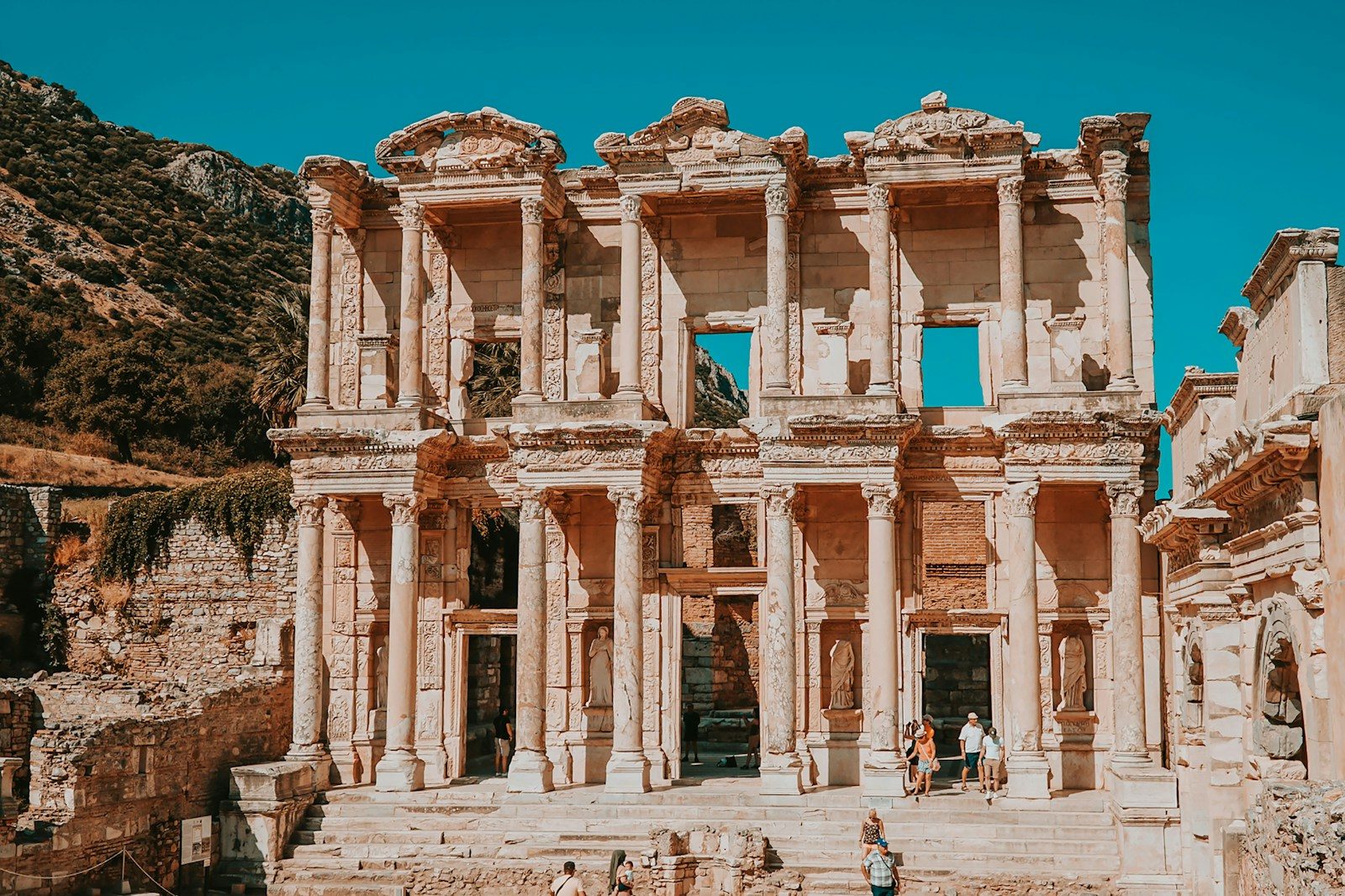
When we first walked through the marble streets of Ephesus, we felt like we’d stepped back 2,000 years in time. Welcome to our comprehensive Ephesus travel guide — we’ll share everything you need to know about visiting this remarkable ancient city. The colossal Library of Celsus stood before us, its restored facade gleaming in the Turkish sun, while ancient theaters and temples stretched into the distance. This wasn’t just another archaeological site – this was one of the best-preserved ancient cities in the world.
Ephesus is Turkey’s most visited ancient site, and for good reason. Located near the Aegean coast in western Turkey, this UNESCO World Heritage Site welcomes over two million visitors annually who come to marvel at its remarkably intact Roman ruins. Whether you’re a history enthusiast, a photography lover, or simply curious about ancient civilizations, Ephesus delivers an unforgettable experience.
Affiliate Disclosure: This post contains affiliate links to Viator. As an affiliate, we may earn a small commission from qualifying purchases at no extra cost to you — it funds our independent travel research and never changes what you pay. The tour options shown in this guide are served by Viator; their availability and pricing are set by the operators, not by us.
Why Visit Ephesus?
This complete Ephesus travel guide will help you plan the perfect visit to this extraordinary archaeological wonder. We’ve walked these ancient streets multiple times, navigated the logistics from different base cities, and learned valuable lessons about timing, tickets, and tour options.
Unlike many ancient ruins where you need imagination to picture the past, Ephesus brings history to life with stunning clarity. You’ll walk the same marble-paved streets where Romans once shopped, see intricate mosaics in wealthy merchants’ homes, and stand in a 25,000-seat theater that still hosts concerts today.
The archaeological site covers a vast area with highlights including the iconic Library of Celsus (one of the ancient world’s greatest libraries), the Terrace Houses (luxury Roman homes with stunning frescoes), the Great Theatre (where St. Paul once preached), and the Temple of Hadrian with its ornate Corinthian columns.
What Makes Ephesus Special
Ephesus was once the second-largest city in the Roman Empire, surpassed only by Rome itself. It served as the capital of Roman Asia Minor and was a major trading port before the harbor silted up. The city was also significant in early Christianity – St. Paul lived here for three years, and St. John is believed to have spent his final years nearby with the Virgin Mary.
What sets Ephesus apart from other ancient sites is the exceptional state of preservation. Thanks to centuries of burial under protective soil and extensive restoration work, you can see intricate marble carvings, detailed mosaics, and even ancient graffiti. The two-story facades, column-lined streets, and grand public buildings give you a genuine sense of Roman urban life.
We’ve created this comprehensive guide to help you maximize your visit, avoid common mistakes, and discover both the main attractions and hidden gems. Whether you’re arriving on a cruise ship with limited time, planning a day trip from nearby towns, or combining Ephesus with other Turkish destinations, we’ve got you covered.
The site is manageable in half a day but rewards those who take their time. We recommend allocating at least four hours to explore thoroughly, including the Terrace Houses which require a separate ticket but are absolutely worth it.
What You’ll Find in This Guide
This Ephesus travel guide covers everything you need to know: the site’s fascinating history, practical planning tips, detailed transportation options from Kusadasi, Selcuk, and Izmir, current entry fees for 2026, in-depth coverage of top attractions, nearby sites like the House of the Virgin Mary, recommended tours and accommodations, local dining spots, and essential practical advice for dealing with crowds, heat, and photography restrictions.
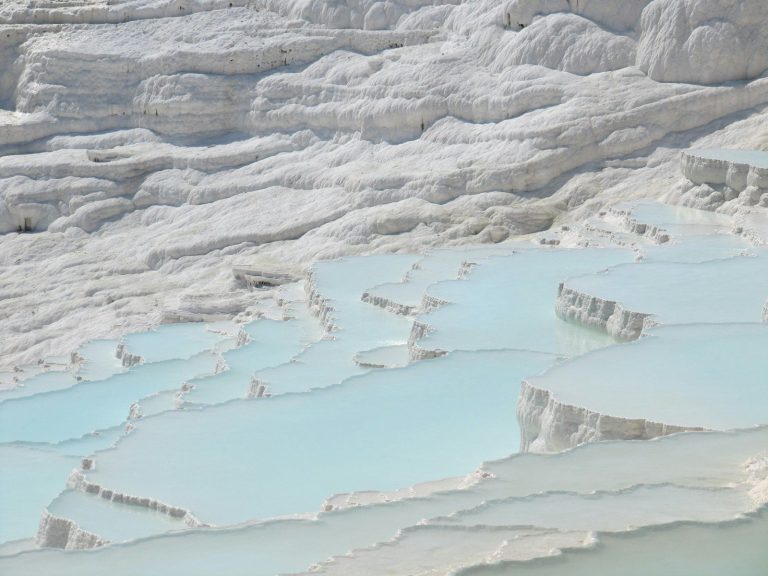
We’ve also included specific guidance for cruise passengers working with tight schedules and suggestions for combining Ephesus with other incredible Turkish destinations like Pamukkale and Cappadocia.

Let’s dive into planning your visit to one of the Mediterranean’s most spectacular ancient cities.
A Brief History of Ephesus
Understanding Ephesus’s rich history makes exploring the ruins far more meaningful. This ancient city witnessed over 3,000 years of continuous habitation and played starring roles in Greek, Roman, and early Christian history.
Ancient Beginnings
Ephesus was founded around 3000 BCE, though the city you’ll visit today dates primarily from the Roman period. According to legend, the city was established by Amazons and later settled by Greek colonists led by Prince Androklos of Athens in the 10th century BCE. The prince supposedly chose the location after consulting the oracle at Delphi.
The city’s prosperity came from its strategic position as a major port city on the Aegean Sea. Ephesus controlled vital trade routes between East and West, bringing enormous wealth that funded the magnificent buildings we see today.
Greek and Roman Glory
Under Greek rule, Ephesus became famous for the Temple of Artemis (Diana), one of the Seven Wonders of the Ancient World. This massive temple drew pilgrims from across the Mediterranean and made Ephesus a center of religious significance.
When the Romans conquered the region in 129 BCE, Ephesus flourished like never before. Augustus Caesar designated it as the capital of the Roman province of Asia, transforming it into the empire’s fourth-largest city with a population exceeding 250,000.
The Romans invested heavily in public buildings, constructing the structures we admire today: the Library of Celsus, the Great Theatre, elaborate fountains, bathhouses, and the Terrace Houses where wealthy Romans lived in luxury. The city featured advanced infrastructure including a sophisticated water supply system, public toilets, and even street lighting.
Christian Significance
Ephesus holds profound importance in Christian history. St. Paul lived here from 52-55 CE, establishing one of Christianity’s earliest and most influential communities. He wrote his First Epistle to the Corinthians from Ephesus and likely composed parts of other biblical letters here.
The city is also connected to St. John the Apostle, who supposedly brought the Virgin Mary to live out her final years in a house on nearby Mount Koressos. The Gospel of John may have been written in Ephesus.
In 431 CE, the Council of Ephesus took place here, a pivotal event in early Church history that declared Mary as “Mother of God.”
Decline and Rediscovery
Ephesus’s downfall came gradually as its harbor silted up from the Cayster River, cutting off maritime trade that was the city’s lifeblood. By the 6th century CE, the city was largely abandoned, and earthquakes buried many structures.
This burial actually preserved the ruins remarkably well. Austrian archaeologists began systematic excavations in 1895, work that continues today. Only about 15% of ancient Ephesus has been excavated, meaning countless treasures still lie beneath the soil.
Planning Your Visit to Ephesus
Proper planning makes the difference between a rushed, overwhelming experience and a memorable exploration of this ancient wonder. Here’s what you need to know before you go.
How Much Time Do You Need?
We recommend allocating at least 3-4 hours for a thorough visit to the main archaeological site. If you’re including the Terrace Houses (highly recommended), add another hour. Serious history buffs or photography enthusiasts should plan for a full half-day.
The site is large – about two kilometers from one entrance to the other – and mostly downhill if you start from the upper (southern) entrance. In summer heat, this takes more time and energy than you might expect.
If you’re visiting nearby attractions like the House of the Virgin Mary, Temple of Artemis, or Ephesus Archaeological Museum, plan for a full day. Most organized tours bundle these sites together efficiently.
What to Bring
Essential items:
- Comfortable walking shoes with good grip (the marble paths are smooth and can be slippery)
- Sun protection: hat, sunglasses, and high-SPF sunscreen
- At least 1-2 liters of water per person (there’s limited shade)
- Cash for entrance fees, Terrace Houses ticket, and vendors
- Charged phone or camera for photos
Also essential:
- Light, breathable clothing covering shoulders and knees (for visiting religious sites nearby)
- Portable phone charger
- Small backpack for water and belongings
- Umbrella for sun shade in summer
- Light rain jacket if visiting October-March
Optional but useful:
- Guidebook or downloaded audio guide
- Binoculars for viewing details on high structures
- Snacks (limited food options inside)
- Portable fan for summer visits
Guided Tour vs. Independent Visit?
We’ve done both, and each has advantages. Independent visits offer flexibility to spend more time at sites that interest you most, skip areas that don’t, and explore at your own pace. You’ll save money and avoid being tied to a group schedule.
However, a knowledgeable guide transforms the experience by bringing the ruins to life with historical context, pointing out details you’d otherwise miss, and explaining the significance of what you’re seeing. The marble columns and stone foundations become stories of real people, political intrigue, and daily Roman life.
For first-time visitors, we recommend a guided tour. The context and expertise add immense value. If you’re returning or have thoroughly researched the site beforehand, an independent visit works well.
Physical Considerations
The walk through Ephesus involves approximately 2-3 kilometers on uneven ancient paving stones. While the route is mostly downhill (if entering from the upper gate), you’ll still need moderate fitness and mobility.
There are places to rest along the route, but limited seating. The site is not particularly wheelchair-accessible, though motorized scooters can manage some areas with assistance.
Summer temperatures regularly exceed 35°C (95°F) with minimal shade. We’ve seen visitors struggle with heat exhaustion, so take this seriously. Early morning or late afternoon visits are essential in summer months.
Photography Rules
Photography is generally permitted throughout the main site for personal use. However, tripods and professional equipment may require special permission. Inside the Terrace Houses, photography is allowed but flash is prohibited to protect the delicate frescoes.
Some of our favorite photo spots include the Library of Celsus from the marble courtyard, the Great Theatre from multiple angles, and the column-lined Curetes Street with its vista toward the library.
Ephesus Entry Fees and Tickets (2026)
Understanding the ticketing system helps you budget properly and avoid confusion at the gates. Here’s everything you need to know about entrance fees for 2026.
Main Archaeological Site
The standard entry ticket to Ephesus covers the main archaeological site, including the Library of Celsus, Great Theatre, Odeon, Temple of Hadrian, Curetes Street, and all public areas. Fees are set by the Turkish authorities and reviewed every season, so confirm the current rate at the ticket office or on muze.gov.tr before you travel.
Tickets can be purchased at either entrance gate (upper/Magnesia Gate or lower/Harbor Gate). Cash and major credit cards are accepted, though we recommend having cash as backup since card readers occasionally malfunction.
Children enter free up to a young age when accompanied by an adult, and students with a valid international student ID card pay a reduced rate — bring the physical card, since digital versions often aren’t accepted. Correct age limits and discount rates are published by the ticket office and can change between seasons.
Terrace Houses (Separate Ticket)
The Terrace Houses require a separate ticket on top of the main entry, purchased either at the main gate or at the entrance to the houses themselves.
We consider this one of the best-value additions anywhere in Turkey. The preserved Roman frescoes, mosaics, and insights into daily life of wealthy Ephesians are absolutely worth the extra cost. Skip almost anything else, but don’t skip the Terrace Houses.
Museum Pass Turkey
If you are visiting several Turkish archaeological sites and museums, the Museum Pass Turkey is usually the cheaper way to do it: it covers hundreds of museums and sites nationwide, including Ephesus and the Terrace Houses. Versions differ in how long they stay valid, so pick the one that matches your trip — current rates and coverage are listed on the official Museum Pass page.
The pass pays for itself once you visit a handful of major sites, and it saves you from queuing for a ticket at every stop.
Purchase the pass online at www.muze.gov.tr or at major museum ticket offices. It activates on first use and runs for a fixed period, so plan the visits you want to make on it early.
Nearby Attractions (Separate Tickets)
- House of the Virgin Mary (separate ticket)
- Ephesus Archaeological Museum in Selcuk (separate ticket)
- Basilica of St. John (separate ticket)
- Temple of Artemis: Free (only foundation remains visible)
Payment Methods
All ticket offices accept Turkish Lira (cash), major credit cards (Visa, Mastercard), and contactless payment. Exchange rates for foreign currency are unfavorable, so we recommend paying in TL or by card.
ATMs are available in Selcuk and Kusadasi but not at the archaeological site itself. Withdraw cash before arriving.
Free Admission Days
Turkish museums and archaeological sites offer free admission on specific dates:
- April 23 (National Sovereignty and Children’s Day)
- May 18 (International Museums Day)
- August 30 (Victory Day)
- October 29 (Republic Day)
Expect massive crowds on these days, making the free entry hardly worth it for most travelers.
Library of Celsus: A Deeper Look
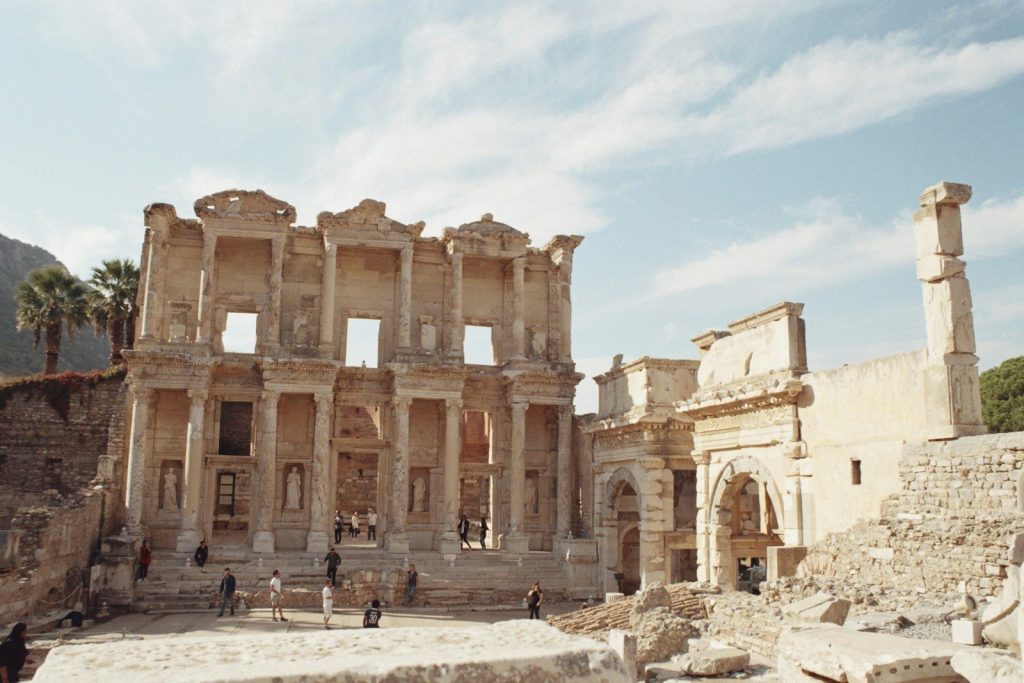
While we’ve introduced the Library of Celsus as Ephesus’s crown jewel, this magnificent structure deserves a closer examination. It’s not just the most photographed building in Ephesus – it’s a masterpiece of Roman architecture and engineering.
Architecture and Design
The library facade stands 16 meters tall and 21 meters wide, creating an imposing presence that announces its importance from a distance. The architects employed a clever optical illusion: the middle columns are slightly larger than those on the ends, and the middle intercolumniations (spaces between columns) are wider, creating an enhanced impression of height and grandeur.
The structure features three stories (though only two story facades remain), with nine interior rooms for storing scrolls. The Corinthian columns become progressively smaller on each level, drawing the eye upward and adding to the monumental feel.
Four niches between the columns contain statues representing virtues: Sophia (wisdom), Arete (virtue/excellence), Ennoia (thought/intelligence), and Episteme (knowledge). While the originals were moved to Vienna’s Ephesus Museum, the copies installed during restoration give you a sense of the original appearance.
The Tomb Connection
What many visitors don’t realize is that the library served a dual purpose. Beneath the structure lies a decorated marble sarcophagus containing the remains of Celsus himself. His son, Gaius Julius Aquila, commissioned the library both as a memorial to his father and as a gift to the city.
Being buried within the city walls was a rare honor in Roman times, typically reserved for exceptional individuals. Celsus’s distinguished career as consul, senator, and governor of Asia earned him this privilege.
Historical Significance
When completed in 135 CE, the Library of Celsus represented the pinnacle of Roman architectural achievement in Asia Minor. Its collection of 12,000 scrolls made it one of only three major libraries in the ancient world, cementing Ephesus’s status as a center of learning and culture.
The reading room was ingeniously designed. Double walls created air space for insulation and moisture control, protecting delicate papyrus and parchment scrolls from Ephesus’s humid coastal climate. The building faced east, capturing morning light while avoiding harsh afternoon sun that would fade the scrolls.
Destruction and Restoration
The library was severely damaged by an earthquake and fire in 262 CE during a Gothic raid. While the facade remained partially standing for centuries, the interior and collection were destroyed. Subsequent earthquakes toppled more of the structure, eventually leaving only the lower portions of the facade.
Austrian archaeologists led a remarkable restoration project from 1970-1978, reassembling the facade using original marble fragments combined with modern materials where necessary. This controversial decision to reconstruct rather than merely preserve ruins has been vindicated by the result – one of the ancient world’s most stunning edifices returned to visible glory.
Photography Tips
The Library of Celsus is incredibly photogenic but also incredibly crowded. For the best photos:
Arrive right at opening (8:00 AM) for shots without crowds. The morning light at this hour is excellent, illuminating the facade beautifully. Position yourself in the courtyard directly in front – this classic angle shows the library’s full grandeur.
For a different perspective, stand on the marble platform to the left (as you face the library) for a slightly elevated, angled view. Late afternoon (after 4:30 PM) brings golden hour light that makes the marble glow, though crowds may still be present.
Try vertical composition to capture the full height. Include a person in the frame for scale – the library’s monumentality becomes even more apparent when viewers can gauge its actual size.
Terrace Houses: Worth the Extra Ticket?
The Terrace Houses (also called the Houses of the Rich) require a separate admission ticket beyond the main Ephesus entry fee. The question we hear constantly: is it worth it? Our answer is an unequivocal yes.
What Are the Terrace Houses?
These luxury Roman residences were home to Ephesus’s wealthiest citizens from the 1st to 7th centuries CE. Built into the slope of Mount Bulbul across from Hadrian’s Temple, six residential units have been excavated and opened to visitors under a protective modern roof structure.
Think of these as the penthouse apartments of ancient Ephesus. While ordinary citizens lived in modest homes, the elite inhabited these elaborate dwellings featuring advanced amenities that would be impressive even today: central heating through hypocaust systems, hot and cold running water, private bathrooms with flushing toilets, and ornate decoration throughout.
What You’ll See
The frescoes are the star attraction. Walls are covered with vivid paintings depicting mythological scenes, theatrical masks, landscapes, geometric patterns, and decorative borders. The color preservation is extraordinary – blues, reds, yellows, and greens remain vibrant after 2,000 years.
Floor mosaics showcase incredible artistry with intricate patterns, figural scenes, and even humor (look for the mosaic warning “Beware of the dog” at one entrance). The level of detail in these mosaics demonstrates the wealth and taste of the occupants.
Room layouts reveal daily life: columned peristyle courtyards, formal dining rooms (triclinia) where guests reclined on couches for meals, private quarters, kitchens, and bathing facilities. You can trace the evolution of decoration styles as successive owners remodeled and redecorated according to current fashions.
Why It Matters
While the main Ephesus site shows public life and grand civic architecture, the Terrace Houses provide intimate glimpses into private domestic life. You see where people actually lived, ate, socialized, and slept. This personal connection makes ancient Rome feel remarkably relatable.
The preservation quality surpasses almost anything else in Ephesus. Being buried under protective soil for centuries and now shielded by modern roofing has kept these fragile artworks intact. This is your chance to see Roman art as Romans saw it – not weathered ruins, but complete, colorful interior decoration.
Practical Information
The Terrace Houses entrance is located along the main path through Ephesus, impossible to miss with clear signage. Buy the separate ticket at the entrance, or visit with the Museum Pass Turkey if you have one.
Photography is permitted but flash is strictly prohibited to protect the delicate frescoes. Tripods are not allowed. The covered structure provides good lighting for handheld photography.
Plan to spend 45-60 minutes inside. Elevated walkways allow you to view the houses from above without damaging the ancient floors. Information panels in English and Turkish explain what you’re seeing, though a guide really enhances understanding.
Our Verdict
The Terrace Houses are one of the best-value cultural experiences in Turkey: the extra ticket costs less than a museum entry in most Western countries, yet gives you access to remarkably well-preserved 2,000-year-old homes with stunning artwork.
Skip the House of the Virgin Mary if you must economize. Skip the audio guide. But don’t skip the Terrace Houses.
Best Ephesus Tours & Experiences
Whether you prefer joining a group tour or exploring independently with a private guide, several excellent tour options help you make the most of your Ephesus visit.
Recommended Group Tours
A full-day tour from Kusadasi or Selcuk is the classic way to see Ephesus, and the easiest option if you are arriving by cruise ship. Expect hotel or port pickup, a professional English-speaking guide, entry to the archaeological site, and stops at the House of the Virgin Mary and the Temple of Artemis — most versions also include the Terrace Houses.
These run most of a day and usually include lunch, and the better ones keep the group small enough that you can hear the guide and move through the site comfortably. What you pay depends on how much is bundled in, so compare inclusions rather than headlines.
>> Find packages: Viator Ephesus full-day tour
A focused half-day option concentrates on the archaeological site with extended time in the Terrace Houses. If your time in port is tight, this is the format that fits an afternoon — and the smaller the group, the more you get out of the guide’s commentary.
Look for a tour that includes entrance fees, air-conditioned transport from Kusadasi or Selcuk, and bottled water, so you are not paying separately at every stop. Half-day versions leave enough slack for cruise passengers with a fixed all-aboard time.
A combined day pairs Ephesus with the surrounding Christian and historical sites: the House of the Virgin Mary, the Temple of Artemis, and St. John’s Basilica, on top of the main site and the Terrace Houses.
One thing to check before booking: some itineraries still include a stop at a carpet or ceramic workshop, which is essentially a shopping opportunity you can skip. Departures usually run from Kusadasi and Izmir with hotel pickup, and lunch at a local restaurant is normally part of the day.
Private Tours
A private tour gives you a dedicated vehicle and guide, which means maximum flexibility: spend longer where you are interested and skip what you are not — something group tours cannot offer.
Private guides can tailor the commentary to your interests – whether that’s architecture, religious history, daily Roman life, or photography opportunities. They also know the best times to visit specific areas to avoid crowds.
Private pricing scales with group size and duration: the per-person cost drops the more of you travel together, and a half-day costs considerably less than a full day. Ask for a written quote that states the vehicle, the guide, and exactly what is included.
>> Find packages: Viator Ephesus private tour
Private Shore Excursion for Cruise Passengers
Specialized private tours designed around cruise ship schedules ensure you return to your ship on time while maximizing your time at Ephesus. The guide meets you at the port, handles all logistics, and monitors your ship’s departure time.
These tours prioritise efficiency, focusing on the must-see highlights if time is limited, or covering the site thoroughly if you have most of a day in port. Pricing depends on how long you are out and what is included, so confirm both before you commit.
Walking Tours from Selcuk
Self-Guided Walking Route
If you’re staying in Selcuk and enjoy independent exploration, walking to Ephesus is feasible. The 3-kilometer route takes about 45 minutes at a comfortable pace. We recommend entering at the upper gate and walking downhill through the site, exiting at the lower gate where you can catch a dolmuş back to Selcuk.
Consider purchasing a detailed guidebook or downloading a good audio guide app before starting. The site has English information panels, but a guide enhances understanding significantly.
Group, private and self-guided Ephesus options are set out side by side.
Audio Guides and Apps
Official audio guides are available for rent at the entrance gates and cover the major monuments with historical context, though the narration is drier than a live guide.
Free audio-guide apps published by travel publishers cover Ephesus in depth. Download one before you arrive, since WiFi and mobile data at the site are limited, and the narration is paced for walking the route.
Our Recommendations
For first-time visitors who want comprehensive understanding, we recommend a small group tour with a knowledgeable guide. The historical context and archaeological insights add immense value that justifies the cost.
Where to Stay Near Ephesus
Your accommodation choice significantly impacts your Ephesus experience. The main decision is between staying in Selcuk (closest to the ruins) or Kusadasi (beach resort atmosphere).
Selcuk: Best for Archaeological Tourists
Selcuk is our top recommendation for travelers primarily interested in Ephesus and ancient sites. This small town sits just 3 kilometers from the archaeological site with excellent dolmuş connections, making multiple visits or early morning arrivals easy.
The town offers authentic Turkish atmosphere without Kusadasi’s mass tourism. You’ll find excellent local restaurants, a genuine weekly market, and fellow travelers more interested in history than beaches and nightlife.
Budget stays in Selcuk are mostly family-run pensions and guesthouses: clean, simple rooms with breakfast included, often in traditional Ottoman houses with courtyard gardens. Owners frequently arrange tours and share local tips, which is part of why the town still feels like a working Turkish town rather than a resort.
Whichever one you pick, judge it on walking distance to the bus station and the Temple of Artemis, and on whether breakfast is included — those two details matter more than the photographs.
Mid-range hotels in Selcuk add a pool, a restaurant, and more space, usually with rooftop views across the valley towards the basilica. English-speaking staff and help arranging transport are common at this level.
Some mid-range properties sit in restored historic buildings with garden courtyards. Being a few minutes’ walk from the centre while still quiet is the sweet spot after a hot day at the ruins.
The most upscale accommodation in Selcuk is boutique-scale: beautifully decorated rooms, a good restaurant, spa facilities, and rooftop terraces overlooking St. John’s Basilica.
Kusadasi: Best for Beach and Comfort
Kusadasi is a larger resort town 18 kilometers from Ephesus with numerous hotels, restaurants, shopping, and beach clubs. Most cruise ships dock here, making it familiar to international tourists.
Choose Kusadasi if you want more amenities, beach access, nightlife options, or are combining ancient sites with resort relaxation. The trade-off is feeling more touristy and needing transportation to Ephesus.
Budget hotels in Kusadasi cluster near the town centre and the marina. At this level you are mainly buying location, air conditioning, a pool, and included breakfast rather than design.
Mid-range hotels in Kusadasi offer large pools, family facilities, a restaurant, and often a shuttle to the beach. At the value end of this bracket expect a 20-minute walk from the centre — quieter, but you will use taxis or the dolmuş to get around.
Properties overlooking the marina are the most convenient for restaurants and nightlife, and most can arrange Ephesus tours from the desk.
Upscale resorts in Kusadasi come with private beaches, multiple pools, spas, all-inclusive options, and full service. Several sit on the peninsula with sea views, which is why they sit in the top bracket.
For couples wanting a quieter, more refined stay, there are adults-only boutique properties with infinity pools and contemporary design — a very different atmosphere from the family resorts.
Booking Strategy
Compare current rates and recent guest reviews on the booking platform you already trust, and favour flexible booking terms, especially in shoulder season when weather can be unpredictable.
Consider proximity to dolmuş stations if staying in Kusadasi and planning to use public transportation to Ephesus. Being walkable to the station saves taxi costs and provides flexibility.
In summer (June-September), book well in advance as the best properties fill up. In shoulder and low seasons, you can often find great last-minute deals.
Our Verdict
Stay in Selcuk if Ephesus and ancient sites are your primary interest. The town’s proximity, authentic character, and excellent budget options make it ideal for most travelers.
Choose Kusadasi if you want beach resort amenities, have children who need pool and beach access, or are on a cruise with limited time. The larger hotel selection and resort facilities offset the distance from Ephesus.
Frequently Asked Questions
-
What are the best things to do in Ephesus?
Start with the Library of Celsus, the image most visitors carry home. Then walk the Curetes Street to the Great Theatre, which once seated thousands. The Terrace Houses are the highlight many people miss, so buy the combined ticket. Finish at Harbour Street and the Ephesus Museum nearby in Selcuk. Allow three to four hours for the site itself. Add the House of the Virgin Mary if you have transport and time.
-
Can you visit Ephesus in one day?
Yes, one day covers the archaeological site and the Terrace Houses comfortably. An Ephesus one-day itinerary usually starts early from Selcuk or Kusadasi. Cruise passengers fit the site into a port call with a guided tour. If you arrive from Istanbul, take an early flight to Izmir and start by mid-morning. Skip the museum if time is tight, and keep the theatre and library as priorities. A single day is enough for the highlights, but not for every detail. See how Ephesus fits into a ten-day Turkey trip.
-
What should you know before you visit Ephesus?
Bring water, a hat, and shoes with grip, because the marble paths are slippery. Most of the site is exposed, and midday heat in summer is punishing. Enter at the upper gate and walk downhill to the lower gate for an easier route. Buy tickets online in peak season to skip the queue at the gate. Weekday mornings are the quietest window for photographs. Toilets and cafes sit near both entrances, but not inside the ruins. Our Turkey weather guide shows which months are kinder.
-
How do you travel to Ephesus?
Most travellers base themselves in Selcuk, three kilometres away, or in Kusadasi on the coast. Dolmus minibuses run frequently between Selcuk and the site in season. From Izmir, the train to Selcuk takes about an hour and a half. From Istanbul, fly to Izmir and continue by train, bus, or rental car. Cruise ships dock at Kusadasi, with shuttles and taxis waiting at the port. Driving yourself is easy, and parking sits at both gates.
-
Are the Terrace Houses worth the extra ticket?
Yes, if you care about how Romans actually lived. The Terrace Houses are roofed, so they offer shade and shelter in poor weather. Mosaics, frescoes, and underfloor heating survive across several restored homes. The walkways climb steps, so allow extra time if mobility is limited. Combine the ticket with the main site entry for the best value. Skip them only if your visit lasts two hours or less.
-
Where should you stay near Ephesus?
Selcuk suits anyone who wants to walk to the ruins and stay near the museum. Kusadasi suits beach days, resort hotels, and cruise schedules. Selcuk is quieter in the evening, with a handful of good local restaurants. Kusadasi has more nightlife and a wider choice of rooms. Both connect easily by road, and the drive takes under half an hour. Choose Selcuk for history, and Kusadasi for a holiday feel. Adding Pamukkale to the trip pairs two ancient sites in two days.
Final Thoughts on Your Ephesus Visit
Standing in the courtyard before the Library of Celsus, watching the morning sun illuminate its magnificent facade, we’re reminded why Ephesus continues to captivate millions of visitors. This isn’t just another collection of old stones – it’s one of the rare places where ancient history comes alive with stunning clarity.
Walking the same marble streets where Romans shopped, sitting in the theater where St. Paul preached, and viewing the intimate details of daily life preserved in the Terrace Houses creates connections across two millennia. Few ancient sites worldwide offer this combination of scale, preservation quality, and accessibility.
This Ephesus travel guide has covered everything you need to plan a successful visit: the fascinating history, practical logistics from nearby towns, current entry fees, in-depth coverage of must-see attractions, accommodation and dining recommendations, and essential tips for dealing with crowds and heat. Whether you’re arriving on a cruise ship with limited time or spending several days exploring the region thoroughly, you now have the information to make the most of your experience.
Remember to arrive early to beat the crowds and heat, invest in the Terrace Houses ticket, wear appropriate footwear, and bring plenty of water. Consider combining your Ephesus visit with nearby attractions or other Turkish destinations like Pamukkale for an even richer experience.
Turkey’s ancient Ephesus stands as a testament to Roman engineering, artistry, and urban planning at their zenith. We hope this guide helps you discover why this extraordinary archaeological site deserves its place among the world’s greatest cultural treasures.
Safe travels, and enjoy your journey through history at magnificent Ephesus.
We are affiliates. We will receive a small commission if you make a purchase via our link. There will be no extra cost to you.