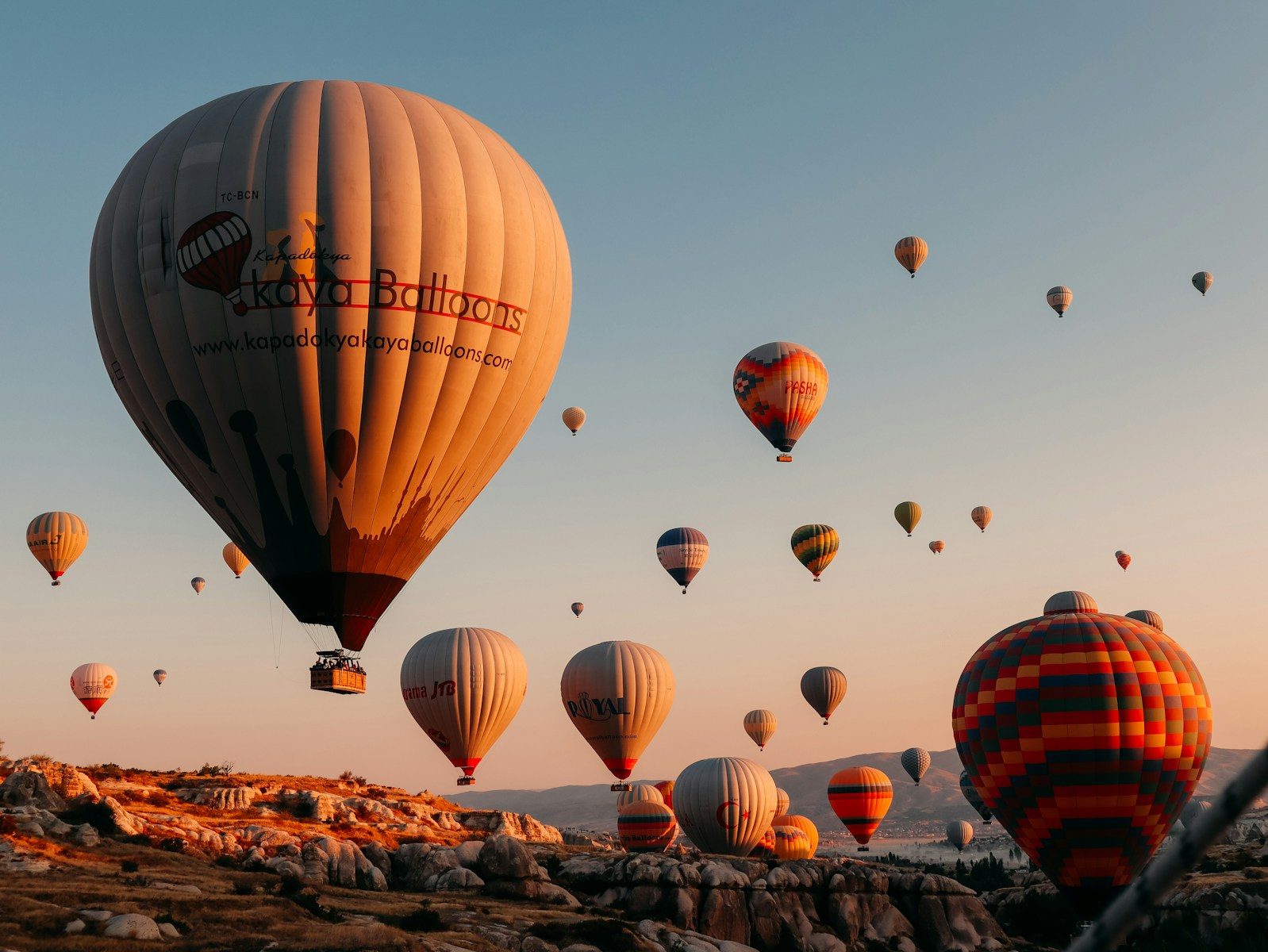
Best Turkey Cappadocia Hot Air Balloon Tours 2026: Private or Group Flight Options
Affiliate disclosure: this article contains affiliate links to tour and experience marketplaces such as Viator. If you book through them, Vooygo may earn a commission at no extra cost to you. Nothing here is sponsored, no operator paid to be named, and the widget appears where it does because the flight or tour fits that section — not because of payout.
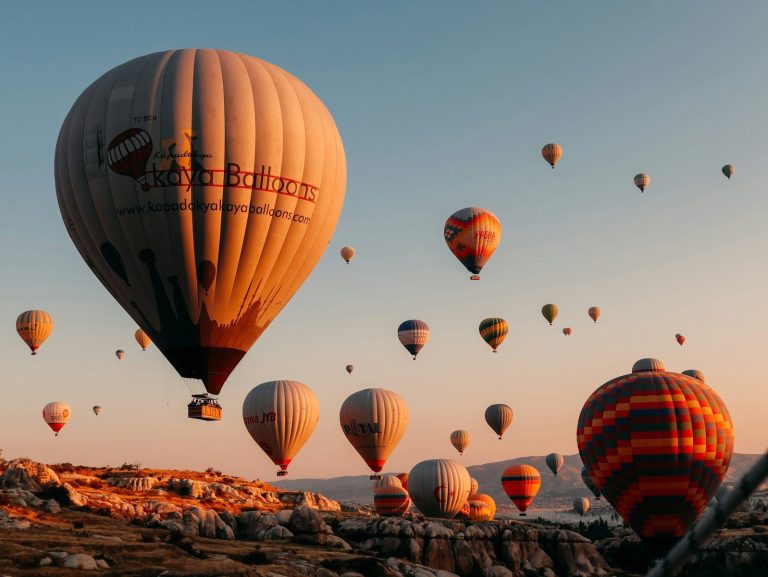
Cappadocia is the place people picture when they say “hot air balloon”, and the picture is accurate: baskets lifting off before sunrise, the fairy chimneys of Göreme dropping away, a hundred silhouettes drifting over valleys that look drawn rather than formed. What the picture does not show is the part that decides whether your morning is memorable or merely expensive — which of the several products sold as Cappadocia hot air balloon tours you actually booked, and what happens on the mornings when nobody flies at all.
The distinction matters because the phrase covers at least three different things. There is a shared basket sold per seat on a large balloon. There is a small-group flight with fewer passengers in the same kind of basket. And there is a private flight, where the balloon flies for your party alone. They take off from the same corridor north of Göreme, they float over the same valleys, and they are priced nothing alike — yet the booking pages often use the same words for all three.
This guide is written for the decision itself. We do not print prices here, because the honest answer to “what does it cost” depends on the morning, the season, the basket and how far ahead you book — and because the live numbers belong in the booking widget and in our separate month-by-month breakdown, both of which we link where they belong. What we can do is explain exactly what changes between the tiers, how the flight morning runs hour by hour, how the weather decision is actually made, what a responsible operator looks like and what the cancellation rules really say — plus the two things this region’s pages rarely cover properly: what is genuinely assessed when the morning flight is cleared or grounded, and the balloon festival, written with the right dates and the right tense.
If you are still choosing between destinations, read the first two sections before anything else — they define the vocabulary the rest of the page uses. If you have already decided to fly and want the practical side, jump to the booking windows, the operator checklist and the plan-B section. And if you are building a longer route around the flight, our 7-day Istanbul to Cappadocia itinerary, the best time to visit Turkey guide and the winter months in Turkey, month by month fit this morning into the rest of a trip.
Three Products Sold Under One Name, and Which One You Booked
The fastest way to be disappointed by a Cappadocia balloon morning is to compare two bookings that were never the same product. Nearly every disappointment story — “we were crammed in”, “we barely flew”, “there was no room to turn around” — traces back to a shared-basket seat being compared with what a private-flight page promised.
A seat in a shared basket. This is the product sold per person. You are one of the passengers in a large balloon, the basket is divided into compartments, and you share the morning with people you have never met. It is the entry point to flying here and, for most travellers, entirely enough: same valley, same light, same altitude band, same launch corridor.
A small-group or comfort flight. Same balloon class, deliberately fewer passengers, usually a longer flight window, and often smoother hotel pickup and a calmer launch routine. The landscape does not change; the amount of personal space and the pace of the morning do.
A private flight. The balloon flies for your party only. You choose the basket size that matches your group, which means no strangers, no compartment sharing, and usually a longer flight window and more flexibility on where the pilot drifts. This is what most people mean when they picture “their” balloon morning, and it is the tier that costs the most.
The fourth, quieter distinction: who is flying you. Two operators can sell the same tier and deliver very different mornings, because the experience is run by a company — the balloon, the pilot, the launch crew, the transfer van, the breakfast — not by the marketplace you paid. That is why the operator checklist further down matters more than the tier name.
Two practical consequences. First, read the unit before the price: per person or per balloon, shared compartment or exclusive basket, standard window or extended one. Second, if the balloon is the reason for the trip, book the product, not the label — a “private” line in a title means nothing if the fine print still sells seats in your basket.
Standard, Comfort, Deluxe: What Actually Changes Inside the Basket
Tier names vary by operator, but underneath them the same handful of variables move. Once you know them, the marketing language stops being confusing, and you can compare any two offers on the same axis.
| What changes | Entry-level shared | Comfort / small group | Private |
|---|---|---|---|
| Who is in the balloon | Mixed group, seats sold individually | Fewer passengers, same balloon class | Your party only |
| Basket space | Compartments shared with strangers | More shoulder room per person | The whole basket |
| Flight window | The standard, shortest window | Usually extended | Longest, and the most flexible route |
| Pickup and launch | Standard hotel pickup, full launch routine | Smoother pickup, smaller crew-to-guest ratio | Pickup timed to your party |
| Route shaping | Standard corridor and altitude | Same corridor, more attention per guest | Pilot can work around your requests |
| Best for | Solo travellers, budget-conscious, first flight | Couples, families, travellers who want room | Honeymooners, photographers, groups who want the balloon to themselves |
What never changes with tier. The valleys are the same valleys, the sunrise is the same sunrise, the launch corridor north of Göreme is shared by everyone, and the safety regime does not loosen for people who paid more. An entry-level seat and a private basket float within sight of each other on a good morning.
What people regret buying. Paying for a longer window and then booking the earliest pickup slot of the day out of habit; buying “private” for one person, when a small-group flight would deliver nearly the same space for a fraction of the commitment; and choosing a tier purely on length without asking how many passengers share the balloon — the single most reliable predictor of how the morning feels.
Where this connects to cost. Tier is only one of the things that moves the figure you eventually pay. The rest — season, demand, how far ahead you book, the morning’s conditions — is set out in the “what moves the price” section, and the real numbers live in the live availability widget on this page and in our month-by-month price breakdown.
Private, Shared or Small Group: The Decision, Made Simple
If you only read one section of this page, read this one. The choice comes down to four questions, and once you answer them honestly the tier picks itself.
| Your situation | The tier that fits | Why |
|---|---|---|
| Travelling alone, watching the budget, flying once | Shared basket, per seat | You get the same valley and light; the trade-off is space, not scenery |
| Couple or family of three to four, want room to move and to photograph | Small group / comfort | Fewer passengers in the same balloon class is the cheapest way to buy space |
| Honeymoon, proposal, anniversary, serious photography, group of friends who want the balloon to themselves | Private | The basket is yours and the pilot can shape the route around you |
| Travelling with someone who has limited mobility, or a nervous flyer | Private or the smallest group offered | Fewer people to manage at boarding, at the landing and in the van |
| One night in Cappadocia and a balloon is the whole point | Whichever tier has live availability — book it first | Weather grounds mornings; one night leaves no room for a rescheduled second attempt |
| Flexible dates, three or more mornings available | Any tier | A grounded morning can usually be rebooked onto the next one, which is where the risk disappears |
Three rules of thumb follow from that.
Buy space, not adjectives. Between two offers at the same tier, the one that tells you how many passengers share the balloon is the one to trust. “Premium”, “deluxe” and “VIP” are not regulated words here; passenger count and flight window are concrete.
Book the flight before the hotel if the balloon is the point. Balloon availability is the scarce thing in peak weeks; hotel rooms are not. Booking the flight first means a grounded morning can be moved to the following day without dragging a non-refundable stay along with it.
Treat one-night stays as a gamble, honestly described. Mornings are grounded often enough in winter and in unsettled spring weather that a single-night visit can realistically end without flying. If the balloon is non-negotiable, give it two or three mornings.
The live widget above shows the flight options with today’s availability and the current figures attached to each — the fastest way to see the real spread between a shared seat and a private basket, rather than a number copied into an article months ago and never updated.
What You Actually See Above Cappadocia
The flight is short, so where the pilot takes you matters. Cappadocia’s balloon corridor runs north of Göreme, which puts the launch fields, the most photographed valleys and the classic landing zones inside one morning’s drift.
The fairy chimneys and the Göreme basin. The rock cones, the carved dwellings and the churches of the Göreme area sit at the centre of the picture. Almost every flight passes over them early, while the light is still low and the shadows are long.
Rose and Red valleys. The band of ridges whose rock genuinely does shift from pink to rust as the sun climbs. This is where the colour photographs are taken, and it is usually the middle third of a flight.
Love Valley and the Çavuşin side. Taller, more improbable pillars, with the old village and its rock-cut buildings below. Flights drift here when the wind allows, which is the honest qualifier: the route follows the morning’s conditions, not a fixed map.
The wider plateau, Uçhisar and beyond. Some flights carry the altitude band higher and let the whole plateau open up — the fortress rock at Uçhisar in the distance, the villages, the orchards and the dry valley systems. Not every morning goes there, but when it does, it is the shot that explains why people come.
The launch itself, which is half the experience. Arriving in the dark to a field of burners firing, half-inflated envelopes standing up out of the grass, crews working by headlamp — it is the part travellers describe most vividly afterwards, and it happens before anyone is airborne.
What you do not see from the air. The underground cities, the pottery workshops of Avanos, the Ihlara canyon — those are ground days, and they are covered in the plan-B section below. No balloon flight replaces them.
A note on photography. The best-known images are shot with the balloon’s own burner light on the fabric of the neighbouring balloons, which means the first twenty minutes and the last ten are the ones worth keeping your hands free for. Tripods are impractical in a basket; a strap, a spare battery and a cloth for the burner condensation matter more.
How Balloon Flights Are Regulated — and How to Check Yours
Cappadocia is not a place where anyone with a balloon can sell you a seat. Commercial ballooning here runs inside a national aviation regime, and knowing the shape of that regime is what turns a vague feeling of “this looks professional” into a checklist you can actually run.
The flight decision is not the operator’s to make. Go/no-go is taken by the civil aviation authority on the morning, for the region as a whole, on the basis of wind at altitude, surface wind, visibility and the forecast trend. When it is a no, it is a no for every commercial balloon that morning — the largest, best-known operator included.
Authorisation, airworthiness, licensing. Operators must hold the authorisations required to fly commercially, their balloons must be registered and maintained under the airworthiness regime, and the pilots must be licensed for commercial passenger flight. This is why the responsible operators publish their credentials and why the unserious ones stay vague.
Passenger insurance. Flights are sold with passenger cover as part of the commercial framework. Ask what happens on a hard landing and how a claim is made; the answer tells you whether the operator actually knows its own coverage.
Baskets, burners and crew discipline. Basket configuration, burner redundancy, the number of crew per balloon at launch and the briefing you get in the field are all observable. You are allowed to look at the equipment and the briefing quality before you get in.
Figures that circulate without a source. Pilot-hour thresholds, minimum ages and heights, daily capacity figures and accident-rate statistics circulate widely in Cappadocia content with conflicting numbers and no traceable official source. We do not repeat them. If a specific figure decides your booking, take it to the operator in writing and ask which authority it comes from — a company that knows its regime will answer precisely.
The check you can run in ten minutes. Confirm the operator publishes its authorisations and insurance position; confirm the cancellation policy in writing before you pay; confirm whether the price you are quoted covers the transfer, the breakfast and the certificate; and confirm the operator’s own name appears on the balloon and the van. Four questions, one morning’s protection.
Why Mornings Are Grounded, and What Happens to Your Booking
Every “is this worth it” conversation about ballooning in Cappadocia eventually runs into cancellations. The useful version of that conversation is not about how often it happens — anyone quoting a percentage at you is quoting somebody else’s marketing — but about how the decision is made, because a traveller who understands the mechanism stops feeling cheated when the morning is called off.
The decision is early, regional and binary. Before sunrise, on the basis of wind at altitude, surface wind and visibility, the aviation authority clears or grounds commercial balloon flying for the area. There is no partial morning: nobody flies a “smaller” version of the flight, and no operator can talk their way into the air.
What you are told, and when. Operators and marketplaces message passengers in the small hours, usually while you are being collected or shortly before. A grounded morning typically arrives as a message rather than a conversation: no flight, here is what happens next.
The two legitimate outcomes. Either a full refund, or a no-charge move to another morning, depending on how you booked and what the operator’s written policy says. Both are standard; neither is generous, and neither should be presented as a favour.
Where bookings go wrong. The problems are almost never the grounding itself — they are: a marketplace policy that refunds only to travel credit; an operator whose reschedule offer expires before your departure date; a private-flight booking made for the last morning of the trip, leaving nothing to move to; and non-refundable hotels booked around a flight that never took off.
What to do about it, practically. Put the flight early in the stay rather than on the last morning. Keep the next morning free of fixed commitments, or at least keep it flexible. Read the cancellation clause before paying and know whether you get money back or a reschedule. Keep the flight on the booking channel’s terms rather than a side arrangement over messaging, so the refund path stays open. And accept the one thing nobody can fix: some trips will not fly.
The silver lining, honestly stated. Grounded mornings do not take the valley away — they move the day you spend in it. The plan-B section below turns a cancelled flight into a full day on the ground, which is where most travellers end up anyway.
What the Flight Morning Actually Looks Like, Hour by Hour
Balloon mornings are long before they are airborne, and knowing the sequence removes most of the anxiety that first-time passengers bring to the field. Times vary with the season and with how far your hotel is from the launch area, so treat the order as the fixed part and the clock as approximate.
Collection in the dark. The van comes while it is still night. This is the part that surprises people who imagined a relaxed sunrise. You are picked up, given the flight paperwork if it was not completed at booking, and driven out of town, usually with a short final stop before the fields.
A light breakfast while the crews work. At or near the launch site there is tea, coffee and something small — the point is not the food but the pause before boarding, during which the crews read the wind and set up.
Inflation. The fans inflate the envelope cold and flat while it lies on the ground; the burners then heat the air until the balloon stands up and pulls. This is when the morning becomes photogenic, and when you find out how cold a Cappadocia dawn actually is between the bursts of heat.
Boarding and briefing. Passengers are placed by weight and by compartment. The pilot briefs the landing position — the handholds, the crouch, the fact that you face the direction of travel — and then the crew releases the lines.
Lift-off and the light. The balloon leaves the ground around first light, which is what the entire schedule is built around: the stable air, the low sun and the long shadows. The first minutes are quiet in a way passengers comment on more than anything else.
The drift. The flight crosses the valleys described above at a height the pilot chooses according to the wind and the traffic, with baskets separated by altitude bands rather than by space on the ground. Balloons nearby are close enough to photograph; the burner bursts of the ones above you are the sound of the morning.
Descent and landing. The pilot looks for a field, gives the landing call, and the chase crew follows by road. Landings in Cappadocia are routinely gentle and occasionally brisk; the briefed position is the reason the second kind is survivable.
The landing celebration and the drive back. A small ceremony and a certificate are traditional, after which the van returns you to your hotel. Most guests are back by mid-morning, which is why a flight and a half-day tour can share the same calendar day.
Choosing an Operator Without Trusting Their Reviews
Reviews are the weakest available signal here, because balloons are sold through marketplaces whose listings blur operator identity: a five-star page can be one excellent balloon and one indifferent one, sold through the same checkout. Screening operators directly takes a few minutes and is worth more than an hour of review-reading.
Start with the name on the balloon. If the marketplace listing does not name the operating company, ask. Then check the operator’s own site, its authorisations and its fleet. A company that operates its own balloons describes them; a reseller does not.
Then the morning logistics. Ask exactly: what time is collection from my hotel and what happens if my hotel is outside the usual pickup area; how many passengers will be in the basket with me; how long is the flight window for the tier I am buying; what is served and where before the flight; and whether the landing certificate and the transfer are included in the figure quoted.
Then the cancellation terms, in writing. Which authority call grounds the flight, whether the outcome is a refund or a reschedule, whether the reschedule can be used on any remaining morning of your stay or only on the next one, and how long a refund takes to arrive. Vague answers here are the clearest warning sign in the entire booking.
Then the equipment, at the field. Basket condition, the briefing you receive, the number of crew attending each balloon, and whether the pilot and the crew appear to be running an established routine rather than improvising. You will see all of this before boarding, and it is legitimate to walk away if it is poor — although on a pre-paid marketplace booking you should expect to go through that channel for any remedy.
Then the comparable tier. Only at this point is length or “premium” worth comparing, because the earlier questions define what you are actually comparing. Two flights at the same tier with different passenger counts are different products, whatever the labels say.
What the network of local operators means for you. Because flights are cleared regionally and grounded regionally, the practical differences between operators are concentrated in logistics, capacity and the way they handle a grounded morning — not in whether they can fly when others cannot. Treat any promise to the contrary as the first reason to book elsewhere.
What Moves the Price of Cappadocia Hot Air Balloon Tours — and Where the Real Figures Live
Ask a search engine what a Cappadocia balloon flight costs and you will be given a number. Ask a traveller who flew last week and you will be given a different one. Both are telling the truth about a different morning, which is why the drivers matter more than any single figure — and why the only numbers worth acting on are the ones attached to a live availability listing.
| Driver | How it moves the figure | What you can do about it |
|---|---|---|
| Tier and basket space | The step from a shared seat to a smaller group, and from a smaller group to a private basket, is the single largest jump | Buy the space you actually need; do not pay for privacy you will not use |
| Season | Spring and autumn weekends, and the festival window, are the weeks when everything is hardest to get | Move the flight to a shoulder date if your trip allows; the landscape does not change |
| Demand on the morning | Availability shrinks as the date approaches, and the remaining seats are not the ones nobody wanted | Book the flight as soon as the trip dates are real, not when packing starts |
| Flight window length | A longer window is a different product, not a discount or a surcharge on the same one | Decide whether you are buying airtime or the experience; for most first flights, the standard window is enough |
| Pickup distance and time of day | Hotels outside the standard pickup area, or collection slots that need an extra vehicle movement, can change the logistics | Stay in Göreme, Uçhisar, Ürgüp or Çavuşin if ballooning is the priority |
| Channel | The same morning sold through a marketplace and bought directly from the operator can differ in flexibility, not only in price | Compare the cancellation terms, not only the number |
Why the numbers move so much. The flights are aviation, not tourism infrastructure: fuel, maintenance, pilot licensing, insurance and crew are fixed costs carried by a limited number of licensed balloons, on a morning that can be cancelled by an authority rather than by the market. Prices are therefore set against capacity and risk, and they respond to demand week by week rather than following a published rate card.
Where the real figures live. Two places, both on this site: the live availability widget on this page, which shows the options and their current figures as you read, and our Cappadocia balloon price by month breakdown, which tracks how the figure behaves across the year. Use the first to book, the second to choose your dates.
A fair-price smell test, without numbers. A quote that includes hotel transfer, in-flight insurance under the operator’s commercial cover, the breakfast, the landing certificate and a written cancellation policy is a complete quote. A quote that is markedly cheaper than everything comparable usually has one of those things missing — most often the transfer, most often on a morning when you need it most.
The tier names you are comparing are explained above, and the live options are one screen up — see how the current Cappadocia balloon options are priced and what availability looks like before you lock dates.
When to Book: Windows, Seasons and the Honest Trade-offs
Timing is where the balloon decision meets weather, and where a few choices change the odds more than any amount of research into operators.
Book the flight before the non-refundable parts of the trip. If the balloon is the point of the Cappadocia leg, the flight should be the first thing fixed and the hotel the second. Everything downstream then bends around the thing you actually came for.
Give the balloon more than one morning. A grounded morning is usually rebookable, but only if you still have mornings left. Two spare dawns turn a cancellation into an inconvenience; a single-night stay turns it into a failed trip.
Use the shoulder weeks. Late spring and early autumn offer the same valleys, the same light and far more availability than the peak summer and festival weeks. If your dates are flexible, this is the cheapest way to improve your odds, in every sense.
Winter is not closed — it is different. Balloon flying continues in winter, with colder, clearer mornings and a higher chance of groundings when weather systems move through. Our winter guide to Cappadocia covers what actually stays open when the snow arrives, and the month-by-month weather guide for Turkey in winter is the reference for temperatures at each point in the season.
Understand what a deposit is buying. Reserving early with a flexible cancellation term buys availability; paying a non-refundable rate early buys a discount in exchange for carrying the weather risk yourself. Neither is wrong — but know which one you are doing.
The booking sequence that works. Fix the flight for the second morning of your stay if you can; keep the first morning free as a buffer; book the hotel with flexible cancellation if your dates are still soft; and add the ground days after the flight is confirmed rather than before. Our 10-day Turkey itinerary places the Cappadocia mornings inside a longer route if the rest of the trip is still open.
The Balloon Festival: What Happened and What Comes Next
Cappadocia’s balloon festival is the one part of this subject where most pages on the internet are now out of date or wrong, so here is the record with its dates attached.
| Item | Detail | Source |
|---|---|---|
| Edition | The seventh Cappadocia International Balloon Festival | National news agency and the Ministry of Culture and Tourism |
| Dates | 30 July – 2 August 2026 — this edition has already taken place | Official festival site |
| Scale | 30 special-shape balloons from 10 countries, flying across four days | National news agency and the Ministry of Culture and Tourism |
| The rest of the sky | 156 commercial balloons operate over the region on a normal flying day | Same official reporting |
| Next edition | Not yet announced | Official festival site — check there for dates |
Table sources: the festival’s official site (balonfest.com) and the national news agency with the Ministry of Culture and Tourism, checked in early October 2026. The 2026 edition has already taken place.
What the festival week means for a normal flight. During the edition, the region fills with visiting balloons, crews and photographers, hotel availability tightens and flights sell out further ahead. If you want to be in the air during a festival window, treat it as a peak week and book well in advance — and be aware that the special-shape balloons are largely a spectacle flown by invited teams, not a product you buy a seat on.
What to do with the dates. The 2026 edition is now history; writing “the festival runs from 30 July to 2 August” in the present tense is a sign of a page that has not been updated. For the next edition, the honest position is that no date has been announced yet, and the historical pattern places it in the window from late July into early August. The festival’s official site is the only place where a confirmed date will appear first.
Two claims that circulate without a source. That the festival offers “free viewing” from the ground and that tickets cost a specific amount are both repeated widely and neither is supported by an official source we could verify. Ground-level watching is covered below, described by where the balloons actually are rather than by a ticket claim.
Watching the Balloons From the Ground
Flying is only one way to spend a Cappadocia sunrise, and on a grounded morning it is the only option — which is exactly why the ground plan deserves its own section rather than a footnote.
Göreme’s Sunrise Point. The hill on the edge of Göreme is where the town’s own population goes for the sunrise, and it looks straight down the launch corridor. Arrive early: the balloon field is busiest in the half hour around lift-off, and the hill fills with people in the same half hour.
Red and Rose valley trails. Walking into the valleys as the balloons rise above the ridges puts you below the flight path rather than beside it, with the low light coming through the rock. It is the most photogenic option that costs nothing but an early alarm.
Love Valley and the Çavuşin road. The pillars and the old rock-cut village, with the balloons crossing overhead on the mornings when the wind sends them that way. A short drive from Göreme and often far less crowded than the viewpoint above the town.
Hotel terraces in Göreme, Uçhisar and Ürgüp. The simplest option, and the reason so many cave hotels market their roof: on a flying morning the sky above those terraces fills with balloons, and a cup of tea on a terrace is a legitimate way to watch the whole thing.
Uçhisar fortress and the high ground. For the widest view — the plateau, the valleys and the balloons distributed across them — the high ground around Uçhisar gives the perspective that the launch fields themselves cannot.
What to bring, and what to expect. It is cold before sunrise in every season, and the temperature does not move until well after the balloons are up. Layers, something for the wind, and a lens longer than you think you need: the balloons that look close are further away than they appear.
If your flight was grounded, watching still works. A grounded morning means no commercial balloons in the region — not a smaller show. Ground watching and flying on the same morning are alternatives, not add-ons, and a rescheduled flight gives you both across two days.
If Your Morning Is Grounded: Building the Plan-B Day
A grounded morning leaves you in Cappadocia with a free day, which is a better outcome than it sounds. The region’s ground days are genuinely good, and they are the part most short itineraries skip.
The Red Tour — the classic northern circuit. Göreme’s rock-cut churches and the open-air museum, the Devrent valley’s animal-shaped rocks, the Uçhisar fortress, Paşabağ and the pottery workshops of Avanos. It covers the landscape you saw from the air from inside it, which sounds redundant until you do it.
The Green Tour — the southern day. The underground cities at Derinkuyu or Kaymaklı, the Ihlara valley walk along the river, and the Selime monastery carved into the rock above it. This is the day that explains the region’s history rather than its geology.
Underground cities on their own. If tunnels and carved chambers are the interest, a dedicated half-day at Derinkuyu or Kaymaklı is more satisfying than squeezing them into a wider tour.
ATV and off-road through the valleys. A dusty, fast way to cover ground the tours cannot reach, usually timed for late afternoon and the golden light that follows it. Not a substitute for a balloon morning, but the closest thing on wheels.
Horseback in the valley system. Slower, quieter, and often the best-value way to see Red and Rose valleys from the inside, with a route that ends as the light turns.
A private day tour, built for your day. When a flight has been cancelled and the next morning is still uncertain, a private day tour is the flexible answer: the itinerary can absorb a reschedule, and the day is not tied to a bus full of fixed stops.
Cooking, crafts and the slower options. A Cappadocia cooking class, a pottery session in Avanos, or a hamam afternoon are the low-effort options for a day that started at four in the morning and does not need another early start.
The widget above lists the ground tours for exactly this situation: a morning that did not fly and a day that still needs filling. If you would rather browse the day options in one place, compare the Cappadocia tours and experiences currently on offer — flights, day tours and the combinations that pair the two.
Who Should Skip a Cappadocia Hot Air Balloon Tour — and What to Do Instead
A balloon flight is not for everyone, and the honest version of this advice says so.
Travellers with limited mobility. Boarding requires stepping into a basket over the side and crouching for landing, and the field is uneven ground in the dark. Some operators accommodate more than others, and a private basket is the version to ask about first — but if the boarding is not physically workable, the ground viewpoints deliver the picture.
Travellers with a serious fear of heights. A basket with no doors and a burn over your head is not the place to test a phobia. The sunrise viewpoint and a valley walk give you the same landscape and the same light with both feet on rock.
Travellers with medical conditions that flying or a hard landing could aggravate. Ask the operator and your own doctor before booking; operators apply their own medical policies, and this is not a decision to make from a booking page.
Families with very small children. Operators apply their own rules on age and on who may fly, and those rules exist for landing safety rather than for administration. If you are travelling with young children, ask the operator directly before paying.
Travellers on a tight schedule with a same-day connection. A late landing or a delayed return to the hotel is unusual but possible, and a flight morning is a poor place to also be catching a mid-morning departure from Kayseri or Nevşehir.
Travellers who would rather spend the money elsewhere. With a fixed budget and a short trip, the balloon is a large share of the total. Our best time to visit Turkey guide puts the season question in context; if the balloon loses that comparison, the trip is still the trip, and Cappadocia on the ground is not the consolation prize. Our Turkey trip cost breakdown shows where a balloon morning sits inside a wider budget, and the 10-day Turkey itinerary is the route to build if the flight is one highlight among several.
FAQ: Cappadocia Hot Air Balloon Tours
You can check how the current Cappadocia hot air balloon tours compare in live availability — and what the options cost on your dates — through the widget above, or browse the same options in one list here: see live Cappadocia balloon availability and current options.
How long does a Cappadocia hot air balloon flight last?
The airborne part depends on the tier you buy: the standard shared flight is the shortest window, comfort and small-group flights are extended, and private flights usually fly the longest. Around that sits roughly half a morning of logistics — collection in the dark, the field, inflation, the landing and the drive back — which is why the whole experience, not the flight alone, is what you should plan your day around.
Is a private balloon flight worth the extra over a shared seat?
It depends on what you are buying it for. Private buys exclusivity, the whole basket and a route the pilot can shape around you; it does not buy a different valley or a better sunrise. For honeymoons, proposals and photographers the difference is real. For a solo traveller who simply wants to fly, the shared seat delivers the same landscape.
What actually happens if my flight is cancelled for weather?
The aviation authority grounds commercial balloon flying for the region on that morning, and no operator can override it. Your booking is then either refunded in full or moved to another morning at no extra charge, depending on the terms of the channel you booked through. Read that clause before you pay — the mechanism is standard, but the flexibility is not.
Can I book a Cappadocia hot air balloon tour the day before?
Sometimes, and never reliably. Availability in peak weeks is thin, and the seats left at short notice are rarely the tiers you would have chosen. If the flight matters to your trip, book it as soon as your dates are fixed; if you are flexible, there is usually something available outside the peak weeks.
Is flying safe for children, older passengers or pregnant travellers?
Operators apply their own policies on who may fly, and those policies reflect landing safety rather than marketing. Ask the operator directly, in writing, before you pay, and describe your situation rather than asking a general question. The age and height figures that circulate online vary by operator and by source, so treat any single number you read as a claim to be checked with the company flying you.
Should I choose a small-group flight or a full shared basket?
Choose the smallest group your budget allows if space matters to you, because passenger count is the most reliable predictor of how the morning feels. The balloon class, the corridor and the sunrise are the same; the difference is how many people are standing in the basket with you.
What should I wear and bring on the flight morning?
Layers, flat shoes, and more warmth than the temperature suggests — the field is cold before sunrise and the burner heat does not reach the passengers. Bring a camera with a strap rather than a tripod, and leave anything you cannot hold onto behind at the hotel.
Do I book the balloon flight before or after my hotel?
Before, if the balloon is why you came. Flight availability is the scarce resource in Cappadocia; hotel rooms are not. Booking the flight first also protects you when a morning is grounded, because the reschedule does not drag a non-refundable stay with it.
Where can I watch the balloons if I do not want to fly?
From Göreme’s sunrise viewpoint, from the trails in Red and Rose valleys, from the road towards Çavuşin and Love Valley, from the high ground around Uçhisar, and from the terrace of almost any cave hotel in the region. Watching and flying are alternatives on the same morning rather than two things you can do together.
When is the Cappadocia balloon festival, and does it change anything for normal flights?
The seventh edition took place from 30 July to 2 August 2026, with 30 special-shape balloons from 10 countries alongside the 156 commercial balloons that operate over the region on a normal flying day. The next edition has not been announced; the official festival site will publish it first. During a festival week, expect tighter availability and book further ahead, and note that the special-shape balloons are a spectacle rather than a product you buy a seat on.
Final Thoughts
The balloon morning in Cappadocia is one of the few travel experiences that survives its own hype, and the reason is simple: nothing else puts you in that landscape, at that hour, with that light. What separates a good morning from a frustrating one is not the balloon. It is whether you understood the tier you bought, whether you booked it early enough in your stay to survive a grounded morning, and whether the operator you chose runs a real flight operation rather than a checkout page.
Get those three things right and the rest is weather and luck, which is the honest share of any flight anywhere. Give yourself more than one morning, book the flight before the non-refundable parts of the trip, and treat a cancelled flight as the day you spend inside the landscape instead of above it.
If this morning is one stop on a bigger route, our 7-day Istanbul to Cappadocia itinerary builds the rest of the leg around it, and the winter version of Cappadocia, with its cancellations and its quiet is the honest picture for the cold months. When you move on to Istanbul, the spots locals keep to themselves and our complete Istanbul guide cover the days the balloons do not. And when you are ready to compare the real options for your dates, browse the Cappadocia flights and tours available now — the live Cappadocia balloon options show what the morning actually costs on the dates you are considering.
Plan Cappadocia hot air balloon tours around two things you control: fly early in your stay, keep a spare dawn, and let the mornings you cannot control decide only how many times you get to watch the sky fill up — not whether you see it at all.