New Year in Istanbul 2026/2027: Fireworks, Parties & What to Book
Affiliate disclosure: this article contains affiliate links to tour and experience marketplaces such as Viator and GetYourGuide. If you book through them, Vooygo may earn a commission at no extra cost to you. Nothing here is sponsored, no operator paid to be named, and the widget appears where it does because the activity fits the section — not because of payout. Where a figure could not be verified, we say so instead of estimating.
New Year in Istanbul is not one event. It is a city of more than sixteen million people deciding, individually, how to spend one night — and the result looks nothing like the postcard. There is no single official show that the whole city watches, no central square where everyone gathers, and no ticket that unlocks the evening. What exists instead is a Bosphorus that becomes the stage, a few hundred boats that sell the best seats on it, a restaurant and hotel industry that repackages itself for one night, and a majority of residents who quietly celebrate at home with family and switch on the television at midnight.
That gap between the postcard and the reality is exactly what this guide is about. We answer the questions travellers actually ask before booking: where the fireworks are visible from and whether they will happen at all; which viewpoints are free and which are traps; how Bosphorus dinner cruises are sold and what is genuinely included; how boat parties differ from dinner cruises; what a hotel gala or a Turkish night show gives you that a cruise does not; why the same evening can cost wildly different amounts; and what Istanbul looks like the next morning, when the city is quiet and most of it is closed.
If you are still deciding whether the trip is worth it, read the next two sections first — they set the tone for everything else. If you have already booked and want the practical side, jump to the booking timeline, the transport section and the New Year’s Day guide. And if you want the rest of the city rather than this one night, our complete things to do in Istanbul guide and the hidden Istanbul spots locals keep for themselves cover the other three hundred and sixty-four days.
How to read the numbers here: the climate figures below are December normals from the Turkish State Meteorological Service, as carried in the published city climate tables; the sunrise and sunset times are computed for Istanbul’s coordinates at Türkiye’s fixed UTC+3; and the transport details come from the Istanbul municipality’s own New Year announcements. Every figure is labelled with its source and the date we retrieved it, and where nothing public exists — most importantly, whether a fireworks display will be staged on 31 December 2026 — we say so plainly instead of guessing.
What New Year in Istanbul Actually Looks Like on the Night
The first thing to understand is that New Year’s Eve in Istanbul is a night out, not a city-wide ceremony. Türkiye marks 1 January as a public holiday, and the run-up to it is a working day for most people. That shapes everything: offices close in the afternoon, families gather for a long dinner at home, and the street party is something a minority of the city — plus most of its visitors — chooses to do.
There are, roughly, three overlapping Istanbuls on 31 December.
The residential Istanbul. This is the largest one and the one you will never see from a hotel window. Millions of households eat at home, watch a televised countdown, and go to bed shortly after midnight. Many neighbourhoods are genuinely quiet by one in the morning. If your image of New Year is Taksim Square packed shoulder to shoulder until dawn, that image is out of date — the big public gatherings that once defined the night have been scaled back, and the crowds now concentrate in specific districts rather than across the centre.
The nightlife Istanbul. Beyoğlu, Beşiktaş, Nişantaşı, Kadıköy and the Bosphorus waterfront fill with people who want a proper night out. İstiklal Avenue and the streets running off it are busy from late evening; restaurants and meyhanes in Beyoğlu and Kadıköy run special New Year menus; live-music venues sell fixed-price packages. This is where the energy is if you want streets rather than a table.
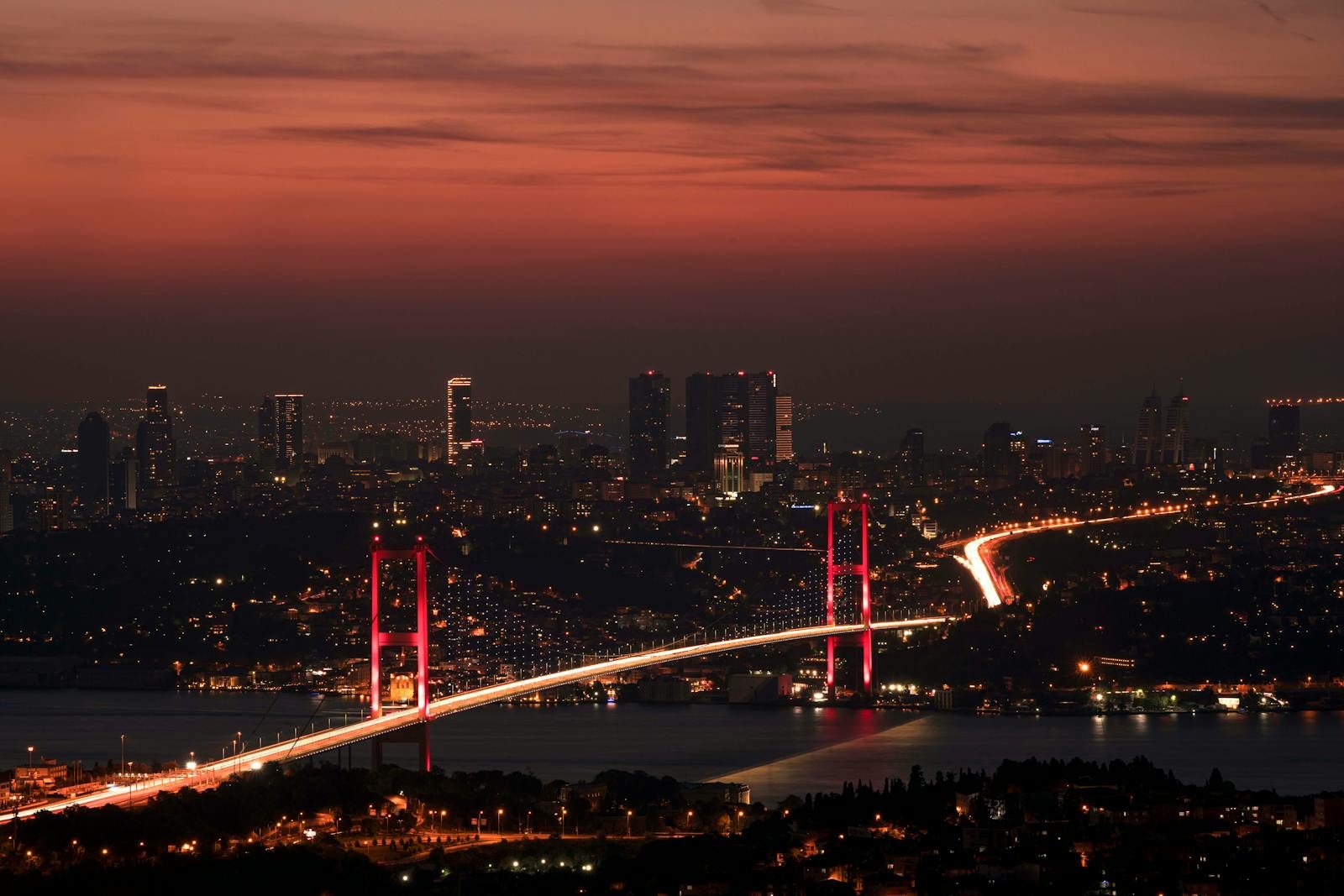
The waterfront Istanbul. The Bosphorus is where the city’s New Year is really staged — the boats, the illuminated bridges, the reflections on the water, and, when it happens, the fireworks. Almost everything people travel to Istanbul for on this night happens on or next to the strait.
Two practical consequences follow from this.
First, nothing is free except the view. Standing on a public waterfront costs nothing; everything else — a table, a deck, a seat at a show — is a paid, pre-booked product that sells out. Second, the “party city” reputation oversells the streets and undersells the water. If you arrive expecting a free, spontaneous, city-wide celebration, you will be disappointed. If you plan around a specific place to be at midnight, Istanbul delivers something most cities cannot: a table on the water, with two continents lit up on either side.
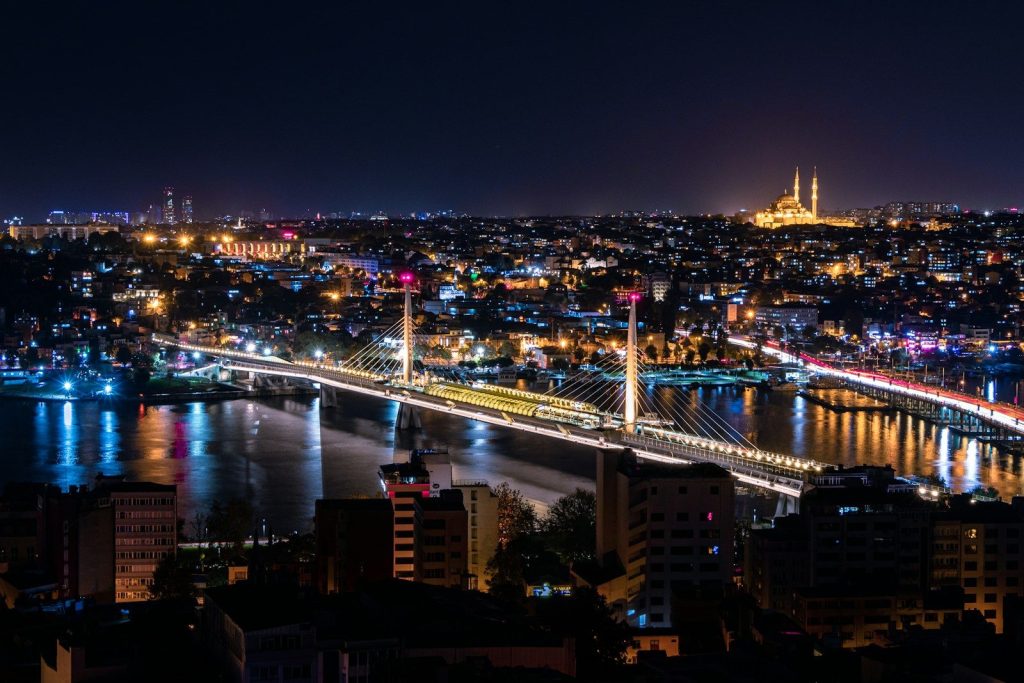
One more honest note before you plan. Istanbul’s most famous New Year imagery is the fireworks over the strait, and that is also the single least predictable element of the night. We deal with it properly in the next section — including why you should plan a night that works even if the sky stays empty.
The Fireworks: Who Sets Them Off, and Where They Are Visible From
Start with the honest version, because it is the single most useful thing in this guide: there is no permanently scheduled, publicly guaranteed New Year fireworks display in Istanbul. The displays you have seen in photographs were staged by different organisers in different years — municipal authorities, sponsors, and in some years private events — and the arrangements are made or changed close to the date. Some years the strait has a large display; some years the celebration is smaller and more distributed. Nothing about the arrangement is published a year ahead, and no operator can honestly promise you one.
That is not a reason to skip the night. It is a reason to plan the evening so that the fireworks are a bonus rather than the whole point.
Why the Bosphorus is the stage. If a display is staged, it is almost always over the strait, launched from barges or from the shoreline between the two bridges, because that is the one place where both the European and the Asian side can see it and where a large crowd can gather on public ground without blocking the city. The geography does the work: the channel is narrow, the hills rise on both sides, and the water carries the light. Any display is therefore visible from a very wide band of shoreline — the whole point of staging it there.
The shape of the night. Istanbul does not do early fireworks. The countdown is at midnight local time, and anything staged happens within the first minutes of 1 January 2027. By then the city’s network has been running extra services for hours, so the real question is not “when do the fireworks start” but “where do I want to be standing or sitting at five minutes to midnight.”
What you can actually rely on. Even in a year with no large public display, three things reliably light up the strait on the night: the two Bosphorus bridges, which are illuminated as a matter of course; the shoreline buildings and mosques on both banks, which are floodlit; and the hundreds of boats, which carry their own lights and, on many cruises, their own small on-board celebration. A midnight on the water with the bridges lit above you is a genuinely spectacular experience whether or not anyone launches a shell.
How to think about the probability. Treat a large public display exactly as a weather-dependent bonus. It cannot be booked, it cannot be confirmed in advance, and no honest operator will guarantee it. What you can book is your position — a table, a deck, a spot on the waterfront — and a position on the Bosphorus is worth having regardless, because that is where the night’s atmosphere, the lit bridges and the sheer volume of celebrating boats are concentrated.
If your trip exists only because you want to see a big fireworks show, build a fallback into the plan: choose a viewpoint or a boat that would still be worth the evening without one. The three sections that follow are organised exactly that way.
Best Free Viewpoints for the Fireworks
If a display happens, it happens over the strait, which means the best free seats are anywhere with a clear north-facing view of the water around the bridges. These are public spaces, they cost nothing, and on the night they fill up. Arrive early, expect to stand, and dress for the wind off the water — the single most common mistake on this night is underdressing for a shoreline that feels several degrees colder than the city behind it.
Ortaköy Square and the mosque waterfront (European side). This is the classic address for the night: a public square and promenade right under the first Bosphorus bridge, with the illuminated bridge filling the sky and the water directly in front of you. It is also the most crowded option in the city, and it is where you will find the most noise, the most street food and the longest wait for a taxi afterwards. Come by metro and tram, not by car. If you want the “Istanbul New Year” photograph, this is where it is taken — and if you want a calm evening, this is where it is not.
Beşiktaş and the Çırağan waterfront (European side). Ten minutes’ walk south of Ortaköy, Beşiktaş is a working district with ferry terminals, cafés and a long waterfront promenade that looks north up the strait. It is less crowded than Ortaköy and easier to reach, with a metro terminus and ferry piers in the same place. The view is slightly more sideways than Ortaköy’s, which in practice means you see more of the strait and less of the underside of the bridge.
Üsküdar and the Salacak promenade (Asian side). The Asian shore is where locals who know the city go, and for good reason: from Üsküdar and the Salacak waterfront you look straight across at the historic skyline, with the water in between and the bridges to your north. The crowd is smaller, the atmosphere more family-oriented, and the view arguably better than anything on the European side. The trade-off is that you are watching the show from across the water rather than under it, and getting home afterwards means crossing the strait.
Kadıköy and Moda (Asian side). For a night that is more bar-and-restaurant than standing-on-a-wall, Kadıköy is the Asian side’s answer to Beyoğlu: busy streets, plenty of places with special menus, and the Moda shoreline a short walk away for the midnight view. It suits travellers who want a normal, lively neighbourhood evening with the option of a water view at midnight rather than an all-night vigil at a railing.
Çamlıca Hill (Asian side). The highest point in the city, with the largest mosque in Türkiye on top, gives the widest panorama of the strait, the bridges and both continents. It is the best overview in Istanbul and a superb place to spend dusk on 31 December. What it is not is close: a display over the water, seen from Çamlıca, is distant and small, and the site is exposed and cold. Go for the view, not for the fireworks.
Two viewpoint traps worth naming. The first is assuming that any waterfront restaurant equals a view — many “Bosphorus view” tables face the wrong way or sit behind a glass wall, and a table bought for the view can easily end up showing you a reflection. The second is assuming that bridges and tunnels are walkable. The Bosphorus bridges are closed to pedestrians and the Eurasia tunnel is not for people; the strait is crossed by ferry, metro or road bridge, not on foot.
Getting to a viewpoint without a car. On this night the metro network is the only transport you can plan around, and Istanbul’s operator schedules extended service specifically for it — the details are in the transport section below. The rule of thumb is simple: pick a viewpoint that sits on a metro, tram or ferry line, because the roads around the waterfront are the first thing to become unusable.
Bosphorus Dinner Cruises on New Year’s Eve
This is the product most visitors actually buy for the night, and it is worth understanding exactly what it is before you compare any two of them.
What a New Year dinner cruise is. A boat leaves a central pier in the late evening, sails a stretch of the strait, serves a fixed dinner at a reserved table, and returns after midnight. Between dinner and midnight there is a programme: live music, a DJ, often a folk-dance or whirling-dervish performance, sometimes a floor show. The boat is decorated, the bridges are lit, and the countdown happens on board with the rest of the passengers. In substance it is a floating dinner-and-show with the best possible backdrop, and for a first visit it solves three problems at once: dinner, a seat, and a guaranteed position on the water at midnight.
How they are sold. Two structures dominate. The fixed-programme dinner cruise sells you a table and a night: you choose a category, sit where the category puts you, and the show runs to a schedule. The party-boat or club-cruise sells you access rather than a table: less food, more music, standing or lounge seating, and a younger, louder crowd. Almost every operator sells by tier rather than by one flat price — the tiers sit in a heavy-to-light order that usually reflects only two things: where on the boat you sit, and what is poured at your table.
What is normally included, and what is not. Dinner, the on-board entertainment, and the cruise itself are standard. Window or deck access, a private table, and a premium drinks package are the usual paid upgrades. Ground transfers are sometimes included and sometimes sold separately — always check, because on this night a transfer is not a convenience, it is the difference between arriving and not. Two exclusions to look for specifically: drinks outside the included list, and photography or souvenir extras that get added on board.
The tiers, in plain language. Think of the choice as three positions rather than three prices. Entry tier is a table on a lower or inner deck with the standard menu — you get the night, the music and the view whenever you walk out, but not from your seat. Comfort tier moves you to a window or a better-positioned table on an upper deck, with a longer drinks list and often the better sightline to the bridges. Deluxe or private tier buys a table for your group alone, the front-facing position, and usually a more generous menu — the version for a proposal, an anniversary or a celebration where the table itself is the point.
How to choose between two boats. Ignore the adjectives and ask five questions instead: Is the pier central and metro-reachable? Does the description say window or deck access, or only “Bosphorus view”? Is the transfer included? What exactly is included in the drinks, and is there a limit? And can you cancel if the weather turns the sailing into a harbour crawl? The answers separate the good operators from the resellers, and none of them depend on the price.
When the weather intervenes. A strait that is calm in July can be genuinely rough in late December, and the sea state, not the rain, is what decides whether a boat sails its full route or stays in sheltered water. Reputable operators publish what happens if the programme is cut short. Ask before you book, and treat a vague answer as an answer.
For the live, date-specific availability of Bosphorus dinner cruises on and around 31 December, this is the place to check — the widget above carries current departure options rather than a frozen list we would have to keep updating. If you would rather compare the classic dinner-cruise format directly, the Bosphorus dinner cruise options with live availability are here.

Boat Parties and Club Nights on the Water
If a dinner cruise is a floating restaurant with a show, a party boat is a floating nightclub, and the two attract different people. On a Bosphorus New Year cruise the food is the anchor and the music supports it. On a boat party the music is the product: a DJ, a dance floor, standing or lounge seating, drinks at a bar, and a crowd that has come to be loud. Food, if there is any, is incidental — snacks, a buffet that nobody talks about afterwards, or nothing at all.
How boat parties are sold. Almost always as access rather than as a table. You buy a place on board — sometimes a standing ticket, sometimes a lounge zone with a minimum spend — and you spend the night on your feet or on a stool. Age restrictions are common: many of these sailings are eighteen-and-over, a few are twenty-one-and-over, and identification is checked at the pier. Dress codes exist but are usually interpreted loosely: smart casual rather than formal, with the practical exception that late December on the Bosphorus is cold and the deck is where everyone wants to be at midnight.
What separates a good party boat from a bad one. Not the line-up, which is usually announced late and often locally famous rather than internationally known, but four unglamorous things: the pier (central and reachable, or a long drive to a fuel dock), the size of the boat (a full deck with a dance floor behaves far better than a packed mid-size boat), the return time (some sail back at a civilised hour, some until the small hours, and some simply dock and stop), and the weather policy (a shell of a boat will hide you from the rain but not from the swell). Ask all four before you pay, and ask what happens to the party if the boat cannot leave its berth — the answer tells you whether the operator is running a business or an event.
The alternative on dry land. Istanbul’s club scene is concentrated in Beyoğlu, Beşiktaş, Nişantaşı and increasingly the Asian side around Kadıköy, and 31 December is the one night of the year when almost every venue sells tickets in advance. A club night costs less than a boat and involves no sea conditions, but it also means no water at midnight — and the water, on this particular night, is the point. Many travellers solve this by taking a party boat for the night itself and keeping the club for the night before or after.
Two honest warnings. First, sea sickness is not a summer problem only: the same strait that is glassy in August can be uncomfortable in December, and a heavy dinner plus a moving boat is a bad combination for some people. Second, “party cruise” is a marketing phrase used for everything from a genuine club on water to a dinner cruise with a DJ between courses. Read what the boarding time, the food and the return time actually say.
If you would rather compare the plain Bosphorus cruise format against the party version, the classic Bosphorus cruise options are listed here — and because a boat is the most weather-exposed way to spend the night, it is worth reading the transport section below before you commit to sailing.
Turkish Night Shows, Meyhane Evenings and Live Music
Not everyone wants to be on the water, and not everyone wants a dance floor. The land-based alternatives for New Year’s Eve in Istanbul are, if anything, more Turkish — and several of them are better value than a cruise.
The Turkish night show. This is the polished, staged version of an evening: a fixed menu at a large venue, a programme of folk dance, belly dance, live music and often a whirling dervish performance, sometimes with the dervish segment reduced to a demonstration rather than a full ceremony. It is designed for visitors, it is unashamedly a show, and it works well for groups and for anyone who wants a single evening that covers food, music and spectacle in one booking. The scheduling is fixed, the venue is indoors, and the weather cannot ruin it. This is the format to look at if you want the evening to be reliably a performance.
The meyhane evening. The opposite approach, and for many travellers the better one. A meyhane is a Turkish tavern: small tables, mezze served in waves, rakı, and live fasıl music that is often played by a small ensemble a few metres from your table. It is a genuinely local evening rather than a show, and on New Year’s Eve the good ones are booked out by regulars well before visitors start looking. Expect a set menu for the night rather than the usual à la carte, expect the music to be loud and communal, and expect the table to be yours for a fixed sitting rather than the whole evening.
Live music, done properly. Istanbul has a serious live-music scene — Turkish rock and pop in Beyoğlu, jazz in a handful of long-established venues, and classical and devotional music in more formal settings. On 31 December most of these venues run special programmes with advance tickets, and the atmosphere is closer to a concert than a party. Book as early as you would for a cruise; the best rooms are small.
Whether to take the dervish seriously. The whirling dervish ceremony (the Sema) is a religious practice as well as a performance, and it exists in two very different forms on this night. A commercial show inserts a short, colourful demonstration between other acts; a proper ceremony happens in a hall and asks for quiet. If the Sema is the reason you are going, look for the ceremony, not the show — and see our guide to Istanbul’s cultural evenings for the format that suits you. For an evening built around a full staged programme with dinner, the Turkish night show options and current availability are here.
One scheduling note. A night show or a meyhane evening usually ends earlier than a club or a boat, which is either a feature or a flaw depending on your plan. If midnight on the water matters to you, do not book a long dinner in the old city and expect to reach the Bosphorus afterwards — cross the city first, then eat.
Hotel Galas and Restaurant Programs
The third way to spend the night is the most expensive and the most comfortable: a hotel gala or a restaurant programme, with a fixed table, a fixed menu and entertainment under one roof.
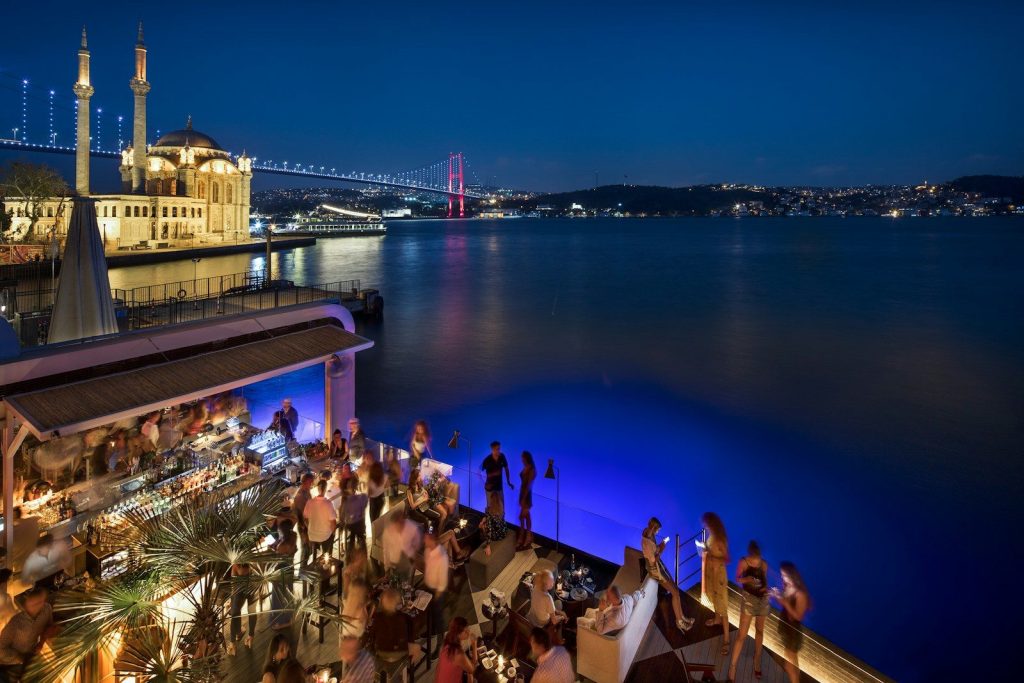
How hotels sell the night. A large hotel with a ballroom, a rooftop terrace or a Bosphorus-facing terrace packages 31 December as an event: a gala dinner, live music or a DJ, a countdown in the room, and often a room-night requirement attached to the ticket. The package is usually sold per person, sometimes per table, and the categories run the familiar ladder — standard seating, premium seating, a private table, a room package with dinner included. The advantage is total: you eat, you celebrate, you sleep upstairs, and you never look at a road or a ferry timetable. The disadvantage is also total: you are inside, the entertainment is generic, and the price is the highest of any option in the city.
How restaurants sell it. A restaurant with a view will run two sittings on New Year’s Eve, an early one (typically for families and for people who want to be somewhere else by midnight) and a late one that runs through the countdown. Both are usually a set menu rather than the normal card, both usually require a deposit or a card guarantee, and the late sitting is the one that sells out first. A rooftop or a terrace facing the water is the premium product; a restaurant in Beyoğlu or Kadıköy with good food but no view is the better-value dinner and the worse place to be at midnight.
What to check before you pay. Five things decide whether a gala or a restaurant table is good value, and none of them is the headline price.
First, the menu, in writing — a set menu for a special night is where kitchens economise. Second, the sitting time, because an early sitting can mean you are being politely moved on before midnight. Third, what the drinks cover, since a “package” that covers food but not drinks behaves very differently in practice. Fourth, the cancellation terms, which on this night are usually stricter than at any other time of year. Fifth, the position, because a table sold as having a Bosphorus view sometimes faces a wall with the water somewhere behind you.
Who this suits. Couples who want the night handled for them, families with children, anyone travelling with people who cannot or will not spend midnight on a cold waterfront, and travellers who would rather pay more for certainty than less for improvisation. If that is you, a hotel gala or a good restaurant’s late sitting is a perfectly rational purchase — just make sure the entertainment is something you actually want to watch for several hours.
Dress code is worth one sentence of its own: on this night Istanbul dresses up more than on any other, and a hotel gala or a rooftop restaurant will enforce it. A jacket is never wasted; a swimsuit, in December, always is.
What a New Year Trip Costs — and Why We Print No Prices
This is the section where most guides hand you a table of numbers, and this is the section where we deliberately do not. Here is the reasoning, because it is more useful than a figure that will be wrong by the time you read it.
The date is fixed, which makes the night a seller’s market. There is exactly one 31 December. Demand on that night is inelastic: people who have decided to be in Istanbul for New Year will pay for a table, a deck or a room, and the supply of the best positions is small. Any figure we printed today would be a snapshot of one operator’s one category on one retrieval date, and it would mislead you about the two hundred other combinations on sale.
What actually drives the difference between two bookings. Five things, and all of them are choices you make rather than prices you find:
- Where you sit. On a boat or in a restaurant, the position is the product: a window, a deck, a front-facing table or a private room costs more than the same food a few metres back. This is the single largest driver.
- What is included. Transfers, drinks, a wider menu, a longer programme. Two listings that look identical can differ by whether a hotel-to-pier transfer is in the price — and on this night a transfer is the difference between arriving and not.
- How the seating is sold. A table for two bought as a whole is a different purchase from two seats in a shared programme, and the same evening can be sold both ways at what look like wildly different rates per person.
- When you buy. Early bookings get the tiers that later buyers cannot, and the cheapest categories are the first to disappear. The price does not fall as the date approaches; the availability does.
- Which currency you pay in and how. Cards, local currency and marketplace bookings all behave differently at the margin, and a booking made in one currency and paid in another can quietly cost more than the headline.
Why we describe tiers instead. Every operator we looked at sells the same night in layers — an entry position, a comfortable position and a premium or private position — and the layers differ mostly in seating and in what is poured. That structure is real and stable, so it is worth understanding; the numbers attached to it are not stable and are not ours to publish. When you want a live figure, the widget in the dinner-cruise section above carries current availability, and the same applies to the marketplace listings for Istanbul tours and experiences.
The wider trip, not just the night. One night does not make a trip budget. Flights, accommodation for the surrounding days, food outside the celebration and getting around the city are the larger part of almost every New Year trip to Türkiye, and they follow ordinary travel economics rather than New Year economics — with the one exception of hotels, where the night itself and the days immediately around it are a peak. For the drivers behind a Turkey budget as a whole, see our breakdown of what a Turkey trip actually costs — the same page that, incidentally, used to be the only place on this site where a New Year query could land, which is why this guide now exists.
A note on tipping and payments. Istanbul runs on cards almost everywhere, and tipping in restaurants and on boats is customary rather than obligatory — a small addition for good service, left in local currency, is normal. That is a habit, not a budget line, and it is the last place you should be surprised on the night.
Booking Timeline: Why Early December Is Already Late
The single most common mistake travellers make about New Year in Istanbul is treating it like any other night in a large city, where a good restaurant will have a table and a boat will have a seat. It will not. The night sells out in an ordered way, and the order is predictable.
The order in which things disappear. The premium positions go first — front tables on boats, rooms with a Bosphorus view, late sittings at restaurants that face the water. Then the mainstream categories of the same products. Then, in the last weeks, whatever remains: early sittings, interior tables, secondary boats, and hotel rooms in districts that are fine but not central. Tickets for the night are not a commodity that gets cheaper as the date nears; they are a finite inventory that gets thinner.
Why early December is already late. By the first days of December, the best categories are typically gone, and you are choosing between what is left rather than between what exists. This matters more in 2026 than in an ordinary year because 31 December 2026 falls mid-week and New Year’s Day 2027 is a Thursday, which turns the surrounding days into a long, obvious break for both domestic and international travellers. If your trip depends on a specific boat, a specific hotel or a specific table, the timeline below is the one to work to.
| When | What to have locked | Why by then |
|---|---|---|
| Ten weeks out | Flights and the hotel itself, if the hotel is part of the plan | Peak-date rooms in the districts you actually want go first; the night is one date in a short break |
| Eight weeks out | The main event — a boat, a gala or a night show, in the category you want | Premium and mid categories of the night’s products are the fastest-selling inventory in the city |
| Six weeks out | The restaurant table for the nights around 31 December, and any show or hamam | Good tables for the whole holiday period, not just the night itself, are committed early |
| Four weeks out | Transfers, airport logistics and the plan for the night’s transport | Late bookings are the ones that end up walking or paying for the most expensive taxi of the year |
| Two weeks out | A fallback for every element above | At this point you are choosing between remainders, and a plan B is worth more than a plan A |
If you are already late. Three moves still work. First, change the product rather than the night: if the boats you wanted are full, look at the land-based options — a night show, a meyhane or a gala — which have different, later inventory curves. Second, change the sitting, not the restaurant: the early sitting is a genuine New Year dinner and is often available when the late one is not. Third, change the district, not the city: Beşiktaş, Üsküdar and Kadıköy hold tables and small boats that the Ortaköy market never shows you.
What genuinely cannot be booked. Be clear about this so you do not pay for something nobody can sell you: the fireworks display itself has no published annual schedule, no operator can guarantee it, and nobody can reserve you a place in a public square. What you can book is your position and your evening. Plan the night so it works without a display, and treat a display as the bonus it is.
The one thing to book last. Your route home. Decide it before you go out — because at one in the morning on 1 January, the difference between a good night and a bad one is knowing which metro line is running and which side of the water you are sleeping on. That is the subject of the next section.
Getting Around on the Night
Everything about 31 December in Istanbul is designed around one reality: the roads stop working long before the party does. The waterfront districts fill, the police close streets around the busiest squares, and the taxis that remain are both scarce and, predictably, expensive. The plan that works is the one built on rails and water.
What the city has done in past years. Istanbul’s municipality has treated New Year as a transport event rather than a normal night. In the most recent New Year period it ran hundreds of extra bus and metrobus trips across the 31 December night and into 1 January — figures reported at the time were in the high hundreds of additional services — kept ten metro lines running around the clock instead of closing, extended the tram and funicular lines until roughly two in the morning, and added ferry sailings on the strait according to demand. On 1 January itself, public transport in Istanbul and several other Turkish cities was free for holders of a personal transport card. National rail services were free for the whole of New Year’s Day under a presidential decree.
Two things about that paragraph matter more than the numbers. First, it is a precedent, not a promise. Those arrangements were announced for the January 2026 holiday, and nothing about the January 2027 schedule has been published at the time of writing. Second, the principle behind it is stable: on this night the city does everything it can to move people by rail and water, and almost nothing to help them move by road.
The night in three phases.
| Phase | What is happening | What to do |
|---|---|---|
| Before midnight | Roads around Ortaköy, Beşiktaş, Beyoğlu and the waterfront fill and close; metro and ferries are busy but running well | Leave early, travel by rail or ferry, and do not plan a taxi to the waterfront |
| The first hours of 1 January | The peak of the night; rail services run late or all night, ferries may be crowded, taxi supply is worst | Stay where you are until the crowd thins, or walk to a metro station rather than hunting for a car |
| After two in the morning | Trams and funiculars stop; the overnight metro lines are what remain; ferry service is effectively over | Know the last crossing and the last metro line before you go out, and decide in advance which side of the water you are sleeping on |
Ferries and the strait. Ferries are the most pleasant way to move on this night and the one with the hardest deadline — service runs late, but it is not a twenty-four-hour network, and missing the last crossing turns a short ride into a long, expensive detour. If you are staying on the Asian side and celebrating on the European side, or the reverse, check the last sailing before you leave the hotel, not at midnight.
Taxis, honestly. Demand on this night is enormous, supply is limited, and the streets around the main squares are closed to vehicles precisely when everyone wants one. Drivers who are working will generally prefer a negotiated fare over the meter, and surge behaviour is the norm rather than an exception in cities on a night like this. The honest advice is not “avoid taxis” but “do not depend on one at the moment of maximum demand” — book a transfer if you need a car, and otherwise take the metro.
What you cannot do. The Bosphorus bridges are closed to pedestrians, and the strait’s road tunnel and rail tunnel are not places to walk. Crossing by foot is not an option; crossing by ferry, metro or one of the bridges in a vehicle is. This matters if you have been looking at a map and assuming the two shores are a short walk apart — they are not.
Arriving and leaving the city. Late December is peak season for the airports as well as the city, and the transfer you book for the return leg is the one most likely to be affected by the night’s aftermath. If your flight is on 1 January, build in more time than you think you need and, if you can, arrange the airport transfer in advance rather than relying on finding a car after the celebration — airport transfer options with live availability are here.
Where to Stay for the Night
Accommodation on 31 December is a decision about which version of the night you want, because the districts do not merely differ in comfort — they differ in what you can walk to at midnight and how you get home afterwards.
Sultanahmet and the old city. The historic peninsula is beautiful, quiet, and the worst-placed part of Istanbul for this particular night. The monuments are here, but the water you will want at midnight is not: the Bosphorus is several kilometres north, and public transport from Sultanahmet to Ortaköy or Beşiktaş on the night means a tram and a metro with crowds in between. Choose it if you are in Istanbul for the city rather than for New Year’s Eve, and if you are happy to take a taxi or a long rail journey to reach the celebration and to come back afterwards.
Beyoğlu and Taksim. The most central option and the loudest: İstiklal Avenue fills on the night, the streets around it are full of restaurants, meyhanes, bars and clubs, and you can spend midnight on foot rather than at a table. You pay for that in noise, in crowd and in the fact that the surrounding streets are exactly where road closures bite hardest. It is the right choice if the night out is the point and the hotel is only for sleeping.
Beşiktaş and Ortaköy. The closest you can stay to the water and the fireworks, and priced accordingly. Ortaköy puts you inside the busiest square in the city on the night, which is either a privilege or a punishment depending on your taste; Beşiktaş is a genuine neighbourhood with a waterfront, ferry piers and a metro terminus, which makes it the more practical half of that pair.
Kadıköy and the Asian side. The best-value and arguably most enjoyable option for a traveller who wants a real neighbourhood rather than a celebration zone: you eat better, you pay less, and the view back across the water to the illuminated European skyline is outstanding. The trade-off is the crossing — you are dependent on the ferries and the metro to reach the European-side action, and the last ferry is the boundary of your night.
Nişantaşı and the newer luxury districts. For travellers who want the hotel to be the event: galas, fine dining and the highest prices. Practical for a gala dinner and a hotel countdown, less so for reaching the waterfront, and the streets around are residential and quiet once the evening ends.
The rule that overrides the district. Stay on the same side of the water as the thing you booked. A table on a European-side boat and a room in Kadıköy is a plan that depends on the last ferry; the reverse is the same problem. Book the crossing into your evening, not into the small hours.
New Year’s Day in Istanbul
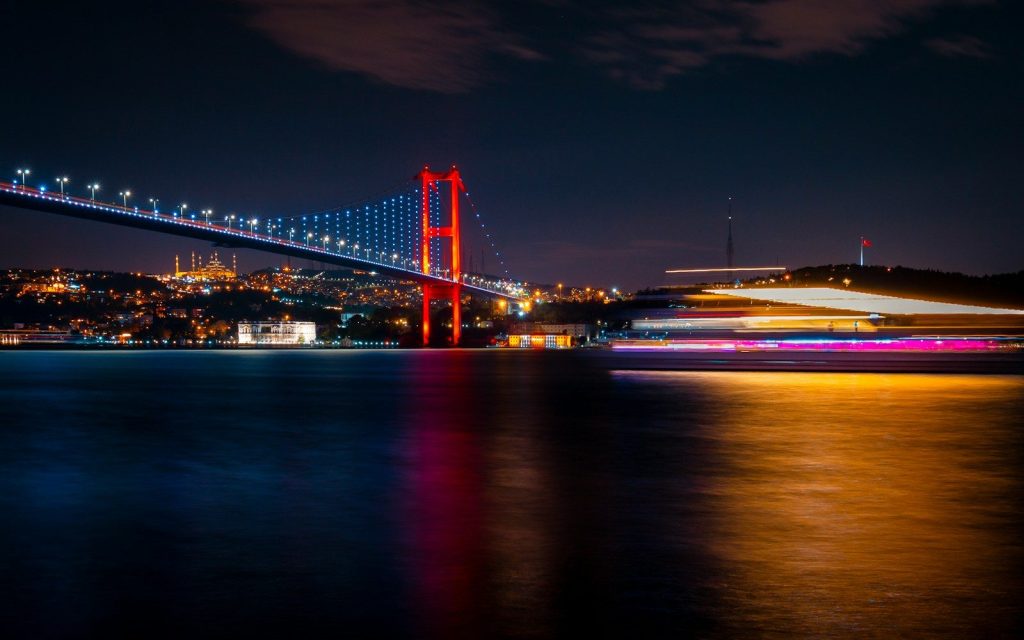
The morning after is the part almost nobody writes about, and it is the part that shapes how the whole trip feels. Expect a city that is quiet in a way Istanbul almost never is, and plan around a shortened day.
What is open, in general terms. The general pattern for a public holiday like 1 January is that offices and banks are closed, many shops open late or not at all, and the big visitor attractions either close or run holiday hours. That is the shape of the day rather than a promise: opening arrangements for 1 January 2027 were not published at the time of writing, and individual museums, monuments and bazaars set their own schedules. Check the operator’s own page for anything you are building the day around — our guide to Istanbul’s museums and skip-the-line tickets covers the main ones and how they are ticketed.
The practical alternative, and what a lot of visitors do on 1 January, is to take a guided old-city tour that handles the ticket and the timing for you:
The traditional Turkish breakfast. If one thing is worth getting up for, it is a long kahvaltı: small plates, cheeses, olives, eggs, bread, tea, spread over an hour and a half and eaten slowly. On 1 January the breakfast places that open at all do a busy trade, and it is the single most Turkish way to start the year. Go late morning, not early — and book if the place has a view.
A hamam, if you can find one open. A traditional bath is the correct remedy after a late night, and the historic hamams in the old city are the classic choice. Holiday hours vary, and the better-known ones work by appointment on a day like this, so it is worth checking ahead rather than walking up.
A ferry ride as sightseeing. The public ferry across the strait is one of the great cheap pleasures of Istanbul in any season, and on New Year’s Day the boats are quiet in the morning and the light is low and long. It is a way to see both shores and the bridges without committing to a tour, and it doubles as transport.
The old city and the bazaars. The historic core is at its most walkable on a holiday morning, precisely because the crowds of the previous night have gone. Covered bazaars are a separate question — they follow holiday schedules and can close on public holidays, so treat any plan centred on shopping as provisional.
One practical warning. Most of what you will want to do on 1 January opens late and closes early, and a city that partied until three in the morning does not run to schedule at nine. Plan one substantial thing — a breakfast, a hamam, a ferry, a single monument — and let the rest of the day be slow. That is what the city is doing too.
Weather and What to Wear in Late December
Istanbul’s winter is milder than most of Türkiye’s interior and colder than most visitors expect, and the thing that decides how the night feels is not the temperature in the city but the wind off the water.
| Istanbul, December normals | Value |
|---|---|
| Average daytime high | 10.7 °C |
| Average night-time low | 5.5 °C |
| Monthly average | 7.9 °C |
| Monthly precipitation | 124.8 mm across about 17.5 days with rain |
| Sunshine | around 62 hours for the month |
Source: Turkish State Meteorological Service (MGM) December normals for Istanbul, as carried in the published city climate tables; retrieved 4 October 2026. Day = average monthly high, night = average monthly low.
| The last day of the year | Value |
|---|---|
| Sunrise, 31 December 2026 | about 08:29 local time |
| Sunset, 31 December 2026 | about 17:45 local time |
Times computed for Istanbul’s coordinates in Türkiye’s fixed UTC+3 offset, using the standard solar-position calculation; accuracy is within about a minute.
What those numbers mean in practice. Averages of ten degrees by day and five or six at night describe a city that is cool rather than freezing, but three things make it feel worse. Rain is frequent — roughly half the month’s days see some — and it arrives with wind. The waterfront is colder than the city by a margin you notice within minutes, because there is nothing between you and the wind coming off the strait. Snow is possible but not the norm: Istanbul does see it in winter, and in some years it sees a lot, but a white New Year is a possibility rather than something to plan on. And with sunset before six in the evening, most of the night happens in the dark.
What to wear. The rule is layers and wind resistance, not bulk. A warm mid-layer and a windproof, water-resistant outer layer will do more than a heavy coat that soaks through. Shoes matter more than anything else: you will be standing on cobbles, on quays and on the deck of a boat, and cold wet feet end the night early. A hat and gloves are not overkill for the hours on a waterfront. If your plan includes a hotel gala or a rooftop restaurant, add the one smart outfit and keep it under the outer layers — Istanbul dresses up on this night, and dress codes are enforced.
The forecast rule. Everything above is a climate average, not a forecast for 31 December 2026. Check a local forecast in the days before you travel, and check the sea state rather than the rain if you have booked a boat, because whether the strait is comfortable is what decides the sailing. For the broader winter picture across Türkiye, including the cities where snow is the point rather than a bonus, see our guide to Turkey in winter by month; and for how December sits inside the year as a whole — crowds, weather and season — our guide to the best time to visit Turkey puts this month in context.
If You’re Not a Party Person
New Year in Istanbul is not a competition, and some of the best nights here belong to people who are not interested in the party at all.
Travelling with children. A family New Year in Istanbul works if you choose a format with a fixed programme, a warm room and a predictable end: an early restaurant sitting, a family-friendly hotel gala with entertainment, or a night show where the entertainment is on a stage rather than around you. Midnight on a cold waterfront is a hard sell for small children, and a boat that returns after two in the morning is worse. If the countdown matters, watch it from the hotel or the restaurant and treat midnight as a ten-minute event, not the whole evening. Several Istanbul hotels run family programmes on the night precisely because domestic families want exactly that — and if you are planning a family New Year in Istanbul with kids, the booking logic is the same as everyone else’s: the early sitting and the indoor option sell out slower, but they still sell out.
Travellers who do not drink. Nothing about the night requires alcohol. Dinner cruises and galas sell tiers partly by what is poured, but the food, the music and the view are the substance; a night show, a meyhane with food, or a quiet restaurant with a view all work without a glass. On a boat, ask what the non-drinking option includes rather than paying for a drinks package you will not use.
Couples who want quiet. The best-kept version of the night is a table with a view, a slow dinner, and midnight on a terrace or a quiet stretch of waterfront away from the main squares — Üsküdar and the Asian-side promenades are the answer here, as is any restaurant worth booking two months in advance.
Muslim travellers and anyone preferring to mark the night differently. Türkiye marks 1 January as a public holiday rather than a religious festival, and the night is a secular celebration that nobody is obliged to join. Prayer times, quiet hotels and non-alcoholic venues are all easy to find, particularly outside Beyoğlu.
Anyone who simply wants to be asleep at midnight. Stay somewhere with a view, eat early, and set an alarm for five minutes to midnight. The fireworks, if there are any, are visible from a great many windows — and a warm room beats a cold quay by any measure.
New Year Beyond Istanbul
Istanbul is the obvious place to spend this night, and it is not the only good one. If you are still choosing where to be, the comparison below uses the same December climate normals we used above, from the Turkish State Meteorological Service.
| Istanbul | Cappadocia (Nevşehir) | Antalya | |
|---|---|---|---|
| Average daytime high | 10.7 °C | 6.2 °C | 16.7 °C |
| Average night-time low | 5.5 °C | −1.4 °C | 7.5 °C |
| December precipitation | 124.8 mm over about 17.5 days | 48.4 mm over about 11.8 days | 262.2 mm over about 10 days |
| Sunshine in December | around 62 hours | around 85 hours | around 146 hours |
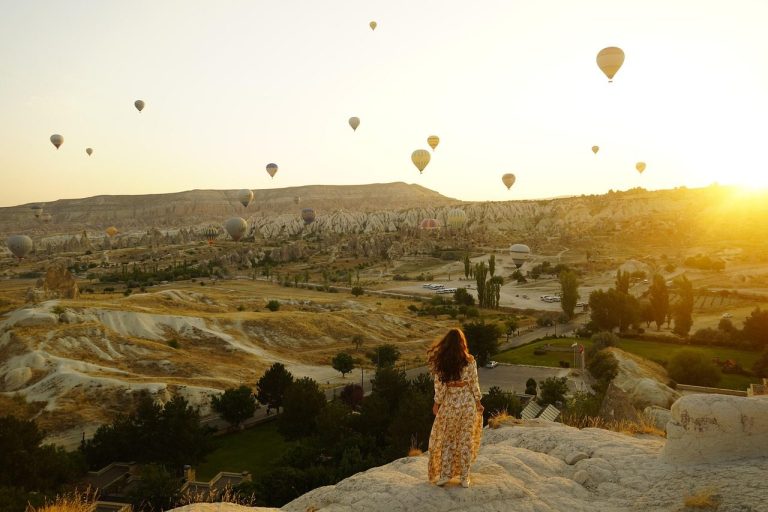
| What the night looks like | A city celebration: boats on the strait, lit bridges, restaurants, clubs and the possibility of a display over the water | A hotel celebration in a snow-covered landscape; the balloons fly at dawn, not at midnight; many businesses are seasonal | A milder, resort-style evening on the coast; the sea is close, the season is quieter, and the celebration is more local |
| Who it suits | Travellers who want the full urban New Year experience and are prepared for crowds and cold | Travellers who want quiet, snow and a spectacular 1 January morning rather than a party | Travellers who want the holiday without the winter, and who do not need midnight on a strait |
Climate source: MGM December normals as carried in the published city climate tables; retrieved 4 October 2026.
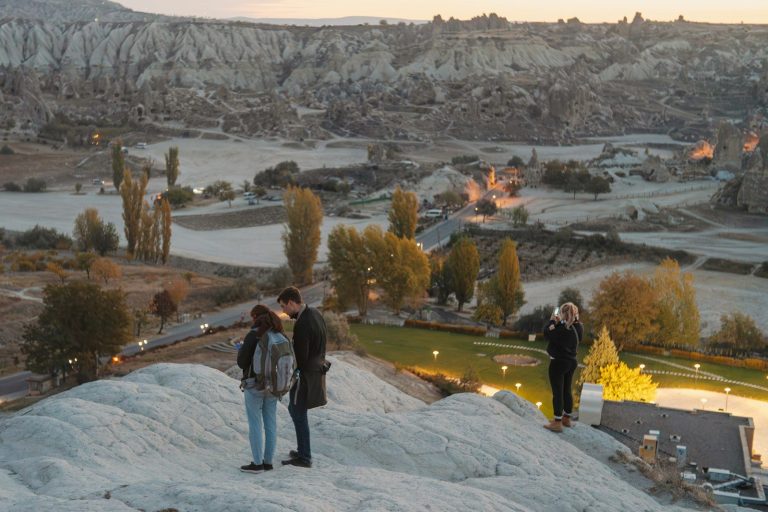
How to choose between them. Istanbul is the only one of the three that offers a genuine big-night city experience, and it is the coldest of the three on the water. Cappadocia in winter is the most beautiful of the three and the least suitable for a midnight party: the landscape is the event, the mornings are the reason to be there, and the cold is serious once the sun is down. Antalya is the mildest and the most relaxed — a coastal New Year rather than an urban one, better for a winter break than for a big celebration. If you are drawn to the snow, read our guide to Cappadocia in winter before you book, because the weather there changes what you can book far more than it does in Istanbul.
FAQ: New Year in Istanbul
Do they celebrate New Year in Istanbul?
Yes. Türkiye marks 1 January as a public holiday, and Istanbul celebrates it as a night out rather than as a single official ceremony. Offices close, families eat at home, and the city’s restaurants, boats, clubs and hotels sell special programmes for the night. It is one of the busiest nights of the year for anything that takes a booking.
What is New Year in Istanbul actually like?
It is three overlapping nights rather than one. There is a residential city that dines at home and watches a televised countdown, a nightlife city that fills Beyoğlu, Beşiktaş and Kadıköy with restaurants and live music, and a waterfront city gathered on and beside the Bosphorus. Almost everything travellers come for happens on or next to the strait — which is why the plan that works is a plan built around the water.
Where are the New Year fireworks in Istanbul?
If a display is staged, it is over the Bosphorus, launched from barges or from the shoreline between the two bridges, because that is the one location visible from both the European and the Asian shore. There is no permanently scheduled public display whose details are published a year in advance, so treat any specific launch point as something that changes from year to year. There is therefore no display anyone can promise you: recent displays have been organised by different sponsors and authorities, and the arrangements are decided or changed close to the date. What is reliable on the night is the illuminated bridges, the floodlit shoreline and the lit boats on the strait.
Where can you watch Istanbul New Year fireworks for free?
Any public spot on the strait with a clear view of the water works, and the classic ones are the Ortaköy waterfront under the first bridge, the Beşiktaş and Çırağan promenades, the Üsküdar and Salacak waterfront on the Asian side, the Kadıköy and Moda shoreline, and Çamlıca Hill for the widest overview. All are free, all fill up early, and all are colder and windier than the city behind them.
Where to celebrate New Year in Istanbul?
The four realistic options are the waterfront (free, crowded, spectacular if a display happens), a Bosphorus dinner cruise or party boat (a seat, a programme and a guaranteed position on the water), a Turkish night show, meyhane or live-music venue (indoors, fixed programme, weatherproof), and a hotel gala or a restaurant’s late sitting (the most comfortable and the most expensive). Almost everyone is choosing between those four, and the right answer depends on whether midnight on the water matters to you more than certainty.
What does an Istanbul New Year dinner cruise include?
Normally dinner at a reserved table, the cruise itself, live music or a DJ, and usually a folk-dance, whirling-dervish or floor show, with the countdown on board. What varies is where you sit, what is poured, whether a hotel transfer is included, and what happens if the sea state shortens the route. Those four questions separate two listings that look identical, which is why we compare the formats rather than the price tags — current Bosphorus dinner cruise options and live availability are here.
Is a Bosphorus New Year cruise worth it?
For a first visit, usually yes, because it solves dinner, seating and a midnight position on the water in one booking — the three hardest things to arrange on the night. It is less obviously worth it if you dislike fixed programmes, if you get seasick, or if you would rather walk a city than sit at a table. In that case a night show or a waterfront restaurant will give you a better night for less.
When should I book for New Year’s Eve in Istanbul?
Earlier than you think. The premium categories of the night’s products — front tables on boats, water-view rooms, late sittings at restaurants facing the strait — are the first to disappear, and by the first week of December you are normally choosing between remainders rather than between options. Flights and hotels come first, the main event next, then the table for the surrounding nights, then transfers. If you are late, change the product, the sitting or the district rather than the city.
What is the Istanbul New Year weather like?
December in Istanbul averages around ten degrees by day and five or six at night, with rain on roughly half the month’s days and around sixty hours of sunshine across the month — mild by Turkish standards but genuinely cold on the water. Sunset on 31 December 2026 falls at about 17:45 local time, so the whole celebration happens in the dark. The wind off the strait is what makes it feel colder than the number suggests.
Does it snow in Istanbul in December?
It can, but it is not the norm. Istanbul sees snow in some winters — occasionally a great deal — but a white New Year is a possibility rather than something to plan a trip around. Rain and wind are far more likely, which is why the packing advice for this night is windproof and water-resistant rather than arctic.
Is a New Year in Istanbul with kids a good idea?
It can be, if you choose the right format. A family New Year in Istanbul works best with a fixed programme, a warm room and a predictable end: an early restaurant sitting, a hotel gala with entertainment, or a night show watched from a table rather than a crowd. Midnight on a cold waterfront is difficult for small children, and a boat that returns in the small hours is harder. Watch the countdown indoors, plan one thing for 1 January, and the trip works well.
How do I get around Istanbul on New Year’s Eve?
By metro, tram and ferry, not by car. In previous years the municipality has run extra bus and metrobus trips, kept ten metro lines open around the clock, extended trams until about two in the morning and added ferry sailings, and free public transport has applied on 1 January — but that was the arrangement for the 2026 holiday and nothing for the 2027 night had been published at the time of writing. The stable part is the principle: rails and water first, and never depend on a taxi at midnight.
What is open in Istanbul on 1 January?
Offices and banks close, many shops open late or not at all, and the big attractions either close or run holiday hours — so check the individual operator before building the day around one. What works well is a long Turkish breakfast, a hamam if you can find one open, a ferry crossing for the light, and a slow walk through the historic core while the rest of the city sleeps in.
What if everything is booked out?
There is almost always a version of the night left. If the boats you wanted are full, look at the land options — a night show, a meyhane or a hotel gala has a different and later inventory curve. If the late sitting is gone, take the early one and move to the waterfront afterwards. If the central districts are full, Beşiktaş, Üsküdar and Kadıköy hold smaller venues and local boats that the main market never shows you. The one thing that cannot be booked is the fireworks themselves, so never build the night around them.
Final Thoughts
New Year in Istanbul rewards the traveller who plans one thing well rather than five things loosely. Decide where you want to be at midnight — a table on the water, a viewpoint on the shore, a show, or a warm room with a window — and build the evening backwards from there. Book the main event early, decide how you are getting home before you go out, and accept that the fireworks display, the one element everyone asks about, is the one element nobody can promise you.
That is not a weakness of the city. The Bosphorus at midnight is already the show: two continents lit on either side, the bridges glowing above the water, and boats full of people who have all decided to spend the same night in the same place. A display, when it comes, is a bonus on top of a scene that exists without it.
So the honest summary of a New Year in Istanbul is this. It is colder than you expect and better than you expect. It is expensive if you buy late and surprisingly reasonable if you plan. The city does not throw one big official party, and it does not need to — it has the water, the lights and the food, and then it hands you the decision about where to stand when the year turns.
If you have read this far, you already know more about the night than most people who will be standing next to you on the quay. Use the sections above to fix the parts you can control, and let the rest be what New Year is supposed to be: a night that turns out slightly differently from the plan, in a city that is very good at that.