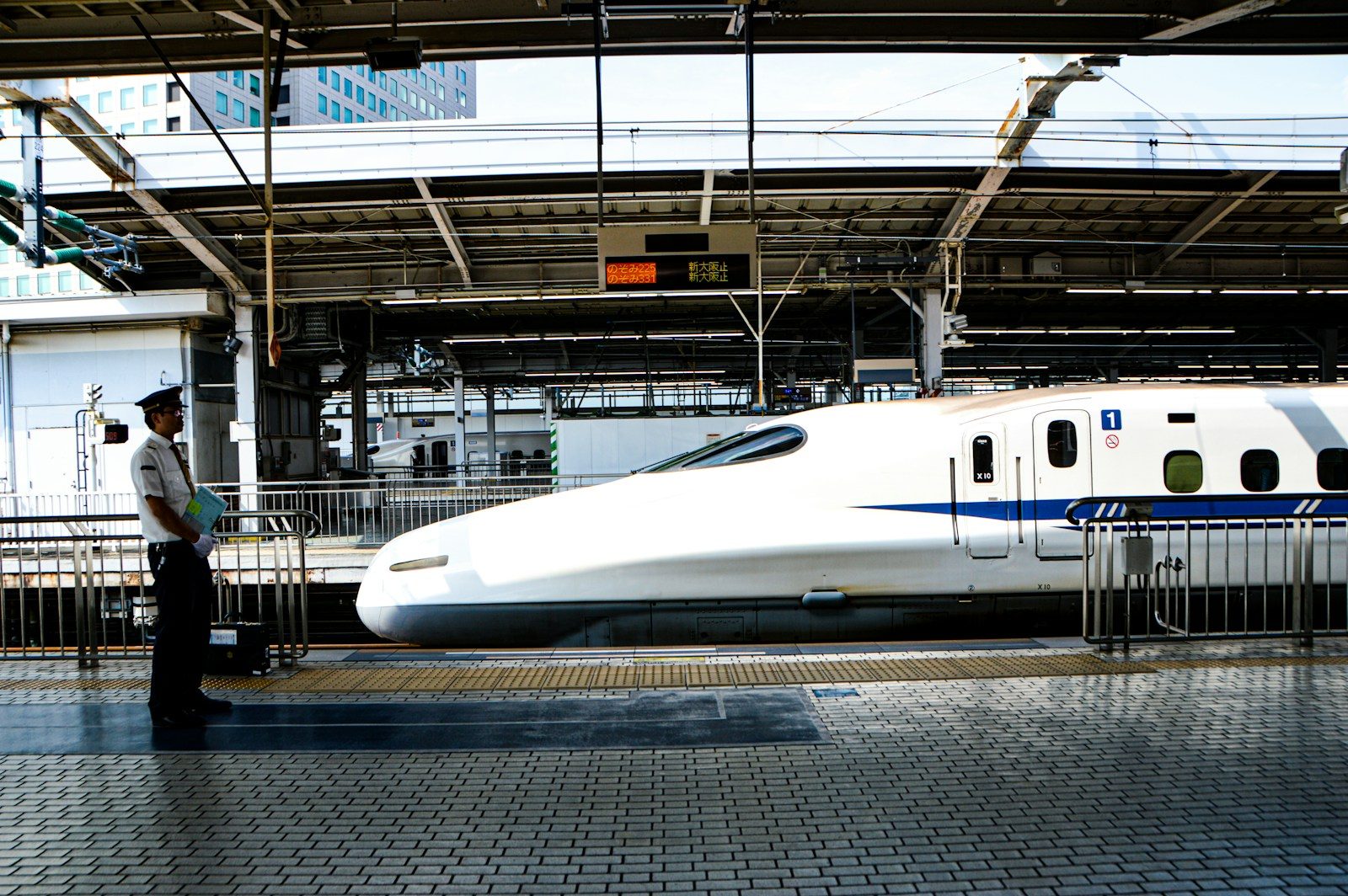
Japan Rail Pass and Japan’s Trains: What Actually Pays Off
Affiliate disclosure: Some links in this guide are affiliate links. If you book a tour or an experience through one of them, this site may earn a commission at no extra cost to you. Nothing here is paid placement, and no operator has been given the right to review or approve a line of this text.
The Japan Rail Pass is the most talked-about ticket in Japanese travel and one of the least understood, because almost every conversation about it starts in the wrong place. It starts with a figure — what the pass costs, what a single ticket costs, which one wins — and figures move. Fares are revised, regional passes are launched and retired, and a comparison written around a number has a shelf life measured in months. What does not move is the shape of your trip: how many long legs you actually ride, whether they sit on JR lines, how many days you spend sitting still in one city, and whether you are travelling in a week when half of Japan is travelling too. Answer those four questions and the Japan Rail Pass question mostly answers itself.
This guide is built in that order. It explains what the pass is and who can use it, then maps what it covers and what it does not — including the two Shinkansen services that catch people out. From there it works through the decision itself, the alternatives that compete with the pass, the everyday layer of IC cards and ticket gates underneath it, seat classes, seat reservations, luggage rules and the weeks that break the timetable. It ends with a checklist of what to book before you fly and one summary table you can read in a minute. Every structural fact here carries a named official source — the official JAPAN RAIL PASS site, the Japan National Tourism Organization, JR Central, the JR Group’s own revision announcement, and Japan’s official national holiday calendar.
Where a detail depends on the fare or availability of the day, this guide says so and points you to the live booking panel on this page, so the part of the subject that moves fastest stays current instead of freezing into a paragraph.
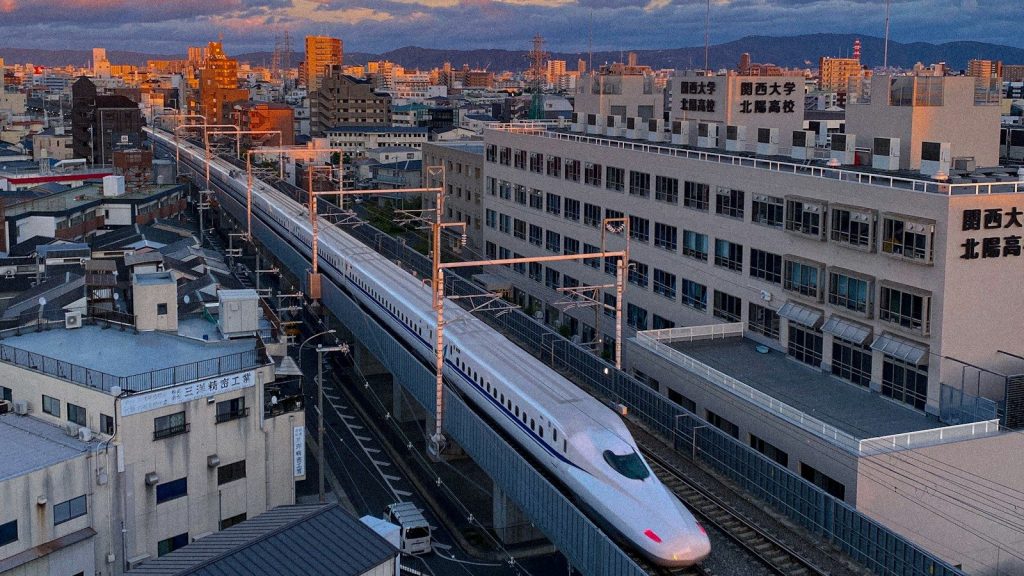
What the Japan Rail Pass Really Is
The Japan Rail Pass is not a single company’s ticket, and that is the first thing worth understanding about it. It is a joint offering of the six companies that make up the Japan Railways Group — the regional passenger operators carved out of the old national railway, together with the freight company that runs its trains over the same tracks. Because the six offer it together, one pass reaches across their networks rather than being tied to a single region’s trains, and that is what separates it from the many regional passes that also exist. The official JAPAN RAIL PASS site describes it in exactly those terms: a joint offering of the six companies comprising the Japan Railways Group.
Two types are sold. The Standard pass covers ordinary seating, and the Green Car pass covers the higher Green Car class — the quieter carriage with wider seats. Both come in three durations, seven days, fourteen days, and twenty-one days, and the clock starts on the day you activate the pass rather than the day you buy it. The network behind those durations is large: the official site notes that the length of JR train lines in Japan amounts to a total of over 19,000 kilometers, and a pass that runs on the JR Group’s trains can put a good part of that within reach on a single trip.
Eligibility is tied to how you enter the country. The pass is built for visitors, and JNTO’s guide to the Japan Rail Pass frames it around the temporary visitor entry status — the short-stay status most tourists arrive on. Treat that as a condition to confirm where you buy rather than a detail to assume, because the operators who sell the pass explain the eligibility rules at the point of purchase, and the official pages carry the version that is current for your trip.
The way you acquire the pass has moved well past the old paper exchange order. Today you can buy it online from the official JAPAN RAIL PASS website, and the official site’s exchange page shows that tickets bought online can be collected at ticket machines fitted with a passport reader — the passport is what identifies you as an eligible traveler, so carry it. Buying on the official site also changes what you can do about seats: as the official site states it, only when purchasing a JAPAN RAIL PASS online from the official website can reserved seats be booked prior to picking up your ticket. The early-reservation path is therefore tied to buying from the official site. The other route is to buy before you leave home through an authorized JR sales agency overseas; the official site’s overseas purchase page lists those agencies and spells out the consequences when the conditions are not met.
A common question is whether you can buy the pass inside Japan. The official purchase pages set out two routes: online purchase at the official website — the route that allows reserved seats to be booked before the ticket is picked up — and purchase through authorized JR sales agencies overseas. Those pages also explain eligibility where the pass is sold. If a plan depends on a particular way of buying or collecting, the official purchase and exchange pages are the ones that carry the conditions for that case.
One thing the pass shares with every rail product is that its tariff is alive. The 2023 revision raised it sharply and removed a two-tier structure that had once made the amount depend on where you bought the pass. Numbers of that kind belong with the source that maintains them, so the figures are read on the official prices page and in the booking widget on this page, both of which stay current. Where the fares actually live is the official site’s prices page and the booking widget on this page; both stay current, and both are where a figure should be read before you decide.
It also helps to think of the pass as a decision tool rather than a discount. It does not make a single ride cheaper. It moves the question to whether your route uses enough of the JR network over enough days to do more work than single tickets would. That is a question about the shape of a trip, not about a figure, and it is the question the rest of this article answers.
What It Covers and Where It Stops
The pass is wide where the JR Group runs trains and narrow everywhere else, and that boundary causes more first-timer trouble than any other single fact about it. The matrix below sets out the ground the pass does and does not hold; read the third column as a checklist rather than a footnote, because almost every surprise on a trip with this pass traces back to one of those lines.
| Service | Covered? | What you must check |
|---|---|---|
| JR Group train lines and Shinkansen nationwide | Yes | This is the core of the pass: the six JR Group networks and the Shinkansen that run on them. It is what the durations are bought against. |
| Nozomi and Mizuho on the Tokaido and Sanyo Shinkansen | No, not by default | These are the fastest departures on the trunk line between Tokyo, Kyoto, Osaka, and the west. They need a dedicated extra ticket, one per ride — see the note below. |
| Other Shinkansen services, such as Hikari, Kodama, and Sakura | Yes | These stop more often and take longer than Nozomi and Mizuho, but they are the services the pass covers without an add-on. |
| Limited express trains between cities | Yes, for the ride | The class of seat decides what that means in practice; ordinary seating sits under the Standard pass, the upper classes do not. |
| Night trains and sleeper services | Rules of their own | Coverage here is not automatic; the specific service is worth checking on the official site before an overnight leg is built around it. |
| JR local buses (Hiroshima sightseeing buses, JR Hokkaido buses around Sapporo, local buses at Kusatsu Onsen) | Yes | JNTO’s guide names these as covered. They are the last short stretches, not a general bus network. |
| JR West ferry to Miyajima | Yes | The ferry to the island off Hiroshima is covered; confirm the return leg the same way as the outward one. |
| City subways and metro, including Tokyo | No | The pass opens no subway gate. In a large city the subway is run by a different operator with its own gates. |
| Private suburban and non-JR railways | No | Any line not run by the JR Group is outside the pass, however short the hop looks on a map. |
| Green Car and GranClass seating | Only with the matching pass or an upgrade | Green Car needs the Green Car pass; the top GranClass class generally carries an extra charge even then. |
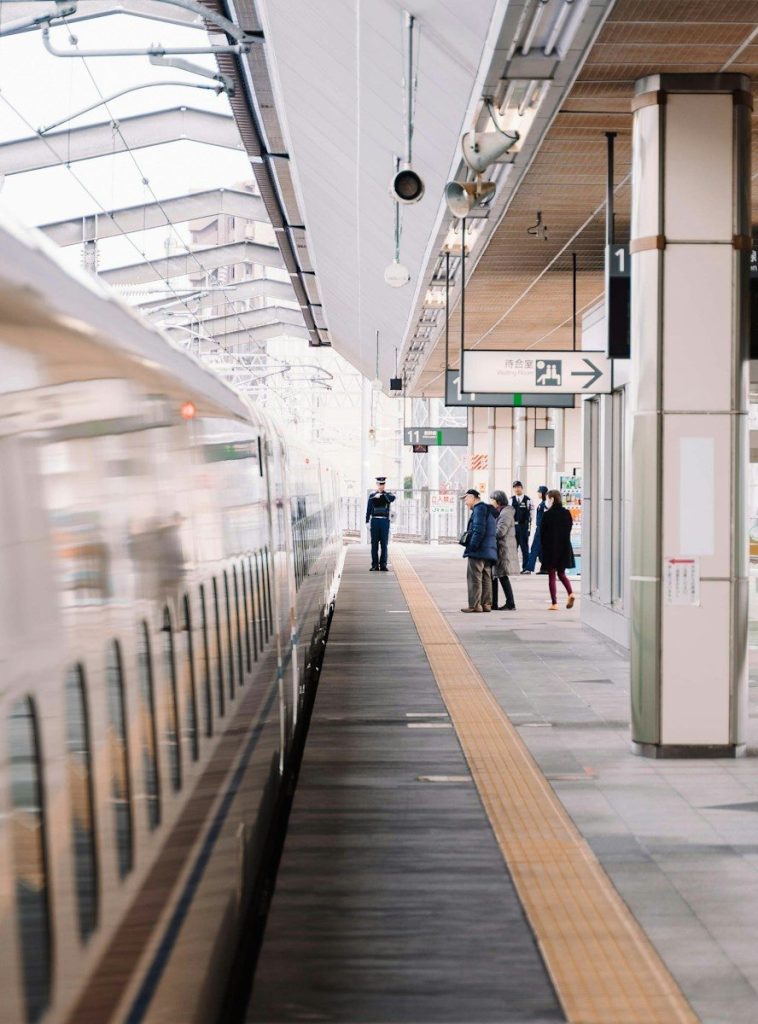
The single most costly mistake here is boarding a Nozomi or Mizuho by habit. They are the fastest services on the Tokaido and Sanyo Shinkansen, the trunk line that links Tokyo with Kyoto, Osaka, and the west, and they are exactly the departures most people reach for when they want to cover ground quickly. They are not covered by the pass as it stands. The JR Group’s own announcement of 26 July 2023 introduced a dedicated product for them — a separate ticket bought on top of the pass, with one ticket required per ride. JNTO’s guide says the same in plain terms: Nozomi and Mizuho are not included, and riders buy the extra ticket before boarding. Because these are the fastest departures and the ones a traveler instinctively chooses, riding one by default rather than by checking is precisely how an unplanned extra charge appears. If you want the speed, plan for the add-on ticket; if you want the pass to be your only train fare, ride the services it covers.
Outside the trains, the pass reaches a short and specific list of ground transport. JNTO’s guide notes that it covers JR local buses — the sightseeing buses in Hiroshima, the JR Hokkaido buses around Sapporo, and the local buses at Kusatsu Onsen — as well as the JR West ferry to Miyajima, the island off Hiroshima. These are useful exactly because they are the last stretches a rail-only plan forgets: the bus up to a ropeway, the ferry out to a shrine island. Treat the list as specific rather than general. A local bus is covered where it is a JR local bus, and nowhere simply because it is a bus.
What the pass does not cover matters just as much. JNTO is explicit that city subways and private suburban railways sit outside it: in a large city such as Tokyo, the pass gives no access to the subway or metro network. That is not a small gap. In Tokyo the subway is the system you will use most, and it is run by a different operator with its own gates and its own fares. Plan to pay for those rides separately — an IC card is the usual answer for that everyday city layer — and do not expect the pass to open a subway gate, however many JR lines run into the same station.
Limited express trains and sleeper services carry their own rules and should be checked individually rather than assumed. The class of seat you sit in changes what the pass does for you: ordinary non-reserved and reserved seating sit under the Standard pass, while the Green Car and the top GranClass sit above it, and GranClass in particular generally carries an extra charge. Night trains and sleeper services are a separate matter again, and the safe habit is to check the specific service on the official site before you plan a trip leg around one. The practical rule that ties this whole section together is simple: before you assume a train is covered, check the service, not just the operator, because the operator can be JR and the service can still sit outside the base pass.
The Decision That Matters: Is the Japan Rail Pass Worth It?
The Japan Rail Pass is neither worth it nor not worth it in the abstract; it is worth it for some shapes of trip and not for others, and the shape is the thing you can actually judge. A pass is bought against days and against distance, so it rewards a trip that moves — several cities, real distances, most days spent on the train. It punishes a trip that stays put, because you pay for a national network while riding only a small part of it. The table below sorts the common trip shapes by what the pass tends to do for each; use it as the second half of a two-part test, with the manual count that follows as the first.
| Trip shape | Verdict | Why |
|---|---|---|
| A single city, one base for the whole stay | The pass rarely earns its keep | You buy a national network but ride only the local city layer, and the city layer is mostly subway and private lines, which the pass does not cover. |
| Two cities close together, one hop each way | Usually not worth it | A short return hop uses little of the network, and the days you are not riding are still days the pass is costing you. |
| Tokyo → Kyoto → Osaka, once, one direction | Borderline; run the count below | Three cities on one trunk line is the classic case, and it turns on how many of your days actually run on JR trains. |
| A multi-city arc that loops back to the start | Often worth it | When the route returns to where it began, you are paying for a loop of real distance rather than a single out-and-back. |
| One region only — Hokkaido, Kansai, or Kyushu | Skip the national pass and look regional | A national pass spends most of its value on ground you never touch; a regional pass or an IC card fits a single-region trip better. |
| A long east–west traverse of the country | Usually worth it | Covering great distance in one direction, across several days, is the case the pass was designed around. |
| A trip with many relaxed, low-travel days | Usually not worth it | The pass is priced by the day; days spent wandering one neighborhood are days you pay for and do not use. |
Notice what the table is not doing. It is not comparing the pass to single tickets by any figure, because that figure changes with every revision and belongs on the source that maintains it. It is comparing your route’s shape to the shapes the pass suits, which is a judgment you can make before any number enters the picture. That is the whole point of doing this by hand.
Here is the manual count, in five steps, with no figures at all.
First, write down your long-distance legs — every journey that moves you between cities rather than around one of them. Be honest about the map: a leg across the country and a leg across a neighborhood are not the same thing, and only the former belongs on this list.
Second, mark which of those legs run on JR lines, including the Shinkansen. A leg on a private railway or a regional line outside the JR Group is a leg the pass will not help with, so marking it correctly is the difference between a real count and a wishful one. This is also where the Nozomi and Mizuho question from the previous section comes back: if your fastest intended leg is one of those, it is not simply a JR leg — it is a JR leg that needs an extra ticket, and you should count it as such.
Third, add up the days on which you actually ride the train for real distance. Days when you walk a city, or move only by subway, do not count, even though the pass is still running. The pass is bought in blocks of consecutive days, so the honest measure is how many of those blocks you would genuinely fill with train travel, not how many days you are in the country.
Fourth, compare the shape you have now written down against the table above. A list dominated by one city, or by two nearby cities, points away from the pass. A list built on a loop, on a long single-direction traverse, or on several real city-to-city legs inside a short window points toward it. You are looking for a match between your route and a row, not for a precise total.
Fifth, decide, and if the answer is still not clear, check it once more on the official site before you buy. The official pages carry the current durations, the current coverage, and the current fares, and they are the place where a borderline case should be settled. Rechecking costs you a few minutes; buying a pass your route does not support costs you the whole price of the pass.
Two habits make this count more reliable. The first is to be skeptical of your own itinerary: many trips look multi-city on paper but collapse into one city with a single day trip attached, and that shape sits with the first row of the table, not the fourth. The second is to remember that the pass is not the only tool in the box. A regional pass, a stack of single tickets, and an IC card for the city layer all exist for the routes where the national pass is the wrong fit, and picking the wrong tool is the most common way an otherwise good trip overspends.
The block structure deserves a second look, because it is where good routes quietly turn into bad purchases. A pass bought in a block of consecutive days only pays back on the days inside that block that you spend moving. If your long legs fall at the very start and the very end of a trip, with a still week in the middle, the block you buy may be running during the week you are not on a train at all. The fix is not to buy a longer block; it is to arrange the trip so the heavy travel days sit close together, and then buy the shortest block that covers them. Grouped travel is what the pass rewards, and spreading the same journeys thin is what makes it look worse than it is.
A borderline answer is worth naming honestly, because pretending every trip is clear is how guides mislead. When the count falls close to the middle — a few real legs, a couple of slow days, a route that could go either way — the pass decision is genuinely close, and the right response is to treat the official page as the tiebreaker rather than to force a conclusion from a table. Borderline is not failure; it is the case where the source that carries the live fares does the deciding, and where reading it once before you buy is worth more than any rule of thumb.
A useful way to test your instincts before you commit to a long pass is to take one fast-train day trip first. A Tokyo–Kyoto run by fast train, which you can see laid out at https://vi.me/xHte6, shows you in a single day how the network moves and what a real intercity leg feels like — enough to tell whether your wider route belongs in the pass’s world or not.
For the parts of the trip this article deliberately leaves out, we point rather than repeat. The full cost side of a Japan trip — food, lodging, and day-to-day spending — lives in our budget breakdown at https://vooygo.com/japan-trip-cost/, and a concrete day-by-day route through the classic Tokyo–Kyoto–Osaka corridor lives in our itinerary at https://vooygo.com/japan-winter-itinerary/. Both go deeper than a decision article should, which is exactly why the right move here is to send you there instead of copying them.
What all of this comes down to is a single sentence you can carry to the ticket counter: the pass pays off when your trip moves, and it does not when your trip stays still. If your route is a loop, a traverse, or a dense run of city-to-city legs, it is likely doing the work you are paying for. If your route is one city, or two cities an easy hop apart, it is likely not, and the honest answer is that the pass is not the right purchase for that trip. Run the five steps, match your shape to the table, and let the route decide — then confirm the final figure on the page that keeps it current, and buy with a clear head.
The Alternatives That Compete With the Pass
The Japan Rail Pass is one answer to a question, not the answer to every trip. It is a joint product of the six companies that make up the Japan Railways Group, sold in Standard and Green Car versions for seven, fourteen, or twenty-one consecutive days, as the official JAPAN RAIL PASS site describes it. Inside that window it is powerful, outside it it is inert, and even inside it it stops at the boundary of the JR network. The JNTO guide to traveling by rail is blunt about the last point: city subways and private suburban lines are not among the things the pass covers.
Everything that competes with the pass lives in the space those two limits create. None of these alternatives is better in the abstract. Each one wins for a particular shape of trip, and each charges you in something other than the fare: time, reach, or flexibility. The choice starts with the shape of your own trip: name it first, then pick the tool that matches it.
| Alternative | When it wins | What you give up |
|---|---|---|
| A regional JR pass | Your whole trip stays inside one region and you never need the national network | National reach: the product stops at the edge of its own area |
| Single tickets, bought as you go | You take a small number of long legs, or your route leans on operators that are not JR | The bundling effect, and the freedom from thinking about every purchase |
| An IC card | Your days are mostly inside one city and its suburban trains | Nothing for city life, but it does not replace a long-distance ticket |
| An intercity express bus | The route is long, the schedule is flexible, and the journey can absorb a night | Time: a bus turns a travel day into a travel night |
| A domestic flight | The two ends of the trip are very far apart and no rail corridor links them well | Airport time: check-in, security, and the ride into town at both ends |
| A private railway or a subway | The route you want simply is not a JR route | Pass coverage: these lines sit outside the JR network by definition |
The regional pass is the closest thing to a like-for-like substitute. The national product is not the only pass on the market. Regional passes are scoped to a single area, so if every day of your trip stays inside one region, a northern loop or a Kansai base or a Kyushu sweep, a pass built for that region covers the part of the country you actually use, and it is generally the cheaper way to buy the same idea at a smaller scale. The mistake runs in both directions. Buying the national pass when your route never leaves the region wastes the one thing the national product sells, and buying a regional pass when a single long leg falls just outside its border leaves you paying twice for the same journey. Draw the route first, then look at which pass contains it.
Single tickets are what the pass is really competing against, and for a short trip they often win by default. If your itinerary is two or three long legs separated by days spent in one place, the pass is being asked to justify itself against a handful of individual purchases, and it frequently cannot. Single tickets also free you to ride whatever service you like. The fastest trains on the Tokaido and Sanyo corridors carry a separate arrangement for pass holders, as the official JR Group release and JNTO both make clear, and a plain ticket sidesteps that arrangement entirely: you board the train you want and pay for the seat you want.
An IC card is the daily layer rather than a long-distance tool. Suica, Pasmo, ICOCA and their relatives work as tap-and-go payment across operators, which makes them the default for getting around a city. But an IC card is not a ticket between cities. It answers the question of how to cross town, not the question of how to get from Tokyo to Kyoto, and treating it as a pass substitute confuses two jobs that never overlapped in the first place.
The intercity express bus competes on one axis only, and it competes hard there. Long-distance highway buses can undercut rail on the same route, and they frequently run overnight, which lets a traveler trade a night in a hotel for a night on the road. The cost is exactly that trade: a bus turns a travel day into a travel night, and the following day is spent recovering from it. For a short trip that arithmetic is poor. For a slow trip with slack in the schedule, it is a genuine option rather than a compromise.
A domestic flight wins when the distance is extreme. For pairs of cities that no rail corridor links well, or that a corridor links only by an exhausting ride, a short domestic hop can beat the train on total time despite the airport overhead. That overhead is the catch: two trips out to the airport, check-in, security, and the ride into the city at both ends. Flights reward itinerary shapes with one or two very long legs and punish trips that are mostly city-to-city hops. If your map is a dense cluster, the airport is a penalty. If your map is one long line with a gap in the middle, it is often the fix.
Private railways and subways exist because not every route is a JR route, and the pass does not pretend otherwise. The JNTO guide is clear that city subways and private suburban lines fall outside the pass, and in a place like Tokyo the pass simply does not open the subway gates. When a day is built around a private line or a subway, the pass is irrelevant and the card in your pocket is the tool that works. Where the pass does reach past its own rails, it reaches deliberately and narrowly, covering local JR buses in places such as Hiroshima, Sapporo, and Kusatsu Onsen, and the JR West ferry to Miyajima. Those are worth knowing precisely because they are the exceptions rather than the pattern.
The point of laying all of this out is not to talk you out of the pass. It is to make the decision an actual decision. A regional pass, a stack of single tickets, an IC card, a bus, a flight: these are not rivals in a race with a single winner. They are tools for different trip shapes, and most real trips use more than one of them at the same time.
If your route is the familiar Tokyo–Kyoto–Osaka arc, the day-by-day version of it lives in the Japan winter itinerary guide, and the northern case, where a regional product and a short flight can both make sense, is covered in the Hokkaido guide.
When the point of the trip is not to run the network yourself but to have several days arranged for you, a multi-day Japan package is the version of that alternative to weigh against a pass.
IC Cards: Suica, Pasmo and the Everyday Layer
The Japan Rail Pass answers the question of how to cross a country. An IC card answers the question underneath it: how to move through an ordinary day. These are two different jobs, and the mistake visitors make most often is expecting one to do the other. Suica, Pasmo, ICOCA and the rest of the family are the same idea under different names. For the way a traveler uses them, they are interchangeable. Read this section as the counterweight to the pass decision. The pass is a bet on long intercity legs; the card is the everyday certainty that runs underneath it, and it is the piece most travelers handle many times a day while barely thinking about it.
Per the JNTO guide to traveling by rail, these cards work tap-and-go across operators and across the country. You tap in at the gate, you tap out at the far end, and the system settles the distance between those two taps. That cross-operator reach is the whole point. Where the pass draws a hard line around the JR network, an IC card steps between the subway, the private line, and the JR platform without a second thought. If your itinerary contains any city time at all, and every itinerary does, this is the layer you touch most often.
There is also a mobile version of that layer. JNTO notes that mobile IC options such as Welcome Suica Mobile and PASMO exist, and it also notes that they are not supported by every phone sold outside Japan. Take that note seriously before you build a trip around a handset. The card in your wallet is the version that always works; the phone is the convenience that works only on the devices that support it. Plan around the card and treat the phone as a bonus if your hardware qualifies, rather than the reverse.
Ticket machines and automatic gates are where this layer becomes visible. At a station you will find machines that sell single tickets, machines that load value onto a card, and gates that wait for nothing but a tap. A gate does not care whether the card in your hand is named Suica or Pasmo; it cares only whether the card can cover the fare for the journey you have just taken. That is why the card feels like a single system even when three different companies run the trains underneath it.
Loading value happens at a machine or in the app, in whatever amount you choose. Nothing is printed and nothing is booked: you are putting a balance onto the card and spending it down over the following days. Because the card holds stored value rather than a specific fare, the machine never needs to know your route. It needs to know only that your card has something left to spend.
An IC gate is still a gate, and it opens only when the balance covers the fare. If you tap out short, you settle the difference at the station, at a fare-adjustment machine or a staffed window, before you pass through. Done in a station you know, that is a small delay. Done in a station you do not know, with a train to catch, it is a moment worth avoiding. The practical habit is to keep a comfortable cushion on the card rather than riding it down to the very last trip of the day.
An IC card becomes the correct primary tool, not merely a convenient one, when your trip is city-shaped. If you are staying in one place, seeing it at street level, and taking day trips on subways and private lines, a pass has little to do. A pass wants long intercity legs packed inside a fixed window. The trip you are on is a sequence of short city rides. In that trip the IC card is the rail product, and the pass would be an answer to a question you never asked.
Consider a week built around a single city. Mornings begin with a short ride to a district, the middle of the day mixes a subway hop and a private line, and the evening ends with the same short ride back. Not one of those journeys is long enough to interest a national pass, and many of them are not on JR at all. A card turns each of those movements into a single tap, and the day stops being a sequence of ticket decisions. Now drop two long intercity legs into that same week. Those legs change the arithmetic, but they do not change the city layer: the card still carries the short rides, and the pass takes the long ones. Holding both is not indecision; it is matching each tool to the job it was built for.
IC card or pass?
| Your situation | The better fit | Why |
|---|---|---|
| You stay in one city for most of the trip | An IC card | Nearly every ride is a short one, often on subways or private lines the pass does not cover |
| You base in one city and take a couple of long day trips | Single tickets plus an IC card | The long legs are few, and the daily movement is not a JR problem |
| You move between distant cities every few days | A Japan Rail Pass | This is the shape the pass was built for: several long legs inside a single window |
| You mix city days with a few intercity legs | Both | The card carries the city layer and the pass carries the long legs, and the two do not overlap |
| You genuinely have not decided yet | Start with an IC card | It commits you to nothing, and you can add a pass the moment the long legs appear |
The two layers can, and usually do, coexist. Nothing about carrying an IC card stops you from also holding a pass, because the two sit in your wallet as answers to two different questions. The only genuine failure mode is using the pass to solve a city problem: buying national coverage in order to ride a subway that was never part of what it covers. The money side of that daily layer, what city travel quietly adds up to across a trip, is set out in our breakdown of Japan trip costs.
Seat Classes, Honestly Compared
The pass itself comes in two versions, Standard and Green Car, but the classes on the trains are a separate question from the class of the pass. JNTO’s Shinkansen guide sets out four things a traveler can buy their way into on a long-distance train: a non-reserved seat, a reserved seat, a Green Car seat, and GranClass. What separates them is not the destination. It is how much certainty and how much space you are paying for on the way, and how much that is worth depends entirely on the length and timing of the ride.
| Class | What you get | Who should choose it |
|---|---|---|
| Non-reserved | A seat in the non-reserved cars, taken as you find it | Short rides, off-peak departures, and travelers who would rather keep their options open |
| Reserved | A specific seat on a specific train | Busy periods, long legs, travelers with luggage, and anyone with a fixed arrival time |
| Green Car | A more comfortable, quieter carriage on the reserved side of the train | Long rides where the hours are long enough to feel, and travelers who want calm as a feature |
| GranClass | The top class, above Green Car, with the highest level of service | The one long, special leg where the ride itself is part of the trip |
Non-reserved is the most flexible way onto the train and the least committed. You board the non-reserved cars and take a seat as you find one, which is what makes a spur-of-the-moment departure possible. On a quiet midday service it works beautifully. On a holiday evening, or at the start of a peak travel window, it is a gamble, and the seat you find may be the one you stand next to.
Reserved buys certainty rather than luxury. The product is not a better seat so much as a guaranteed one: a known place on a known train at a known time. For a traveler carrying luggage, or connecting to something with a fixed start, that guarantee is the whole of what you are paying for, and it is worth it. For a short hop on a quiet train, it can be more assurance than the ride needs.
Green Car is a step up in space and quiet rather than a different train or a different timetable. What you add is comfort on top of the journey you already chose, so the question is whether the hours are long enough for that comfort to register. Whether it is worth the higher class depends on the hours, not the kilometers: on a long leg the difference between a standard seat and a Green Car is the difference between arriving tired and arriving rested, and on a thirty-minute ride it is barely visible.
GranClass is the top of the hierarchy, above Green Car, and it exists for the traveler who wants the ride itself to be part of the trip. It makes sense on the one long, deliberate leg of a journey, the ride you plan around, far more than it makes sense as a default for every train you board.
When do the upper classes actually pay off? The honest rule is that a class is worth its premium when the ride is long, busy, or both. On a short, quiet train an upgrade buys minutes of comfort. On a multi-hour leg during a peak window, the same upgrade buys a seat, a measure of quiet, and the chance to arrive able to do something with the rest of the day. Peak demand is not hypothetical, and it does not only touch the seats: it fills trains and pushes the whole class question forward. One concrete case of demand outrunning supply is covered in the Sapporo Snow Festival 2027 guide.
There is also a mechanical point worth folding into the decision before you ever reach the seat. Reserved seats can be booked in advance only when the pass was bought online from the official website, as the official JAPAN RAIL PASS site states. That means the class you are choosing and the place you bought the pass are not separate decisions; the ability to lock in the comfortable option ahead of time runs through the purchase channel. Decide what you want, and then make sure the way you bought the pass can actually deliver it.
Seat Reservations: How to Reserve Seats With the Pass
A Japan Rail Pass and a reserved seat are two different things, and the gap between them is where a lot of first-timers lose half a day. The pass is the right to ride; a reserved seat is one specific chair, on one specific departure, at one specific time. Holding the first does not automatically hand you the second, and in the heaviest travel weeks of the year the second is the scarce one. This section is about closing that gap before you are standing in a moving carriage with your bag wedged between your feet.
Three places a reservation can be made
The official JAPAN RAIL PASS website names the channels open to a pass holder, and the welcome news is that you do not have to pick one and stay loyal to it. The Midori-no-madoguchi, the staffed “green window” ticket offices found inside major stations, is the place where a human being looks at your route, checks the connection you had not thought about and prints the whole journey at once. The self-service ticket machines are faster when you already know exactly which departure you want. And there is an online reservation channel that belongs to the pass itself — but that one comes with a condition strong enough to change how you buy the pass in the first place.
That condition is worth stating plainly, because it is the single most useful reservation fact on the official site. In the site’s own wording, “only when purchasing a Japan Rail Pass online from the official website can reserved seats be booked prior to picking up your ticket.” Read it the other way and the consequence is unavoidable: a pass bought from an overseas travel agent is still a perfectly valid pass, but it does not come with the ability to lock seats from home before you leave. If your trip runs through a peak week — and the next section is about exactly which weeks those are — then the difference between booking a seat from your kitchen table and queuing for one after you land can decide whether your group sits together or sits apart.
Where the pass is actually collected
The official site also sets out where a pass bought online is turned into a working ticket, and the exchange step is the moment the pass becomes active. Online purchases can be picked up at ticket machines fitted with passport readers as well as at staffed exchange points. That detail matters to reservations: the seats you booked before you flew are tied to the pass you have not yet collected, so collection is the first thing to do when you reach your arrival station, not the last thing before your first long ride. Build in time for it rather than sprinting for a Shinkansen with your suitcase in tow.
Which trains ask for a reservation, and which demand one
On most long-distance services the choice is yours. Shinkansen and limited express trains generally run both non-reserved cars, where you take any open seat, and reserved cars, where a seat number is yours. For a short hop in the middle of a quiet Tuesday you can ride non-reserved and never think about it.
The picture changes in two directions. First, some services run as all-reserved, so there is no non-reserved car to fall back on — turn up without a reservation and there is simply no seat for you, however early you arrive. Second, and more important for planning, the busiest weeks push more services into reservation-only territory as operators manage the crowds. The Japanese holiday windows described below are exactly the periods when a train you could have boarded on impulse in an ordinary month becomes one you must have booked weeks earlier.
There is a trap layered on top of the reservation itself. Two of the fastest Shinkansen services, Nozomi and Mizuho, are not covered by the pass in the ordinary way: the pass holder needs a separate additional ticket for them, one per ride. The JR Group’s own revision announcement and the national tourism authority both describe this, and the practical point for reservations is that a reserved seat on a Nozomi is not the same as the right to board a Nozomi. Sort out both, or take a service the pass covers outright.
Why a reservation is the only promise of a seat in Golden Week
Here the word that matters is not “cheaper” but “certain”. A reservation is not a discount and it is not a comfort upgrade. It is the only mechanism that turns “I would like to be on that train” into “I have a seat on that train.” In an ordinary week that distinction is small, because trains run often and non-reserved cars stay open. In Golden Week, through the middle of August during Obon, and across the New Year holidays, the same distinction becomes the whole trip. Those are the weeks when the reservation windows open and close fastest, when reserved cars fill first, and when the traveller without a seat number is the one left standing in the doorway.
This is the practical reason the earlier fact about buying online is not a footnote. The reservation channel that opens earliest is the one that comes with the official-site purchase. Buy the pass there and you can hold a seat before you board a plane. Buy it overseas and you can still reserve — at the green window, at a machine, or online once the pass is in hand — but you are doing it after you land, in the same queue as everyone else, in precisely the week when the queue is at its longest. Same product, different starting line.
If you are unsure whether your dates fall inside a peak window, the calendar in the next section lays out the 2027 holidays and is short enough to check against your own flights in a couple of minutes. Then get the seats, and, if you are carrying a large case, the baggage seat that goes with them.
Luggage on Japanese Trains
Luggage is the part of Japanese rail travel that people plan last and regret most, because the trains are fast, clean and punctual while the space for a suitcase is neither large nor generous. The rules themselves are simpler than the internet suggests, and they turn on a single number.
That number comes from JR Central, which publishes the operator’s guidance for oversized baggage on its Shinkansen services. If the three sides of your bag added together come to 160 cm or less, the bag counts as ordinary hand luggage: it travels on the overhead rack above your seat or on the floor space in front of you, and you do nothing special to bring it aboard. A standard carry-on and a medium checked-size case both live comfortably on this side of the line. If the three sides add up to more than 160 cm — the territory of the large hard-shell case and the holiday suitcase that swallows everything — the bag may no longer simply ride with you. It has to travel in a designated “seat with an oversized baggage area” at the end of the car, and that seat must be reserved before you board.
| Size and dimensions | How it may be carried | Special reservation needed? |
|---|---|---|
| Three sides adding up to 160 cm or less — a standard carry-on or medium case | On the overhead rack above your seat, or on the floor space in front of you | No |
| Three sides adding up to more than 160 cm — a large or hard-shell case | Only in the “seat with an oversized baggage area” at the end of the car | Yes — the seat must be reserved before you board |
| A daypack, tote or small rolling bag well under the limit | On your lap, under the seat in front of you, or on the rack | No |
| Anything that blocks the aisle, a doorway or an emergency exit, at any size | Not carried on board — send it ahead with a luggage-delivery service | Not applicable |
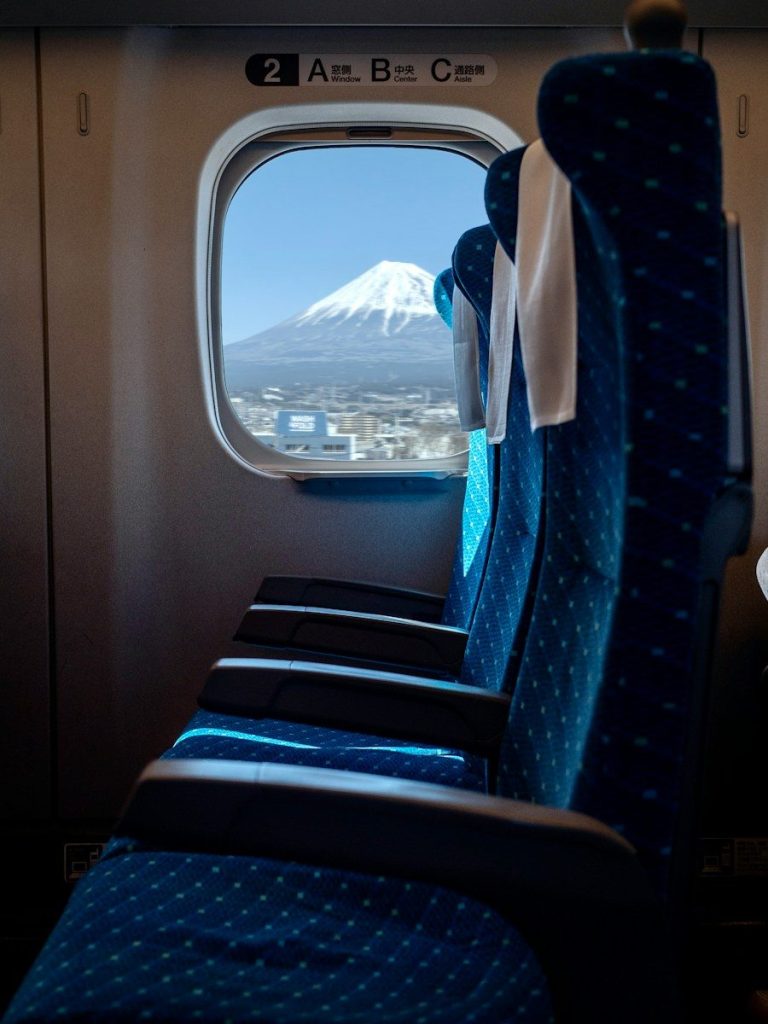
The threshold is worth remembering as a line rather than a fraction: below it, your case is invisible to the operator; above it, your case needs its own reservation. The mistake to avoid is measuring the bag by eye in a shop and being surprised on the platform. A tape measure takes ten seconds at home and saves an argument at a station.
The option most people forget: send it ahead
Japan runs one of the most reliable intercity parcel-delivery networks anywhere, and travellers lean on it for luggage constantly. Rather than wrestling a large case through three stations, you hand it over at one address — a hotel front desk will usually handle this for you — and collect it at another a day or two later. The service appears on the official JAPAN RAIL PASS website’s own baggage leaflet as an option, and for a trip that moves between several cities it removes the problem outright rather than merely managing it. This guide does not quote what it charges, because that is the sort of figure that moves; the operator’s leaflet and the counter staff are the right places to check on the day.
The same habit helps on a short trip. If you have one large case and a busy week, send the case to your final city and travel the middle of the trip with a small bag.
Rush hour, and the rules that are never printed
Two practical habits cover almost every remaining case. First, at rush hour — the morning and evening peaks in any big city, and the length of any holiday week — a large case on a crowded platform is a hazard and an irritation at once, so either travel with something you can lift with one hand or time your moves to the middle of the day. Second, put the bag where it blocks no one: the rack if it fits, the floor by your seat if it does not, and never the aisle, a doorway or the space in front of an emergency exit.
If your bag falls into the oversized band, the reservation is not something to sort out on the platform. Add it to the same booking as your seat, decide it at the moment you decide your route, and the rest of the trip’s luggage problem disappears before it starts.
Booking Timeline, Golden Week and the 2027 Holiday Calendar
“Plan ahead for Japan” is advice that does nothing until it names the weeks. Four windows actually move the needle. Mark them against your own dates before you book anything else, because they decide when seats vanish, not merely when a trip gets harder.
Start with the fixed points. Japan’s official national holiday calendar, maintained by the Cabinet Office, sets the dates for 2027. Across the year they fall on 1 January; 11 January; 11 February; 23 February; 21 March and 22 March; 29 April; 3, 4 and 5 May; 19 July; 11 August; 20 September; 23 September; 11 October; 3 November; and 23 November. Some of these sit close enough to a weekend to create a three-day block, and blocks are what fill trains; others pass quietly on their own. The list is short enough to check against your own flights in two minutes.
The four windows
New Year. The first window is the largest. The days around 1 January 2027 are when the whole country travels home and back, and long-distance services fill in both directions for several days on either side. If you are moving between cities then, treat it as a booking problem rather than a spur-of-the-moment ride.
Cherry blossom season. The second window is not a holiday at all but a season, so this guide treats it strictly as a crowding question; the weather side of it belongs in our guide to Japan in winter. For booking, what matters is that the spring holidays fall on 21 and 22 March 2027, the trees draw travellers to the same few cities at once, and the trains and rooms near the best-known parks fill earlier than the calendar suggests.
Golden Week. The third window is the one this heading names, and it is the busiest stretch of the Japanese travel year. In 2027 it is anchored by 29 April and the cluster of 3, 4 and 5 May, with the days between often taken as leave, so the span behaves like one long holiday rather than several short ones. This is the week to have seats in hand before you leave home, and the reason the reservation rules above matter so much: a pass that lets you book early is worth more here than at any other point in the year.
Obon. The fourth window arrives in the middle of August, when families return to their hometowns again and Mountain Day falls on 11 August 2027. It is shorter than Golden Week but every bit as concentrated on the main lines, and it catches travellers who assumed the summer crowds were only about the coast and the festival towns.
The table below condenses the four windows. Every dated entry in it traces back to the Cabinet Office’s official national holiday calendar named above, with one exception noted here: the cherry-blossom window is a season rather than a fixed date, so read its dates as the time of year that crowds build, not as a holiday the calendar declares.
| Peak window | Dates (2027) | What to have booked before it |
|---|---|---|
| New Year | the days around 1 January 2027 | reserved seats and rooms locked by mid-December |
| Cherry blossom season | late March into early April; the spring holidays fall on 21 and 22 March 2027 | reserved seats for the first days of April, and rooms near the best-known parks |
| Golden Week | 29 April, then 3, 4 and 5 May 2027 | reserved seats the moment the booking window opens |
| Obon | the middle of August; Mountain Day falls on 11 August 2027 | reserved seats and big-city rooms before the start of August |
Two of the four windows — cherry blossom and Golden Week — fall close together in spring, which is why spring is the season most often described as impossible. Read the calendar, date your trip against it, and the rest of this guide is simply the sequence of things to book.
Rail as the Spine of a Japan Trip
Japan’s rail network is not one line between two cities; it is a handful of great corridors, and almost every trip that works is built by choosing one of them and letting it carry the shape of the journey. Think in corridors, not in daily schedules — the day-by-day belongs in an itinerary, and this section is about the bones underneath it. Four corridors do most of the work.
North: Tohoku and Hokkaido. The line that runs north out of Tokyo toward the top of Honshu, and onward to the northern island, answers the question of how far north you are willing to go. It serves the far north as a single long spine, with the cities and hot-spring country of the Tohoku region strung along it before the crossing to Hokkaido. A trip built on this corridor is a trip about distance and cold and quiet, and the practical choices about where to stop and how to use the far north sit in our Hokkaido in winter guide.
Northwest: Hokuriku. The second corridor leaves Tokyo toward the northwest and the Sea of Japan coast. It is the one that trades the Pacific side of the country for the other side — the route toward the Japan Sea, the mountains in between, and the craft towns and old post roads beyond them. Travellers who have already done the obvious run to the west use this corridor to see a Japan that the first-time route skips.
West: Tokaido and Sanyo. The third corridor is the busiest and the most famous: the Tokaido line running west from Tokyo through Nagoya and on to Kyoto and Osaka, and the Sanyo line continuing past them toward the western end of Honshu. This is the corridor on which the fastest and most frequent services run, and the one most international visitors mean when they think of travelling Japan by train at all. Its shape is a straight chain of large cities, which makes it easy to build and easy to overload; the temptation is to move every day, and the better trip usually moves less than that.
Southwest: Kyushu. The fourth corridor takes the same westward push and continues across the water into Kyushu, the southwestern island, where the line threads between the island’s cities. It is the corridor for travellers who want their trip to end somewhere other than where the last paragraph left them — volcanoes, hot springs and a slower pace, reached by the same green network that carried them the whole way.
Seen this way, the pass question simplifies. Almost every long-distance decision is a decision about which corridor you are travelling and how far along it you go; the pass wins or loses on the length of those runs, not on the cities’ names. When you know your corridor, you know whether the shape of your trip is one long line, a there-and-back, or a loop — and the shape is exactly what the decision table earlier in this guide is built to read. The short versions of these corridors are small trips in their own right, and a single rail hop to a city just outside the big one is often the best day you will have; a day trip to Nara from the Kyoto–Osaka axis is the classic example, one train ride rather than a whole itinerary.
For the two places where a corridor becomes a whole trip, the itineraries on this site do the day-level work that this guide deliberately leaves alone: a route that strings the western corridor’s cities together is mapped in our Japan winter itinerary, and what it actually costs to run any of these corridors is broken down in the Japan trip cost guide.
The point of thinking in corridors is not tidier maps. It is that a corridor tells you where your time will go: a north-south line gives you a one-way sweep, an east-west line gives you a chain of stops, and a loop gives you a return you did not have to plan twice. Pick the corridor that matches the direction you actually want to travel, decide how far along it you are going, and the trains — which is to say the pass, the seats and the luggage — fall into place behind a decision you made about the country rather than about the ticket.
Stations, Transfers and the Ten Minutes People Lose
The first surprise at a big Japanese station is that it is not one place run by one company. Tokyo Station, Shinjuku, Umeda in Osaka and Kyoto Station each gather several operators under one roof or one address: JR on one set of platforms, the city subway on another, and private railways running to their own concourses. Each operator keeps its own gates, and a ticket or pass that opens one gate will not open the next. The official JAPAN RAIL PASS website describes the pass as a joint offering of the six companies of the Japan Railways Group, and that is the honest edge of it: a JR gate, not every gate under the same building.
The habit worth building first is to decide which operator you are about to ride before you go looking for a platform. JR lines and private lines usually sit in different color families on the signs, and they rarely share a ticket gate. If you are holding a Japan Rail Pass and your next leg is a subway ride, the pass has nothing to do here; the subway is a separate fare at a separate gate. Knowing this in advance saves the small panic of swiping a pass at a gate that was never going to accept it.
The second thing first-timers underestimate is the transfer inside the station itself. “Transfer” on a map looks like a short dashed line; on the ground it can be a walk of ten minutes or more. At a terminal like Tokyo or Osaka, reaching the shinkansen platforms from the conventional lines can mean changing floors, crossing a concourse, and passing through a second set of ticket gates reserved for people with a shinkansen ticket. Some pairs of platforms are a single escalator apart; others sit at opposite ends of a building that is itself the size of a small town. When you plan a connection, treat anything under fifteen minutes between two different operators as tight, and give yourself extra room the first time you make the change.
Signage is where Japan rewards a little attention. Major stations carry layer on layer of information: line color, station number, platform number, and route maps, in Japanese and in English. The useful discipline is to trust the platform number over the line name. Trains from the same platform can serve different destinations and different stopping patterns, and the electronic board above each platform names the next departure. Look up at the board, confirm the destination and the train type, then step on. If you are ever unsure which of two trains ahead is yours, let one go; another follows.
Luggage deserves its own line. On a crowded platform the space between the train door and the seats disappears fast, and a large suitcase becomes a moving obstacle for everyone behind you. Japan’s rail rules recognize this. On the shinkansen, according to JR Central, a bag whose three sides together measure no more than 160 centimeters can go in the overhead rack or the luggage space behind the seats, while anything larger needs a seat with an oversized baggage area, booked in advance. On a morning train, a smaller bag you can lift overhead is worth more than a big one you drag down the aisle.
Then there is the question of where to meet. A station this large is a poor place to say “meet at the station,” because “the station” is several buildings and a dozen exits. Pick a named spot that exists only once: a specific ticket gate, a specific exit letter, or a landmark inside the concourse that everyone can find. In Tokyo, the red-brick facade on the Marunouchi side is that kind of landmark; in Kyoto, the long central concourse works the same way. Agree on the spot, and the meeting takes ten seconds instead of twenty minutes.
The ten minutes people lose are rarely one dramatic mistake. They are the gate that did not open, the platform at the far end, the escalator that went the wrong way, the suitcase that had to be manhandled down a staircase. None of it is hard; all of it is slower than the first trip through tells you it will be. Build a generous margin into the first transfer of each day, and the rest of the day stops being a race.
One more thing is worth planning for. The station does not end at the gate, and the neighborhood outside it often rewards a slow walk more than another train ride. In Kyoto, the old lanes of Gion sit within walking distance of the station district and are best seen on foot once the trains are done. see Kyoto on foot: Gion and the neighboring lanes is the kind of short walk that turns a transit stop into an afternoon.
First-Timer Traps
Most first-timer problems on Japan’s trains are not exotic. They are the same small handful, repeated by nearly everyone, because the rail system asks for a few habits that are close to invisible if you have only traveled at home. The table below gathers the traps that cost the most time, seats and composure, with the reason each one catches people and the way to step around it.
| Trap | Why it happens | How to avoid |
|---|---|---|
| Boarding a Nozomi or Mizuho expecting the pass to carry you | Nozomi and Mizuho look like ordinary shinkansen and are simply the fastest trains on the Tokaido and Sanyo lines, so nothing on the platform warns a first-timer | Read the train name on the board before you board; a pass holder needs the special Nozomi Mizuho Ticket, one ticket for each ride (JR Group announcement, 2023) |
| Assuming the pass covers the subway | The gates look alike and the pass is a rail product, so people read “rail” as “all trains” | The pass is a JR Group product; city subways and private suburban lines sit outside it and need their own fare (JNTO) |
| Buying a pass for a trip spent in one city | Pass pages sell a national product, and “travel Japan” reads like “get the pass” | Match the product to the shape of your trip; a stay in one city is an IC-card trip, not a pass trip |
| Activating the pass on a day you will not use fully | The pass runs on consecutive days from its activation date, and arrival day rarely earns its full value | Set the activation date to your first long rail day, not the day you land |
| Not reserving seats in peak season | Non-reserved cars feel sufficient until the calendar fills them | Reserve as early as your purchase method allows, especially around Golden Week, Obon and the New Year |
| Carrying a large suitcase without a baggage seat | Packing for a whole trip, then meeting a train that has rules about bags | A bag whose three sides total more than 160 centimeters needs a seat with an oversized baggage area, booked ahead (JR Central) |
| Believing every train stops at every station | Nozomi, Hikari and Kodama share one line but not one set of stops | Confirm the train type, not only the destination, before boarding |
The thread running through the list is that Japanese rail rewards checking rather than assuming. The fastest train is not always the one your pass covers; the gate that looks like all the others may belong to a different company; the station that looks like one building is several. A single habit, reading the train type and the operator rather than only the destination, heads off most of these before they happen. The second habit, checking the calendar before the seat, catches the rest: the day a pass pays off is a day you are genuinely on the move, and the reservation that saves a peak-season trip is the one made before the season starts.
Two traps deserve a second mention because they are the ones people are least likely to see coming. Nozomi and Mizuho are not a class of train you can avoid by luck; they are frequent, quick, and sit right beside the trains you can ride, and the only difference that matters is the special additional ticket a pass holder needs for each ride on them. If you board by destination alone, you can end up on the fastest train with the wrong fare in hand. The oversized bag is the other. It appears on the day itself, at the gate, when a suitcase carried through three airports turns out to need a reserved space on the train, and the rule it meets is the shinkansen line at 160 centimeters on three sides, per JR Central.
Both are avoidable with one early decision: check the train name before boarding, and check the bag before you pack it. The pattern behind the whole table is worth naming, because it is what separates a smooth first trip from a frustrating one. The pass, the shinkansen, the IC card and the subway each belong to a defined part of the system, and first-timers stumble when they treat one named product as if it covered all of it. The pass covers JR; the IC card covers the everyday taps across operators; the city subway and the private lines sit outside both. Once that map is clear in your head, the traps on this list stop being traps and turn into things you simply already know. None of them requires special knowledge or a second language, only the willingness to check a train’s name, an operator’s gate, and a bag’s size before the moment arrives. Do that once and the trip settles into the calm rhythm the system is built for.
When Rail Travel in Japan Is Easiest (a Crowding Question, Not a Weather One)
“When is the best time to travel Japan by train?” is really two questions wearing one coat. One is about the weather, and this page leaves that to the month-by-month guide it points to at the end. The other is about how many other people are standing on the platform with you, and that question has the clearer answer, because it is about the calendar rather than the sky. Stations and trains are busiest inside three well-known holiday windows: Golden Week in late April and early May, Obon in mid-August, and the New Year period. They are busy again through cherry blossom season, when domestic travel and overseas visitors land on the same lines at the same time. Outside those windows, the same route that felt like a crush can feel calm, and the difference is not subtle. A weekday in an ordinary month is a different railway from a Saturday inside a holiday, even on the identical train at the identical hour, and that is the whole of the crowding question in one sentence.
Crowding decides the two things you carry with you: your seat and your suitcase. On a busy day the non-reserved cars fill first, and a traveler who assumed “I will just find a seat” ends up standing between carriages with a bag at their feet. Reserving a seat turns a crowded train from a gamble into a plan, and the pass rules make that easier if you buy on the official website, because reserved seats can then be booked before you even collect the pass. Luggage compounds the problem. A packed car has no room for a large suitcase dragged down the aisle, and the shinkansen’s own rules already mark the point where a bag needs its own reserved space: anything over 160 centimeters on three sides, per JR Central. On a quiet train, a big bag is merely awkward; on a peak-day train, it is a problem for the whole carriage. The lever you actually control is the hour. Long-distance trains are calmer at the very start of morning service than in the mid-morning rush, and the day’s last departures, after the evening commute thins out, are often quiet again. Moving one long leg to an early start or a late finish trades a little sleep for a seat, a place for your bag, and a platform you can actually walk across. Do that for your busiest and longest segment, and let the short hops take care of themselves. The point is not to avoid crowds entirely, which is impossible on the days everyone else is traveling too; it is to move your one demanding leg to an hour when the same train is quiet.
None of this is about temperature or snow, which is why this page stops where it does. If the question behind your question is really “when is the weather kind,” the month-by-month picture, what each season feels like and what to pack, lives in the dedicated guide at read the weather side in Japan in Winter. That page owns the weather; this one owns the crowding. Read them side by side and you get both halves of the same decision.
What to Book Before You Fly
Some of a Japan rail trip can be improvised; a few things cannot. The items below are the ones that either sell out or lock in your later choices, so they belong to the weeks before departure rather than the morning of travel. The order matters, because each row is easier to settle once the one above it is done.
| Item | When to book | Why |
|---|---|---|
| The pass and its activation date | Before you fly, if you want the early-reservation advantage | Reserved seats can be booked in advance only when the pass is bought on the official website (JAPAN RAIL PASS) |
| Seat reservations | As far ahead as your purchase method allows | Peak departures and the busiest windows fill early, and a reserved seat is the one thing you cannot add at the gate |
| A seat with an oversized baggage area | Together with your seat reservation, for any bag over 160 centimeters | JR Central requires the baggage seat for larger bags on the shinkansen |
| Peak-season accommodation | Before the pass, if your dates touch a peak window | Golden Week, Obon and the New Year fill hotels first, and a seat with no bed is not a plan |
| Your airport-to-city rail link | Before arrival, at least in outline | It is your first move in the country, on the day you are least able to improvise |
| Any guided or packaged day | Before you fly | Fixed departures and licensed-guide days carry limited places |
Two of these are easy to leave too late. The first is the pass itself: buying on the official website is what unlocks advance seat reservations, so a pass bought on the wrong channel quietly costs you the option to plan your seats ahead. The second is the baggage seat, which is not an extra you can add at the platform; it is a reservation that has to exist before you board, and it depends on a bag that is already packed against the 160-centimeter line JR Central draws. Settle both while you are still at home, where you can measure the suitcase in a calm room instead of at a ticket gate.
There is a third item that is easy to forget because it is not a rail product at all, and that is the bed. In the peak windows the rooms go before the seats do, and a fully reserved train is little comfort if there is nowhere waiting at the other end. Book the accommodation the moment your fixed rail days are known, so the places you sleep follow the days you travel rather than the other way around. Airport links deserve the same early thought: they are the first move in an unfamiliar country, made when you are tired and least able to improvise, so at least sketch the route and the operator before you land.
The practical sequence is short. Decide the shape of your trip first, from the decision table later in this article. Book the pass through the channel that gives you advance reservations, then attach your seat reservations to your longest legs. If any bag crosses the size line, add its baggage seat in the same session. Then book the accommodation around those fixed rail days, and only then the airport transfer that starts it all. Done in that order, the rest of the trip has a spine to hang from, and each later choice becomes a small one instead of a large one.
The Decision Summary in One Page
Everything argued above, compressed into a single table. Find the row that matches the shape of your trip and read across; the reason column is the part worth keeping.
| If your trip looks like this | Your decision | Why |
|---|---|---|
| One city, no long rail legs | Skip the pass and use an IC card | The pass is built for long distances, not for local taps |
| Two nearby cities, one base | Single tickets or an IC card | Short hops rarely earn a national pass |
| A base in one city with day trips by rail | Usually single tickets | Day trips are separate purchases, and a pass wants more than one |
| Tokyo to Kyoto to Osaka, one way | Weigh a pass against single tickets | One long arc is the borderline case, so count your long legs first |
| A multi-city loop that returns to the start | A pass usually earns its keep | Repeated long legs are exactly what a pass is for |
| One region only, such as Hokkaido, Kansai or Kyushu | Check a regional pass first | A regional pass is scoped to the area you are actually in |
| A long east-to-west traversal | A pass is the natural fit | Distance is where a pass pulls ahead of single tickets |
| A long stay with a few big jumps between far cities | Compare a pass against single tickets on the jumps | Value sits entirely in the long legs, so price them one by one |
| Many slow days and few train days | Lean toward single tickets | The pass rewards lots of rail, not lots of rest |
| A stay built around short day trips by bus | Skip the pass | Buses and local rides are not what the pass covers |
| Peak-season travel on fixed dates | Decide early and reserve early | Seats and rooms go first in the big holiday windows |
| You want someone else to arrange the days | Look at a guided or packaged option | Structure can replace planning when you would rather not do it yourself |
This table settles the shape of your trip, not the current numbers. The living numbers are kept on the official pass pages and in the booking options on this site, and they change with each revision; the shape of your trip does not. Check the shape here, check the live detail there, and the decision settles itself.
FAQ: Japan Rail Pass and Train Questions
Used with a clear picture of your route, the Japan Rail Pass is less a gamble than a filter: it decides which days run on one ticket and which need something else. The travelers who get the most from it are not the ones who bought it fastest, but the ones who knew, before they flew, which long legs they would actually ride. Decide the shape of your trip first, check the current detail on the official pages, and let the map do the rest. If a short, rail-led day trip belongs in your plan, a day trip built around the train shows how neatly that fits together.
Is the Japan Rail Pass worth it?
It depends on how much long-distance rail your trip actually contains, not on how many days you are in Japan. A trip built around several long shinkansen legs between distant cities is where the pass does its work; a stay in one city or a couple of short hops usually is not. The practical way to decide is to list your long legs, mark which of them run on JR Group lines, and compare that shape with the verdicts in the decision table above. The pass pays off when you are on the train a lot, and less when you are mostly settled.
Can I ride the Shinkansen with a Japan Rail Pass — and what about Nozomi and Mizuho?
Yes, the pass covers the shinkansen on JR Group lines, but not every service on those lines. Nozomi and Mizuho, the fastest trains on the Tokaido and Sanyo routes, are not included, and a pass holder needs the special additional ticket sold for them, one for each ride (JR Group announcement, 2023). If riding those specific trains matters to you, plan for that extra ticket. Otherwise the pass still covers the other shinkansen services running on the same route.
Where do I buy the Japan Rail Pass, and can I buy it in Japan?
The purchase routes shown by the official JAPAN RAIL PASS site are two: buying online on the official website, or buying through an official JR travel agency overseas before you travel. Buying on the official website is also what enables reserved seats to be booked before you collect the pass. Beyond those routes, this page does not claim where else the pass can be bought; check the official purchase page for the current list and conditions.
Is an IC card (Suica or Pasmo) a replacement for the pass?
No. An IC card such as Suica, Pasmo or Icoca is a tap-and-go card for local rides across operators, and it is the right tool for everyday city travel, but it does not stand in for a rail pass. The pass is for long-distance JR travel; the IC card handles the short hops a pass never covered in the first place. Most travelers use both, for different jobs. One practical note: the mobile versions of these cards are not supported on every overseas phone (JNTO).
How far in advance should I reserve seats?
As early as your purchase method allows, and much earlier if your dates touch a peak window. If you buy the pass on the official website, reserved seats can be booked before you collect the pass, which is the main reason to choose that route. For Golden Week, Obon, the New Year and cherry blossom season, treat reservations as something to lock in the moment your plans are firm. Waiting until the platform is the one approach that reliably fails.
Does the pass cover the Tokyo subway and private railways?
No. The pass covers the lines of the JR Group, and it does not cover city subways or private suburban railways. In Tokyo that means the metro and the private commuter lines sit outside it, and in other cities the local subway is likewise a separate fare (JNTO). For those rides you need a regular ticket or an IC card. Knowing the boundary before you are standing at an unfamiliar gate is what keeps a good day moving.