Japan Cherry Blossom Season: How to Catch the Bloom Somewhere in the Country
Affiliate disclosure: Some links in this article are affiliate links. If you book a tour or an experience through them, we may earn a commission at no extra cost to you. It does not change what we recommend. Every date, opening time and rule below comes from the operator’s own page. Others come from the weather agency that keeps the records.
The Season Is Not a Date, It Is a Six-Week Rolling Window
Ask when the Japan cherry blossom season starts. Any single answer is true for one place and wrong for the next. The bloom does not open everywhere at once. It moves north and uphill for roughly six weeks. And the front that passes Tokyo in the last week of March is still weeks away from Sapporo.
The observation records make that distance concrete. The Japan Meteorological Agency keeps long series of bloom dates for its monitoring stations. Its normal date for first bloom is 22 March in Fukuoka and 1 May in Sapporo. Forty days of spring, in one country, on one trip.
The same spread shows up inside the recent record, and it is worth knowing how wide it can swing. Fukuoka’s first bloom landed on 12 March in 2021 and on 27 March in 2024. Sapporo’s landed on 15 April in 2023 and on 23 April in 2021 and 2025. A warm spring pulls the whole line earlier, a cold one pushes it back, and no single date survives both.
That is why this guide is organised by bands rather than by a calendar. Each band covers a stretch of the country and the window it usually serves. Once you know which band your dates fall into, the questions that matter become answerable. Where to base yourself, what to book before you fly. And what to do when the bloom arrives early or late.
What “Peak Bloom” Actually Means
Two words do most of the damage in cherry blossom planning: peak bloom. In the Japanese record they are two separate dates, and neither one is a period. Knowing what each date marks changes how you schedule a day.
The first date is 開花 (kaika), first bloom. It is recorded when five or six blossoms have opened on the sample tree the station watches. The tree looks sparse on that date, because almost everything else is still in bud. The second date is 満開 (mankai), full bloom, recorded when most of the blossoms on that tree are open. That is the day the photographs in your head were taken.
Neither date says how long the tree will stay that way. A mild, still week after full bloom keeps the parks worth a second visit. Wind or rain strips a tree in hours, and the ground becomes the better picture.
| Stage in the record | What the date marks | What you actually see | How long it usually holds |
|---|---|---|---|
| 開花 first bloom | Five or six blossoms open on the sample tree | A tree that is mostly buds, with the first open flowers easy to spot | Several days before the tree looks full |
| 満開 full bloom | Most blossoms on the sample tree are open | The canopy the postcards show, with petals still firm | A few days, longer in cool and still weather, shorter in wind and rain |
| 散り (chiri) falling petals | Petals are dropping and the canopy is opening up | Drifts on the ground, paths and water covered instead of branches | Days, and in some riverside spots a week of falling petals |
Read together, the three stages turn a single date into a usable window. The comfortable part of a visit usually runs from just before full bloom to a few days after it. Plan a trip around that window and a cold snap or an early warm spell costs you days.
There is one more distinction worth holding on to. Full bloom is a record about a sample tree at a monitoring station. It is not a promise about every tree in the city. A city park with a mixed planting can hold flowers for two weeks. A single famous tree will be bare much sooner.
Japan Cherry Blossom Bands by Region: What the Observation Records Actually Say
The table below is built from the agency’s own observation series for fourteen monitoring stations. It covers the seasons from 2021 to 2026, plus the normal value the agency calculates from a thirty-year baseline. It is a record of what happened, not a forecast. And that is exactly why it is useful: a record cannot go stale.
| Station | Earliest first bloom, 2021–2026 | Latest first bloom | Normal first bloom | Earliest full bloom, 2021–2026 | Latest full bloom | Normal full bloom |
|---|---|---|---|---|---|---|
| Fukuoka (Kyushu) | 12 Mar | 27 Mar | 22 Mar | 22 Mar | 3 Apr | 31 Mar |
| Hiroshima | 11 Mar | 26 Mar | 25 Mar | 25 Mar | 5 Apr | 3 Apr |
| Osaka | 19 Mar | 30 Mar | 27 Mar | 27 Mar | 6 Apr | 4 Apr |
| Kyoto | 16 Mar | 29 Mar | 26 Mar | 24 Mar | 5 Apr | 4 Apr |
| Nagoya | 17 Mar | 28 Mar | 24 Mar | 27 Mar | 7 Apr | 2 Apr |
| Kanazawa | 23 Mar | 1 Apr | 3 Apr | 29 Mar | 8 Apr | 8 Apr |
| Tokyo | 14 Mar | 29 Mar | 24 Mar | 22 Mar | 4 Apr | 31 Mar |
| Sendai | 26 Mar | 8 Apr | 8 Apr | 31 Mar | 11 Apr | 13 Apr |
| Aomori | 7 Apr | 17 Apr | 22 Apr | 11 Apr | 22 Apr | 26 Apr |
| Hakodate | 14 Apr | 23 Apr | 28 Apr | 20 Apr | 28 Apr | 2 May |
| Sapporo | 15 Apr | 23 Apr | 1 May | 21 Apr | 27 Apr | 6 May |
| Nagano | 28 Mar | 9 Apr | 11 Apr | 1 Apr | 13 Apr | 16 Apr |
| Niigata | 27 Mar | 8 Apr | 8 Apr | 31 Mar | 11 Apr | 13 Apr |
| Takamatsu (Shikoku) | 15 Mar | 29 Mar | 27 Mar | 27 Mar | 5 Apr | 4 Apr |
Two notes on reading it, because they change how the numbers should be used.
The first is about the normal column. A normal value is an average, and individual years sit on both sides of it. Kyoto’s normal first bloom is 26 March, yet the same station recorded 16 March in 2021 and 29 March in 2024. Treat the normal as the centre of a band, not as a booking date.
The second note is about species. For several stations in northern Tohoku and Hokkaido, the agency’s series does not watch the same cultivar as in the south. Those stations use a substitute species, エゾヤマザクラ (Ezo-yamazakura), an early wild cherry that grows naturally in Hokkaido. A Sapporo date and a Tokyo date are therefore not two readings of one tree. They are two trees in two climates, and the comparison still holds as long as it is described that way.
Scanning down the first-bloom column shows a line that walks north in steps. The southern cities cluster in the second half of March, and Kanazawa, Nagano and Niigata sit a little later. Sendai and Aomori follow in April. And Hakodate and Sapporo close the sequence into the start of May.
The full-bloom column trails that line by roughly a week at every stop. In the north it stretches a little further, where cool air keeps the opening slow. The bands below are built on full bloom, because that is the stage travellers plan around.
Early Season: Kawazu, Izu and the February Window
The first band of the year is not in a city. It is a river valley on the Izu Peninsula, where a single early-flowering cultivar, Kawazu-zakura, opens. The rest of the country is still in winter. The blossoms are a deeper pink than the trees around Tokyo, they open earlier, and they hold longer on the branch.
For 2027 the town’s official notice puts the festival period at 6 February to 7 March. That period appears in the notice the town published for stall and parking operators. This is the town’s official statement on the festival period. The festival’s own site has not yet replaced its 2026 edition, which ran from 7 February to 8 March. Treat the announced period as the plan and expect detail announcements. Illumination hours, road closures, shuttle arrangements — to appear closer to the date. The dates shift from year to year, so keep a fortnight either side of your target month light.
| Item | Announced for 2027 | Previous season (2026) | What it means for a trip |
|---|---|---|---|
| Festival period | 6 February to 7 March, per the town’s official notice | 7 February to 8 March | Book the middle of the window, not the opening or closing days |
| Where it is | Kawazu, on the Izu Peninsula, along the Kawazu River | Same | Base yourself in the valley or arrive as a day trip from Tokyo |
| How to reach it | Izukyu line, with additional services in the festival period | Same | The last train back fills up; check the timetable before you commit to an evening |
| What the town controls | Stalls and parking operate under permits during the period | Same | Parking is tight and the lanes are narrow; the train is the simpler arrival |
This band suits a trip with fixed February dates, and it hedges for anyone travelling at the very start of spring. It is not a substitute for the rest of the country. One cultivar along one river is a different experience from a city park in flower.
Two practical notes. Weekends concentrate visitors into a few streets and the riverbank path, so a weekday is calmer even inside the festival period. And the valley sits in the mountains, where cold nights can slow the opening while Tokyo’s forecast looks warm. The town publishes bloom progress through the season, which is the figure to watch in the fortnight before you leave.
Tokyo and Kanto: The Late-March Window
Tokyo is the band most travellers meet first, and the easiest one to work with. The city has many trees, several large parks and a rail network that makes the whole layer reachable in a day. The normal first bloom for the station is 24 March, and full bloom follows about a week later.
The point of this band is not that one place is the right place. It is that the city offers three different kinds of visit. And choosing between them decides how your day goes: a free public park with crowds, a paid garden with rules. And an imperial avenue with a short opening window.
| Place | What it is | What has to be checked | Notes for a day there |
|---|---|---|---|
| Ueno Park | A large public park with a museum cluster beside the station | Nothing; entry to the park is free, and some facilities inside charge admission | The busiest of the easy options; arrive at opening if you want paths to yourself |
| Shinjuku Gyoen National Garden | A paid landscape garden with wide lawns and late-flowering varieties | Opening hours change by season, and the garden has used timed entry and crowd measures in busy years | Shut on Mondays outside the spring special period, then open daily through that period |
| Inui Street, Imperial Palace | A short avenue inside the palace grounds, opened to the public for a limited period each year | Dates and hours are announced year by year; bags are inspected at entry | Free to walk, no booking, and the walk itself takes well under an hour |
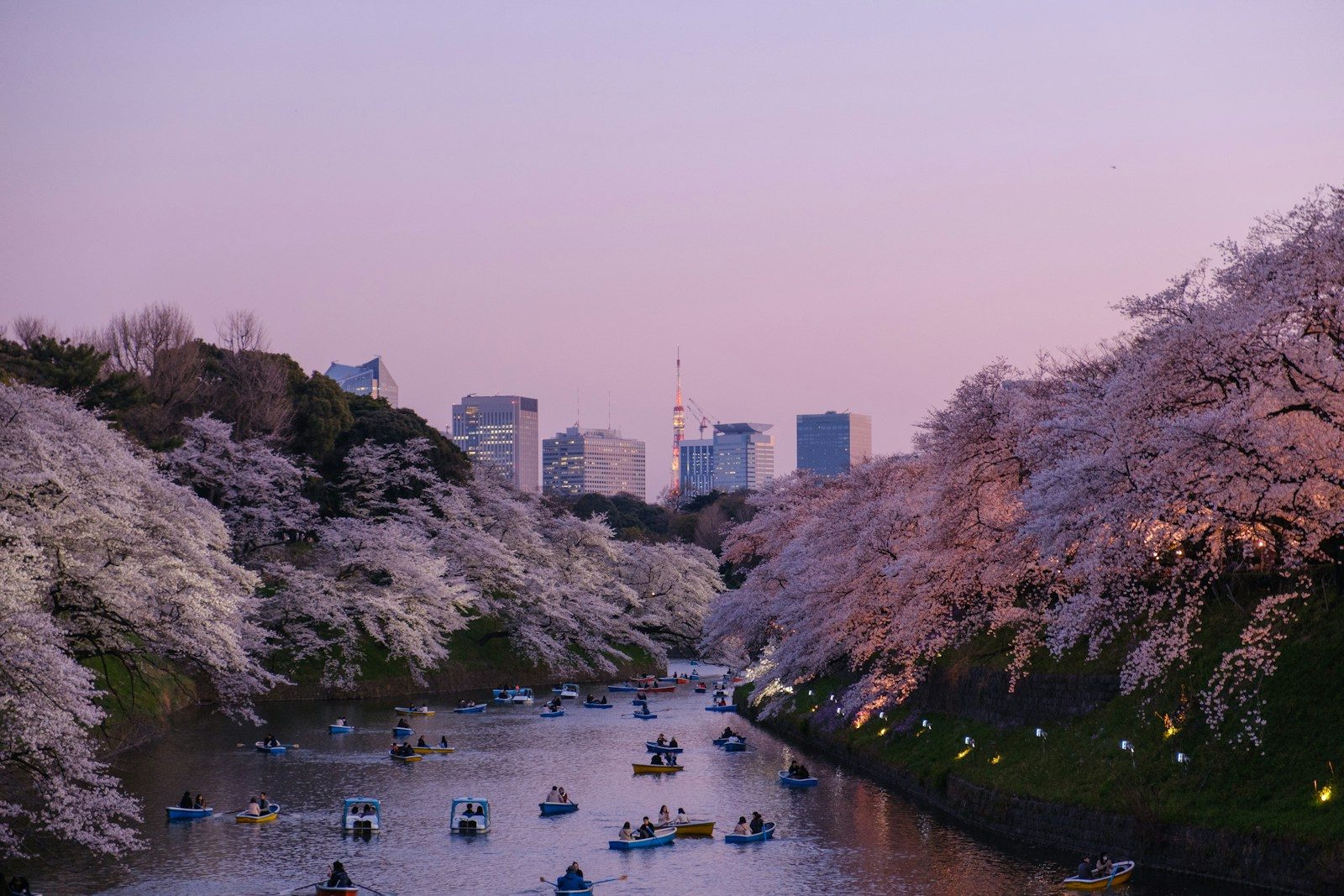
| Chidorigafuchi and Kitanomaru | A moat-side walk with boat rental nearby | Boat queues form early on weekends | Good in the evening, when the trees are lit |
| Meguro River and Sumida Park | Riverside rows of trees in the city centre | Lanes are narrow and pavements are tight | Better walked early, when the blossom is above you rather than around you |
On Shinjuku Gyoen, two things need to be said plainly. During its spring special period the garden opens every day, including Mondays, from 25 March to 24 April. Outside that period it closes on Mondays, or on the next working day when Monday is a holiday. Hours also move with the season. From mid-March to early June the gates are open from 9:00 to 18:00. The last entry is at 17:30. The garden used advance reservation and timed entry during the pandemic years. And that arrangement stands as a precedent rather than a standing rule. Treat reservations as a possibility, and confirm the current status on the garden’s own page in the week before you go.
The Imperial Palace avenue is the opposite case. Inui Street is a short walk, opened for a set period that the Imperial Household Agency announces each year. And the pattern in recent years has been a small number of late-March days either side of the gardens’ general opening. Entry is free, there is no booking system, and visitors pass through a bag check. The walk itself is brief, which makes it a good addition to a morning that already has another stop in it.
If your trip is built around Tokyo, the wider city layer is worth planning properly. And our things to do in Tokyo guide sets out the districts, closing days and viewpoint rules. It follows the same format as this page. The Mount Fuji and Hakone day trip from Tokyo runs year-round. It works whatever the bloom is doing. It survives a mistimed week.
One more layer explains why some Tokyo days feel crowded and some do not. The parks carry early and late varieties side by side. This keeps the city interesting for a fortnight rather than a few days. Late-flowering double blossoms carry the season into the second week of April in gardens whose main avenues have already ended.
Kyoto, Osaka and Kansai: The Early-April Squeeze
Kansai is the band where the calendar and the crowds collide. Kyoto’s normal first bloom is 26 March and its normal full bloom is 4 April. Osaka sits within a day of that. The region’s openings land in the same stretch as school holidays and the local custom of visiting famous trees. That is why accommodation tightens here first.
| Place | What the record shows | What has to be arranged | When to go in the day |
|---|---|---|---|
| Kyoto, central | Normal first bloom 26 March, normal full bloom 4 April | Nothing for public temples and lanes; expect queues at the well-known stops | Before 8:00 for the hillside lanes, after dark for lit trees |
| Nara and Uji | Bloom runs within days of Kyoto | Nothing at the parks; paid temples have their own hours | Mid-morning, when day visitors have moved on to the next stop |
| Osaka Castle Park | Large planting; the park is free, the keep is charged | Nothing for the park itself | Early, and away from the station-side entrances |
| Osaka Mint walkway | A separate, much shorter event, opened for about a week | Advance reservation only, with entry in an assigned slot | Your slot decides it; go straight in and keep moving |
| Kiyomizu-dera | Bloom and a hillside view over the city | Opening hours are set by the temple and change by season | Very early or in the evening hours when the temple stays open |
The walkway at the Osaka Mint is the one place in this band with a hard process around it. In the 2026 season it ran for seven days, from 9 to 15 April. The grounds opened at 9:00 at weekends and at 10:00 on weekdays. And closed at 19:15 each day, with visitors asked to be out by 19:45. Entry was by advance reservation only. Visitors used a QR code sent in the confirmation email, shown on a phone or on paper. Visitors were admitted in their assigned slot, and anyone arriving outside it was turned away. Small transport delays were allowed for.
The practical rules around that walkway are as important as the dates. There is no parking at the site, and no drop-off area for coaches, so public transport is the only sensible arrival. Bags are inspected at entry. Eating and drinking inside the grounds is not allowed, and neither is smoking. Umbrellas, selfie sticks and tripods are not permitted, because the path is narrow and shared. Pets are not allowed either, with the exception of assistance dogs. The season is also a change in the way the site is run. The walkway used to be an open, walk-up visit, and the reservation regime replaced it. The 2027 procedure had not been published at the time of writing. So the pattern above is the thing to plan around, with the current-year notice to be confirmed when it appears.
The rest of Kansai rewards a different approach: leave the centre early and let the crowds arrive behind you. The hillside temple in the east of Kyoto opens its gates hours before the coach parties reach it. And its own site lists the seasonal hours. Nara’s parks are free and wide, the calm option when the city lanes are busy.
Two guided ways of spending a Kansai day are worth knowing about, because both solve a specific problem. A Kyoto walking tour through Gion and the old lanes puts the history of the district in order. This matters when the streets look similar and the signage is not in English. A Nara day trip from Kyoto or Osaka removes the timetable work from a full day out of the city. It puts you in the deer park and the temple grounds without changing trains twice.
One note on timing for the band: the region’s planting is broad. And riverside rows and hillside groves peak at slightly different moments. The visible blossom therefore spreads over more than a week, which is good news for late arrivals.

Kanazawa, the Alps and the Mid-April Layer
Between the Kansai window and the northern one there is a middle band that most itineraries skip. It runs along the Sea of Japan and into the mountains, it sits a week to ten days behind Kyoto. And it absorbs a late arrival better than the famous cities do.
| Place | What the visit is | What to check before you go | Timing in the shape of the season |
|---|---|---|---|
| Kenrokuen, Kanazawa | A strolling landscape garden, open every day of the year | Seasonal opening hours, and the notices for the viewing period | Normal first bloom 3 April, normal full bloom 8 April |
| Kanazawa Castle Park | The castle grounds next to the garden | Early-morning entry arrangements | Same window as the garden |
| Takato Castle Park, Ina | A mountainside park planted thickly with trees | Access without a car, and current-year visitor arrangements | Later than Kanazawa, in the mountains |
| Miharu, Fukushima | A single ancient weeping tree, with the town’s wider planting around it | The rules for the tree itself, which are strict | Mid-April, and short at its peak |
Kenrokuen is the anchor of this band, and its opening arrangements are unusually well documented. The garden is open all year round, with the tearoom inside it as the only closure. From 1 March to 15 October the gates run from 7:00 to 18:00. The last entry is at 17:30. From 16 October to the end of February they run from 8:00 to 17:00. The last entry is at 16:30. During the cherry season and again in the autumn foliage period the garden holds illumination evenings. They are announced in its own notices rather than kept as a standing arrangement.
Two further details are worth building a day around. The garden sets free-admission days through the year, one of them in the viewing season. Usually about seven days in late March and early April, announced roughly a week beforehand. The park and the garden also offer early-morning entry in busy periods. This Puts you on the paths before the coaches arrive. Kanazawa’s compact centre puts the samurai district, the teahouse districts and the market on foot or a short bus ride. This Makes it worth two nights rather than one.
The mountains behind Kanazawa are why this band exists. Takato, in Nagano, is a castle park planted on a hillside. It is reached by a small private line and then a walk. The view runs down the ridge of blossom toward the Alps. Plan around the access and the season. Confirm the current arrangements when the season opens. The last stretch runs on a shuttle in the busy period without a car.
Miharu, in Fukushima, is the other kind of stop entirely. It is a town built around one tree, an ancient weeping cherry whose trunk has been designated a natural monument. And the town’s wider planting runs to thousands of trees across its parks and riverbanks. The tree itself is fenced and viewed from set positions. The town collects an admission during the bloom period under its own ordinance. Children of middle-school age and younger are admitted without charge. And drone flying around the tree is prohibited. In 2026 the collection period ended on 15 April. That is a reminder that this tree peaks earlier than the northern sites on the same itinerary. The town’s own pages carry the current rules and a map of the wider blossom spots. This is worth reading before you decide how long to stay. Miharu rewards a slow visit: the tree is the photograph, but the walk through the town is the day.
Both Miharu and Takato sit away from the main rail lines. And both are small enough that a late arrival means a crowded last bus. If either is the point of your trip, give it a night nearby instead of chaining it to a city day.
Tohoku: Hirosaki, Kakunodate and the Late-April Layer
Tohoku is where the season becomes a second chance. If your dates fall in the second half of April, the cities in the south will already be past their peak. The north, meanwhile, is arriving at full bloom. The band opens with Sendai, whose normal first bloom is 8 April. And closes with Aomori, whose normal first bloom is 22 April and whose normal full bloom falls on 26 April.
| Place | Festival and park | Dates and pattern | Rules worth knowing |
|---|---|---|---|
| Hirosaki | Hirosaki Cherry Blossom Festival in Hirosaki Park | Announced for 2027: 16 April to 5 May, twenty days. The 2026 run was 10 April to 5 May, twenty-six days | Paid areas sit alongside free ones; special evening illumination; drones prohibited; pets cannot walk in the park except caged or carried |
| Kakunodate | The samurai district, with its weeping cherries | The city publishes its own bloom-date list, separate from the visitor summaries | About twenty minutes on foot from the station; the lanes are narrow and residential |
| Sendai | City parks along the river and the castle ruins | Runs in the first half of April | The southern edge of this band and an easy stop on the way north |
| Aomori | City park planting near the bay | Follows Hirosaki closely | Useful as an overnight stop rather than a single stop |
Hirosaki is the reliable card in this band. And 2027 is a good year to plan around, because the dates have been published already. The tourism association’s notice sets the 2027 festival at twenty days, from 16 April to 5 May. The 2026 run went from 10 April to 5 May, twenty-six days. The window is a decision the organisers publish each year, not a fixed number of days. This is why the published dates matter more than any pattern.
The park itself explains why people build trips around it. The festival covers a castle park with a moat. And water, stone walls and blossom together are what the photographs are made of. Free areas sit alongside paid ones, including the inner enclosure, which requires an admission at the gate. In the evening the trees are lit, a pattern the organisers have repeated for years. The rules are stricter than at a city park: drones are prohibited. And pets cannot walk in the park except when caged or carried.
Kakunodate, in Akita, is the quieter counterweight. It is a former samurai district where the weeping cherries along the old streets are protected as natural monuments. And the town is small enough to walk end to end in an afternoon. It is about twenty minutes on foot from Kakunodate Station, which makes it an easy stop on the northern line. The city publishes a bloom-date list for the district separately from its visitor summaries. This is the page to check if you are timing a single day. Because the lanes are residential, the visit works better in the morning and without a tripod.
For a longer spring trip, this band does something the cities cannot: it turns a late booking into a good one. Rooms in Hirosaki and Kakunodate are limited, so the hotel decision comes before the flight decision here. The Hokkaido in winter guide covers the same island in a cold month. It takes the same island to the other end of the year.
Hokkaido: Hakodate, Matsumae and the May Edge
Hokkaido is the last band of the spring, and the one that most spring itineraries do not reach. Its normal dates sit a full month behind Tokyo’s. In Hakodate that means first bloom on 28 April and full bloom on 2 May. In Sapporo it is 1 May and 6 May. If your trip lands in early May, this is where the blossom still is.
| Place | What it is | The window | Practical notes |
|---|---|---|---|
| Hakodate, Goryokaku | A star-shaped fort with a moat, seen from the tower beside it | Follows the city’s normal dates, at the very end of April | The tower gives the shape; the park gives the walk |
| Hakodate, city parks | Formal park planting, illuminated in the evening during the season | Same window | The city runs the evening lighting itself |
| Matsumae | A castle town with a large collection of flowering cherry species | Later and longer than the rest of the island | Its own festival notice carries the dates and the evening hours |
| Sapporo | City park planting, with the island’s coolest season | The last of the main line | Normal full bloom on 6 May |
Goryokaku is the easiest of the Hokkaido stops to explain. It is a fort built in the shape of a star and surrounded by a moat. Planting runs along the ramparts and through the inner park. The view people come for is from the tower beside the site, because the star shape only reads from above. The city manages the evening lighting in its parks during the season.
Matsumae is the stop worth knowing if you will be on the island anyway. It is a former castle town with a broad collection of flowering cherry species. And a broad collection of species means a long window: early varieties open first, late ones follow. And the town keeps blossom for longer than any single-cultivar site can. The 2026 festival ran for twenty-three days, from 18 April to 10 May. The illumination ran from dusk to about 21:00. The organisers also keep the weeks either side as a lighter period. Traffic control is in place when the bloom arrives early or late. The trade-off is access: Matsumae sits at the southern tip of the island. And reaching it takes a bus ride from the nearest town, which makes it a full day rather than an add-on.
Sapporo closes the line, and it is where the species note from the observation table matters most. The city’s normal full bloom lands on 6 May. And the station’s series uses the wild early cherry that grows naturally on the island. So the last band of spring is not the same tree arriving late. It is a different tree in a colder place, which is exactly why it works when everything further south is finished. In Sapporo the season also overlaps with the end of the local snow season in the mountains. This is a strange and useful combination for a trip in the first week of May.
Missed the Peak? The Salvage Playbook
A trip that lands after full bloom in one place is not a failed trip. The country is long, the planting varied, and five moves recover a mistimed week. They are worth knowing even if your dates look right, because the bloom moves.
| Situation | The move | Why it works | What it costs you |
|---|---|---|---|
| You are in a southern city and the trees are past their peak | Look for late-flowering varieties in the same gardens | Many city parks carry double blossoms and late cultivars behind the main avenues | A different tree, often denser and pinker than the classic single blossom |
| The cities are finished but you have a week left | Climb: parks in the mountains sit behind the plains | Cooler air at altitude slows the opening by days to weeks | A longer journey, and often a bus in the last stretch |
| You have ten days and no plan | Ride north, in order: Sendai, Kakunodate, Hirosaki, Hakodate, Sapporo | The northern dates sit a week to a month behind the cities | Hotel choice does the work; the north is where rooms run out |
| You want one reliable day and no risk | Choose a park with a broad planting rather than a single famous tree | A mixed park holds flowers for a fortnight; one tree holds them for days | Fewer postcard images, more usable hours |
| You are in the middle of the season in a small town | Ask the local association for its own bloom page | Small towns publish their own progress notes through the season | You need to check the day before, not the month before |
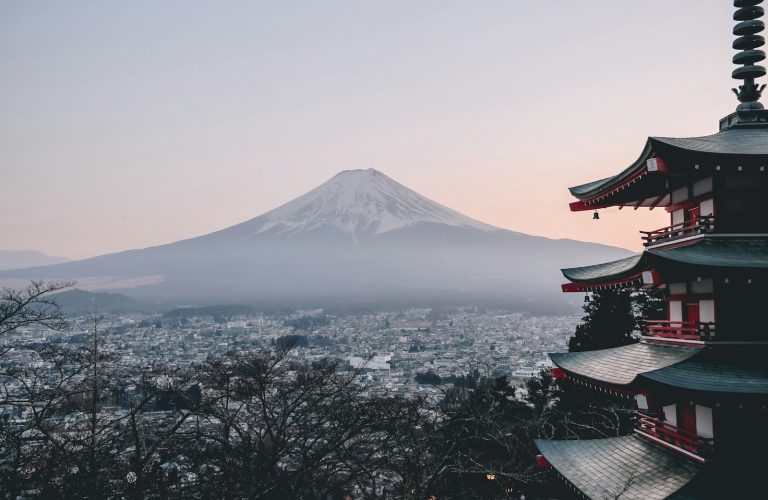
There is a version of this problem that has nothing to do with your dates. A handful of viewpoints have become so busy that the place changed how it operates. The clearest case is the hillside park at Arakurayama Sengen Park in Fujiyoshida. The pavilion view of the mountain there has spread far beyond travel circles. From the 2026 season the town stopped running the site as a festival. The event name is no longer used in the town’s own tourism material. And the reason given is the pressure on residents. What remains is a site that is open and heavily visited. It has a strengthened-measures period in early April. Traffic control runs into the middle of the month, and the viewing deck is entered in rotating groups. And typical waits of one to three hours. Parking is limited.
The lesson is not that the place should be skipped. Visiting a viral viewpoint in peak week costs hours of standing still. And a park with a hundred trees a station away often gives you a better day. If you are travelling outside spring, our Japan in winter guide sets out what each month gives you.
The Booking Clock: What Has to Be Reserved, and When
Spring is a fixed season for residents as well as visitors. Anything that can be reserved will be reserved, and the things that matter most are shortest exactly when you want them.
| What it is | When it becomes scarce | What happens if you wait | The workaround |
|---|---|---|---|
| Accommodation in a famous bloom town | The moment the festival dates are announced | The town fills, and the nearest rooms sit a long train ride away | Book the room first, then build the route around it |
| Rooms in a big city in early April | Weeks before, then again for the holiday stretch at the end of April | You choose between districts you did not plan to stay in | Split the stay between two areas instead of one long booking |
| Advance-reservation venues, such as the walkway at the Osaka Mint | The application window, which opens ahead of the season | Entry outside an assigned slot is refused | Apply the day the window opens, and keep the confirmation code with you |
| Timed entry at busy gardens and viewpoints | Shortly before the date, and again in the week itself | Walk-up entry is suspended or the queue is hours long | Reserve the first hour of the day, which is also the quiet hour |
| Reserved seats on long-distance trains | As soon as the seat map opens, and fast in the holiday weeks | Only standing or non-reserved carriages on the busiest days | Fix the travel days before the sightseeing days |
| Private guides and small-group days out | Weeks ahead in the peak fortnight | Only large-group departures remain | Book the day you care about and keep the rest flexible |
| Rental cars in mountain areas | The same peak fortnight | The model you want is gone, or the office is closed on arrival | Confirm the office hours, not just the booking |
| Parking in small towns | On the morning itself | You circulate, and the lanes are narrow | Take the train or the shuttle where one exists |
The rule that saves the most trouble is to book in the order of scarcity, not importance. A room in a small bloom town is scarcer than a train seat. And a reservation window that closes is more dangerous than a queue that forms. If your trip hinges on one place, that place decides the date.
There is also a calendar effect to plan for. The last week of April and the first days of May are a national holiday stretch. And domestic travel peaks then, on the same trains, hotels and festival towns as the northern bloom. If your dates can move, moving them off that stretch gives you an easier trip.
If you are weighing routes before you commit. Our Japan trip cost guide breaks the decision into the parts that change the total. This is a better starting point than a single daily figure. And if you would rather hand the logistics to an operator, packages that combine transport and accommodation are listed below. Their own availability and contents are shown on each listing.
Chasing the Front by Train
The rail network makes a rolling season usable. You can follow the front north, or treat one city as a base and reach the surrounding bands on day trips. Neither approach needs a pass decision months in advance, but both reward knowing which legs do the heavy lifting.
| Leg | Route | Roughly how long | What to know |
|---|---|---|---|
| Tokyo to Kyoto and Osaka | Tokaido Shinkansen | A little over two hours to Kyoto | The busiest service in the country on holiday days |
| Tokyo to Sendai and Aomori | Tohoku Shinkansen | Two hours to Sendai, around three and a half to Aomori | The spine of the northern band, and the link to the island line |
| Tokyo to Kawazu | Limited express plus the Izukyu line | Around two and a half hours | Additional services run during the festival period |
| Kyoto to Kanazawa | Limited express across the Japan Sea side | A little over two hours | The easiest way into the mid-April band |
| Aomori to Hakodate | Shinkansen under the strait, then a local line | Under two hours in total | The crossing into the Hokkaido band |
| Within Hokkaido | Limited express between Hakodate and Sapporo | Around three and a half hours | Reserve ahead in the first week of May |
Three habits make spring travel easier. Reserve seats on the long legs as soon as the seat map opens, especially either side of the national holiday stretch. Travel with luggage you can manage alone, because the busiest carriages are no place for a large case. And same-day forwarding between hotels removes that problem. Know the last connection of the day rather than the first. A late afternoon at a festival can leave you choosing between a long taxi ride and an early exit.
For the practical layer of Japanese rail travel. Passes, seats, luggage and when a pass actually pays for itself. Our Japan Rail Pass guide goes through the same routes with more detail. The Tokyo to Kyoto bullet train day trip suits a single long day between the two classic cities. It removes the timetable work and the seat reservation.
Crowds, Etiquette and the 7 a.m. Rule
The difference between a crowded visit and an easy one is usually one hour. Blossom sites run on a predictable daily rhythm, and the hour you arrive decides which version of the place you get.
| Time of day | What the site is like | Who is there | What it means for you |
|---|---|---|---|
| Before 8:00 | Empty paths, low light, cold air | Local walkers and photographers | The hour that makes the whole trip worthwhile |
| 9:00 to 11:00 | Steady arrival of groups | Coach parties and school groups | The window when lanes and gates queue |
| Midday to mid-afternoon | Busiest stretch, food stalls open | Everyone | The time to be somewhere else, or eating |
| Late afternoon | Thinning out, warm light | Local residents returning | A good second visit to a place you saw early |
| After dark | Illumination, if the site runs it | Crowds around a short route | Check the last train before you commit to it |
The rule that follows from this is simple. Pick one site per day and arrive at opening. Then use the crowded middle of the day for travel or a meal. Two sites done early are worth six done at midday.
Etiquette in spring is mostly common sense. The notice at the gate is the version that applies where you are standing. Those notices ask visitors not to touch or pull branches, to keep off tree roots. And to stay on the marked path where a lawn is protected. Rules on tripods, drones and picnics vary by site, and they tend to be stricter where the paths are narrow. Read the sign at the entrance rather than carrying an assumption from the last park.
Carry your rubbish out, because bins are rare. And keep the lanes clear: the paths around the well-known trees are shared with residents.
Sakura With Kids and Elders: What Holds Up
A blossom trip with a stroller, or with someone who does not walk far, is a different trip. It is not a worse one. The sites differ enormously in how much walking they demand, and choosing well matters more than choosing famous.
| Need | What works well | What to avoid | The practical arrangement |
|---|---|---|---|
| Wide, flat ground | Parks with lawns and level loop paths | Hillside sites reached by steps | Pick a park with more than one entrance so you can shorten the loop |
| Toilets and benches | Large public parks and paid gardens | Riverside walks and mountain sites | Plan the stop around a park building rather than mid-walk |
| Strollers and wheelchairs | Paved loops in city parks and paid gardens | Gravel, steps and forest trails | Ask at the gate for the accessible route; many sites publish one |
| Short walking distances | Imperial avenue walks and city-centre rivers | Forts and castle grounds with long ramparts | Two short visits in a day beat one long one |
| Rest and food | Garden teahouses, park cafés, station food halls | Festival food stalls at their busiest hour | Eat before noon, then walk while the site empties |
| Heat and sun | Morning visits with a hat | Afternoon queues with no shade | The early hour solves more than one problem |
Privately guided days with a vehicle can be arranged around rest stops and step-free routes. That suits a group mixed in age. The timetable bends to the group rather than the other way round. Options are listed below.
Warm Springs, Cold Snaps and How the Window Moves
The bloom is a temperature story. A date can be beaten or missed because the same weather reaches different places at different times. Four signals explain most of it.
| Signal | What it does | How you read it | What you change |
|---|---|---|---|
| A warm late winter | Pulls the opening earlier across the south | The record jumps forward, as it did in 2023 | Move your dates up, or plan the north instead |
| A cold snap after a warm spell | Holds full bloom longer once it arrives | The trees open slowly and stay open | Take the extra days as a gift; the window widens |
| Wind and rain | Strips petals within hours of full bloom | The ground fills before the canopy empties | Go the day you arrive, not the day after |
| Altitude and inland basins | Delay the opening behind the plains | Mountain parks run later than the city below | Use the mountains when the cities are finished |
The record already shows both directions. A warm spring pulled the whole southern line forward, with Tokyo’s first bloom landing on 14 March in 2023. A cold spring pushed the northern line back. The island’s first bloom arrived in the third week of April rather than the middle of it. Neither year broke the system; both years broke the date.
So plan a band and a hedge rather than a target day. If the band is right, a two-week swing in the weather costs you a change of city, not of country.
On forecasts, one thing is worth stating plainly. The national weather agency stopped issuing its own formal bloom forecasts a few years ago. And today’s forecasts come from private weather services and broadcasters. Each runs its own method, and their dates for the same city often differ by a few days. Read two rather than one, and pair them with the agency’s published observation pages for the cities you plan to visit. This is because an observed date is a fact and a forecast is a guess with a confidence range attached. This page is updated when each season’s forecasts, festival notices and reservation windows are published. So the bands above stay in step with the current year.
Two-, Five- and Ten-Day Japan Cherry Blossom Plans That Hold Together
Most spring itineraries fail for one reason: too many bands in too few days. The plans below are sized so the travel does not eat the trip. And each names the band it is built on.
| Plan | Base or route | The shape | Why it holds together | Who it suits |
|---|---|---|---|---|
| Two days | One city, one base | Two gardens on two mornings, one evening illumination | No transfers, so a weather swing is survivable | A stopover on a longer trip |
| Three to four days | Tokyo, or Kyoto and Osaka | One city layer plus one day out of town | Enough time for a late or early bloom to still work | A short holiday with fixed flights |
| Five to six days | Tokyo to Kanazawa, or Kyoto to Kanazawa | Two bands, one rail leg between them | The mid-April band absorbs a late arrival | A first spring trip in early to mid-April |
| Seven to eight days | Tokyo, then north to Sendai and Hirosaki | Two bands plus one festival town | The northern dates sit a week behind the cities | Anyone with dates in the second half of April |
| Ten days and more | South to north, two or three bands | Cities first, then Tohoku, then the island if the dates allow | Each hop moves later in the season, in step with the calendar | A dedicated blossom trip |
The logic is worth spelling out. Movement north is movement forward in time. A route from the south to the north keeps pace with the season by itself. And movement west into the Sea of Japan side buys a few extra days. Movement south late in the season works against the calendar and needs generous dates.
Two concrete shapes are worth having in mind. A five-day trip in the first half of April works well as Kyoto or Osaka first. Then take a limited express west to Kanazawa for two nights, with the garden as the anchor. A ten-day trip in the second half of April works well. Start in Tokyo, then go north through Sendai and Kakunodate to Hirosaki. The island is an optional tail if the dates run into May.
Planning a full itinerary rather than a single season? Our Japan winter itinerary shows how to order Tokyo, Kyoto and Osaka over a longer trip. It applies when the trees are not the organising principle.
What We Would Skip, and Why
Not everything on a spring itinerary earns its place, and the reasons are practical rather than aesthetic. The table below is the honest version of the advice we would give a friend.
| What it is | Why we would skip it | What to do instead | When it is worth it anyway |
|---|---|---|---|
| The viral hillside deck in peak week | Queues of one to three hours to stand on a platform | A park with a wide planting and no queue | Off-peak mornings, or if the photograph is the point of the trip |
| A single famous tree in a small town | Days of blossom, not weeks, and the town fills | The same town’s wider planting, which runs longer | When the tree is a natural monument and you care about that |
| An evening illumination reached by a long walk | Cold queues, a short route, and a last-train problem | A morning visit to the same trees | When the site is central and the last train is late |
| A mountain park without a car or shuttle | The last stretch is where the day disappears | A valley park on a rail line | When a shuttle runs during the season |
| A multi-band sprint on a short trip | Travel time replaces tree time | Two bands, done properly | When the trip is a rail project in its own right |
| Riverside walks at midday on a weekend | Narrow lanes, no benches, no shade | The same walk at opening | Never, on those terms |
The pattern is that the disappointing places are the ones where the visit is a queue rather than a place. A big park with mixed varieties will beat a famous viewpoint almost every time. So will a walk beside water at opening time, or a garden with a bench. The reason is not that the viewpoint is bad, but that peak week is measured in hours.
Practical Overlays: Tickets, Luggage, Connectivity in Peak Season
Small arrangements decide how a spring day feels, and all of them are easier to set up before you travel.
| Overlay | What to arrange | When to arrange it | Why it matters in spring |
|---|---|---|---|
| Rail tickets and seat reservations | Long legs and any travel day near the holiday stretch | As soon as the seat map opens | The busiest days sell out, and standing wastes a day |
| Transit cards and regional tickets | A transport card for the cities, and a pass only if the maths works | On arrival, or before if your card arrives by post | Two or three journeys a day is normal in blossom season |
| Luggage | Station lockers, same-day forwarding between hotels | The evening before a transfer day | You cannot enjoy a park while managing a large case |
| Connectivity | A data plan that works on arrival, plus an offline map | Before departure | Timetables, reservation codes and bloom pages are all online |
| Timed entries and reservations | The venues that require them, kept in one note on your phone | As soon as each window opens | An assigned slot decides your day |
| Cash and cards | A little cash for small-town buses and stalls | Before leaving the city | Rural shuttles and festival stalls are not always card-friendly |
| Weather checks | Two forecast sources and the observation pages | The night before, and again in the morning | The plan changes by district, not by day |
FAQ: Japan Cherry Blossom — When to Go, What to Book and What to Skip
| Your dates | The band that usually serves them | The one thing to arrange first |
|---|---|---|
| February | Kawazu and the Izu Peninsula | A room in the valley, or a timetable for an early train from Tokyo |
| Late March | Tokyo and the Kanto plain | A timed entry for the busiest garden |
| Early April | Kyoto, Osaka and Kansai | The hotel, then the short reservation windows |
| Mid-April | Kanazawa and the mountains | The rail leg, and a room in the mountain town |
| Late April | Sendai, Kakunodate and Hirosaki | Accommodation in the festival towns |
| Late April to early May | Hakodate and Sapporo | Long-distance seats, and somewhere to stay in the north |
Related Reads
The bands above lean on material we have already published. And these are the pages worth opening next if you are still shaping the trip.
- Things to Do in Tokyo — districts, viewpoints, closing days and the practical rules for the capital.
- Japan Trip Cost — how transport, accommodation and season move the total.
- Japan Rail Pass and Japan’s Trains — passes, seat reservations, luggage rules and when a pass pays for itself.
- Japan in Winter — the same country in the opposite season, month by month.
- Sapporo Snow Festival 2027 — the winter counterpart to the northern band, with its own dates.
- Hokkaido in Winter — the island at the other end of the year, area by area.
- Japan Winter Itinerary — how to order Tokyo, Kyoto and Osaka over a longer trip.
Between them these pages cover the two seasons most travellers are choosing between. If your dates are already set, use the band table above to find the city that fits. Then book the scarce thing first. Fourteen monitoring stations and six seasons of records point at the same conclusion. The Japan cherry blossom season is a moving window. And a trip planned around that window rather than a single date is the one that works.
When is cherry blossom season in Japan?
There is no single date, and that is the first thing to accept. The bloom moves north for about six weeks each spring. In the agency’s normal values, first bloom falls on 22 March in Fukuoka. In Sapporo it falls on 1 May, a spread of forty days. The record shows how wide the swing inside that can be. Fukuoka’s first bloom has landed as early as 12 March and as late as 27 March in the last six seasons. Sapporo’s sits between 15 April and 23 April. Plan a band rather than a day, and the season will meet you somewhere.
What is the best time to see the cherry blossoms in Japan?
The most reliable stretch runs from just before full bloom to a few days after it. Which band that falls into depends on where you are going. Tokyo’s normal full bloom lands at the start of April and Kyoto’s a few days later. Kanazawa’s follows in the second week of April. The northern island’s is in the first week of May. The table above maps dates to bands. If your holiday is fixed, pick the band that fits the dates rather than the city you had in mind.
How far in advance should I book a cherry blossom trip?
Book in the order of scarcity, not importance. A room in a small bloom town is scarcer than a seat on a train. So fix that first, then the reservation windows for short-season venues, then long-distance seats when the seat map opens. Anything with a published application window should be applied for on the day it opens. And keep the last week of April in mind: it is a national holiday stretch, domestic travel peaks. And the north is blooming at the same time. Our Japan trip cost guide breaks down the parts of the trip that move the total.
What can I do if I miss the peak bloom?
Five things. Look for late-flowering varieties in the gardens you are already in, because many parks carry double blossoms behind their main avenues. Climb, since mountain parks sit behind the plains. Ride north, because the northern dates run a week to a month later. Choose a park with a broad planting rather than a single famous tree. And check the local association’s own bloom page the day before, because small towns publish progress notes. If the trees there finish while you are in the capital, our Tokyo guide still holds. It lists the districts and viewpoints that work in any week of spring.
Which regions have the most reliable bloom window?
Reliability means different things in different places. Kanazawa and the Japan Sea side sit a week behind Kansai. This absorbs a slow spring and turns a late arrival into a normal one. Tohoku and Hokkaido are the reliable late option. This is because the season there is decided by a colder climate rather than by a warm spell. Hirosaki’s festival dates for 2027 have been published for twenty days from 16 April. Sapporo’s normal full bloom falls in the first week of May. Where a published period exists, treat it as the plan. Where only an average exists, treat it as the centre of a band.
Do I need reservations for any cherry blossom spots?
For most parks and riversides, no. Public parks are free to enter, and the imperial avenue in Tokyo is free with a bag check and no booking. The exception is a short list of sites with hard processes. The walkway at the Osaka Mint ran for seven days in the 2026 season. Entry was by advance reservation with an assigned slot. There is no parking, no eating or drinking inside, and no umbrellas, tripods or selfie sticks. Busy gardens have used timed entry in some years, so treat it as a possibility rather than a rule. Treat reservations as possible rather than rare, and confirm the current-year rule on the operator’s own page before your date.