Hokkaido in Winter 2026–2027: Weather by Area, the Drift Ice Window & What to Book
Affiliate disclosure: Some links in this guide are affiliate links. If you book a tour or an experience through one of them, this site may earn a commission at no extra cost to you. Nothing here is paid placement, and no operator has been given the right to review or approve a line of this text.
Hokkaido is the part of Japan where winter does not pass through — it settles. Snow that lands in December is still on the ground in March, which is why planning hokkaido in winter is less a question of whether you will see snow and more a question of which four or five days you want to stand in it. The trap is treating the island as one destination with one winter. Sapporo, Niseko, Furano, Asahikawa, the Okhotsk coast and Hakodate sit several hundred kilometres apart and behave like different countries in the same week: one city under a metre of snow, another dry, bright and almost bare.
This guide is built around that difference. It gives you official climate data, month by month from December to March, for the places you are actually likely to sleep — with the observation station named so you can check every figure. It gives you the published operating windows for the drift ice and the festival dates that are confirmed for the coming season, plus an honest note on the ones that are not announced yet. It ranks the bases against each other and puts the booking order in one place, because here the sequence in which you reserve things decides more of your trip than the money you spend on them.
How We Built This Guide (Methodology)
Three inputs, and one refusal.
1. Official climate data, per station, with the metric named. Every temperature, rainfall, sunshine and snow figure in this guide comes from the Japan Meteorological Agency’s 2020 normals (the 1991–2020 statistics period), taken from the agency’s AMeDAS monthly normals archive and quoted with the observation station. That matters more than it sounds, because three different snow measures are confused constantly in winter travel writing: total snowfall, maximum snow depth on the ground, and the number of days on which the depth reaches ten centimetres or more. We name the metric every time we use one. None of the numbers is a forecast, and none is borrowed from another blog. We also extend the tables into March, which most Hokkaido guides simply do not do.
2. A dated calendar with a source — and a blank where there is no source. Every event date printed here was confirmed against the organiser’s or operator’s own page in the first week of October 2026, and where a season is published as provisional we say so. Where the next edition has not been announced at all, we describe the seasonal pattern instead of guessing. A wrong date is worse than no date when you are booking flights around it.
3. Booking windows rather than prices. Two icebreaker seasons for the coming winter are already published and one operator’s reservation desk opens in October; that is the single most useful scheduling fact in this guide, and it has nothing to do with price. Tour descriptions and availability come from live Viator listings, so this article links out for the numbers and keeps its prose free of them — winter pricing here moves with date, group size and distance from the February school weeks, and a figure frozen into text is wrong inside a single season.
What we do not claim. We do not claim to have guided in Japan, and we are not pretending a planning guide is a substitute for a company that operates there. We make no claims about search rankings, and we do not claim to be the only guide to Hokkaido’s winter. We also do not claim the drift ice is schedulable: it is a natural phenomenon with a published window around it, not a timetable. The method itself is the one we use for our winter guides elsewhere, including Turkey in winter, weather by month: climate first, calendar second, bookings third.
Hokkaido in Winter at a Glance — Area by Month
This is the decision table for the whole guide. Read it by row if you already know which part of the island you want; read it by column if your dates are fixed and you are choosing between areas. The ratings are relative to the other months in the same row — not a comparison between areas, and not a ranking of how good each place is in absolute terms.
| Area | December | January | February | Best for / not worth it if |
|---|---|---|---|---|
| Sapporo & around | Good — snow arrives early, the city stays easy | Best — cold, dry, emptiest month of the winter | Peak — festival weeks, hardest beds of the season | Best for a first Hokkaido winter without a car. Not worth it if you want resort skiing at the door and nothing else. |
| Niseko & Kutchan | Building — base forms, road quiet, prices softer | Strong — deep-snow days start in earnest | Best — the deepest snow weeks on the island | Best for skiers chasing the deepest snow with English-speaking infrastructure. Not worth it if you want Japanese town life or a low-key budget week. |
| Furano, Biei & Asahikawa | Good — coldest mornings begin, zoo open | Best — the clearest, coldest inland skies | Very good — deep snow plus the zoo’s penguin walk | Best for dry cold, photography and a family zoo day. Not worth it if nightlife or a big-city base matters. |
| Abashiri & Shiretoko (Okhotsk) | Poor for ice — the ice ships are not running yet | Fair from the last third — the season starts mid-month | Best — most reliable ice window | Best for drift ice, and essentially only for drift ice. Not worth it if your dates are fixed and you cannot absorb a late ice year. |
| Kushiro, Lake Akan & Nemuro | Quiet — driest and most sun of the six | Best — the most sunshine in Hokkaido | Good — lake ice festivals and cranes | Best for sunlight, wetlands and cranes, away from the resort crowds. Not worth it if deep snow is the point of your trip. |
| Hakodate & the south | Mild — the least wintry corner | Good — snow, seafood, thin crowds | Good — late winter markets and food | Best as a rail-friendly stop on the way north. Not worth it if Hokkaido’s winter is your reason — this is a milder, different island. |
Two patterns are worth stating before the month-by-month detail. First, January is the best month for cities and the worst month for improvisation: the skies are the most stable of the four months, the crowds are thin outside the New Year holiday, and a large number of small businesses close for a few days at the start of it. Second, February is the best month for snow and the worst month for deciding late: one festival week pulls the whole country’s demand towards Sapporo, and accommodation that was available in December quietly stops existing.
Hokkaido Winter Weather, Month by Month
Everything below is climate, not forecast: Japan Meteorological Agency 1991–2020 normals for six reference stations — Sapporo (14163), Asahikawa (12442), Furano (12626), Kutchan for the Niseko area (16217), Abashiri (17341) and Kushiro (19432). The station numbers are printed so you can look the figures up yourself, and they are the reason the numbers for the same month differ so much between rows: Furano and Asahikawa sit in an inland basin that traps cold air, Kushiro sits on the dry eastern coast, and Kutchan sits in the snow belt where the numbers stop looking like the rest of the island.
Read the last column carefully, because it is the one that answers the practical question. Days with 10 cm or more on the ground is not how many days it snows — it is how many days of the month you can expect the landscape to be under snow at all. A month can produce heavy snowfall and still record few of those days if the snow melts between storms, and the reverse also happens. Every time a figure is quoted in this guide, the metric is named.
December in Hokkaido: Snow Arrives, Daylight Is at Its Shortest
| Station | Mean temperature (avg high / avg low) | Sunshine | Days with ≥10 cm on the ground | Max snow depth |
|---|---|---|---|---|
| Sapporo | −0.9 °C (2.0 / −4.0) | 82.7 h | 19.6 | 47 cm |
| Asahikawa | −4.2 °C (−0.8 / −8.0) | 58.1 h | 27.1 | 58 cm |
| Furano | −5.1 °C (−1.2 / −10.2) | 45.7 h | 25.6 | 46 cm |
| Kutchan (Niseko) | −3.1 °C (0.0 / −6.8) | 38.8 h | 29.0 | 99 cm |
| Abashiri | −2.4 °C (0.7 / −6.0) | 117.4 h | 14.6 | 29 cm |
| Kushiro | −1.9 °C (2.5 / −7.0) | 175.6 h | 4.7 | 17 cm |
December is a month of two halves, and which half you get depends entirely on which row you are standing in. Sapporo records snow on the ground on roughly two-thirds of the month and a maximum depth around knee height, while Kutchan — forty kilometres west and several hundred metres higher — is already recording snow on the ground on almost every day of December and a maximum depth near a metre. Kushiro, on the other side of the island, is drier and sunnier than Tokyo in the same month and mostly bare.
What that means in practice. Daylight is at its shortest, so the usable part of a day is a bright morning and an early sunset; the sensible shape of a December day in Hokkaido is outdoor time before mid-afternoon and indoor time after it. Sapporo’s 82.7 hours of sunshine across the whole month, against 90.4 in January and 103.5 in February, is the number behind every “the days are short” warning you will read elsewhere — the light is not only brief, it is also frequently overcast. Travel in the first half of the month is the softest of the winter in terms of demand, which is a real advantage if you are booking late rather than planning a year out.
What opens and what closes. The ski season starts, but provisionally and often on partial terrain: the published plans for the coming season put Sapporo Kokusai’s opening around 20 November, Sapporo Teine’s around 21 November and Niseko Tokyu Grand Hirafu’s on 28 November, all of them marked as target dates rather than promises, and early-season cover in Hokkaido can be thin, with some lifts and runs still closed into the middle of the month. Asahiyama Zoo in Asahikawa closes for a short maintenance window in early November and runs its winter season from 11 November, which is worth knowing because the zoo is one of the few winter attractions in the interior that works well with children in low temperatures. Many smaller museums, rural attractions and mountain facilities move to reduced winter hours or shut for the season as the month turns.
January in Hokkaido: The Coldest, Clearest Month — and the Quiet One
| Station | Mean temperature (avg high / avg low) | Sunshine | Days with ≥10 cm on the ground | Max snow depth | Days with ≥50 cm |
|---|---|---|---|---|---|
| Sapporo | −3.2 °C (−0.4 / −6.4) | 90.4 h | 30.5 | 76 cm | 17.3 |
| Asahikawa | −7.0 °C (−3.3 / −11.7) | 75.3 h | 31.0 | 72 cm | 19.5 |
| Furano | −8.3 °C (−3.7 / −14.4) | 64.3 h | 30.9 | 64 cm | 15.3 |
| Kutchan (Niseko) | −5.4 °C (−2.0 / −9.6) | 47.0 h | 31.0 | 155 cm | 30.6 |
| Abashiri | −5.1 °C (−2.2 / −8.9) | 111.5 h | 28.5 | 46 cm | 4.8 |
| Kushiro | −4.8 °C (−0.2 / −9.8) | 186.7 h | 14.0 | 23 cm | 0.3 |
January is the month people are describing when they say Hokkaido is cold, and the numbers are more specific than the reputation. Sapporo averages a high of −0.4 °C and a low of −6.4 °C; Asahikawa spends roughly twenty-six days of the month without the temperature reaching freezing at all, and Furano averages a night-time low near −14 °C. This is also the clearest month of the winter on the Pacific coast — Kushiro records 186.7 hours of sunshine, more than most of Japan manages in January — because the coldest air is the driest and the cloud that buries the west coast is wrung out before it reaches the east.
The New Year period, which is the one thing in January you must plan around. The first three days of the month are the domestic travel peak: long-distance trains and flights fill with people going home, and a large number of independent businesses — restaurants, small shops, some museum wings, rural buses and a few ferry and bus services — close or run a holiday timetable for several days either side. The practical rule is to plan the 1st and 2nd of January around things that are reliably open, keep any long-distance leg reserved before you land, and not to judge Hokkaido’s food scene by what is open on New Year’s Day. By mid-January the island is empty again and remains so until February.
January is also when the ice season starts. The icebreaker cruises on the Okhotsk coast begin in the last third of the month, the penguin walk at Asahiyama Zoo typically enters its regular pattern from late December, and the daytime highs in the interior stay below freezing, which is what keeps the snowpack intact rather than turning it into slush. If snow depth rather than temperature is your question, note the Kutchan column: 155 cm maximum depth and thirty days of the month with at least half a metre on the ground.
February in Hokkaido: Deep Snow, the Festival Week and the Tightest Booking Market
| Station | Mean temperature (avg high / avg low) | Sunshine | Days with ≥10 cm on the ground | Max snow depth | Days with ≥50 cm | Days with ≥1 m |
|---|---|---|---|---|---|---|
| Sapporo | −2.7 °C (0.4 / −6.2) | 103.5 h | 28.3 | 95 cm | 26.0 | 3.5 |
| Asahikawa | −6.0 °C (−1.7 / −11.8) | 96.1 h | 28.3 | 84 cm | 24.2 | 2.1 |
| Furano | −7.4 °C (−2.3 / −14.0) | 78.5 h | 28.3 | 73 cm | 22.0 | 0.1 |
| Kutchan (Niseko) | −4.9 °C (−1.0 / −9.4) | 65.1 h | 28.3 | 181 cm | 28.3 | 26.9 |
| Abashiri | −5.4 °C (−2.0 / −9.6) | 137.9 h | 27.6 | 58 cm | 9.6 | 0.2 |
| Kushiro | −4.3 °C (−0.1 / −9.4) | 183.1 h | 18.7 | 26 cm | 0.5 | 0 |
February is the deep-snow month, and the Kutchan column is the reason the Niseko area has the reputation it has: a maximum snow depth averaging 181 cm and roughly twenty-seven days of the month with a metre or more on the ground. Even Sapporo, a city rather than a resort, averages a maximum depth of 95 cm in February and snow on the ground on nearly every day of it. This is also the month in which the snowpack is at its most reliable, which matters if your trip is built around snowshoeing, snowmobiling or simply walking in it: a February visit to the interior is the closest you can get to a guarantee that the landscape will look like the photographs.
The cost of that reliability is demand. The Sapporo Snow Festival week is the moment when the whole country’s winter travel wants the same beds, flights and seats, and the effect spreads outward from Sapporo into the ski resorts, because the school holidays around it push families into the same fortnight. Accommodation that was easy to book in December becomes unavailable, and the marginal hotel rooms — the ones that get released last — are exactly the ones you do not want to rely on. Sunshine is also improving through the month, which is the small compensation for the crowds: Sapporo’s 103.5 hours is the brightest of the four months of deepest winter, and the light on the snow on a clear morning in the interior is the reason photographers plan trips for February rather than January.
March in Hokkaido: Winter on the Ground, Spring in the Light
| Station | Mean temperature (avg high / avg low) | Sunshine | Days with ≥10 cm on the ground | Max snow depth | Days with ≥1 m |
|---|---|---|---|---|---|
| Sapporo | 1.1 °C (4.5 / −2.4) | 144.7 h | 28.4 | 82 cm | 1.7 |
| Asahikawa | −1.4 °C (3.0 / −6.1) | 141.3 h | 29.7 | 82 cm | 2.2 |
| Furano | −2.2 °C (2.7 / −7.8) | 124.0 h | 29.1 | 71 cm | 0.5 |
| Kutchan (Niseko) | −1.0 °C (3.0 / −5.7) | 121.1 h | 31.0 | 170 cm | 25.9 |
| Abashiri | −1.3 °C (2.3 / −4.9) | 172.4 h | 26.0 | 52 cm | 0.1 |
| Kushiro | −0.4 °C (3.3 / −4.2) | 200.8 h | 9.4 | 23 cm | 0 |
“Is March still winter in Hokkaido?” is one of the most common questions about the island, and the honest answer is that it is both, in a way that is easy to use once you see the numbers. On the ground, March is still plainly winter: Sapporo records 28.4 days of the month with at least ten centimetres of snow lying, almost exactly the January figure, and its average maximum snow depth of 82 cm is deeper than December’s. In the Niseko snow belt the snowpack is still building into the second half of the month — twenty-six days with a metre or more on the ground — which is why the resort’s published season runs to early May.
In the light and the calendar, however, March belongs to spring. Sunshine jumps sharply: Sapporo’s 144.7 hours is well over half again its December figure, Abashiri reaches 172.4 hours and Kushiro 200.8 — the brightest month of the winter on the east coast. What closes in the first ten days of the month is the event season, and this is the part that catches people out: the ice festivals and the festival weeks are February and early March events, and by the time the daylight is worth travelling for, most of them have ended. Skiing, by contrast, is at its most comfortable — longer days, softer temperatures, the deepest base of the year — but the surface changes through the day, firm in the morning and heavier in the afternoon, which is why serious skiers still start early.
The practical trade in March is therefore quality against quantity: fewer events, thinner crowds, cheaper beds, easier tables, and a town that is easier to walk in — with the caveat that city streets go through a slush-and-ice phase, and pavements in Sapporo and Asahikawa can be genuinely slippery in the afternoon and icy again at night. If your trip is about snow underfoot rather than a festival, March is the month most people overlook, and building it around the first ten days gets you the last of the event calendar with the best of the daylight.
The Drift Ice Window on the Okhotsk Coast
The drift ice is the one thing on Hokkaido’s winter calendar that nobody sells you a guarantee for, which is exactly why it is worth planning properly. The ice forms in the Sea of Okhotsk, where fresh water arriving from the Amur river lowers the salinity of the surface layer and lets it freeze early at low temperatures; wind and current then push that ice south and west until it reaches the Hokkaido coast, usually from late January, with the greatest concentration of pack ice off Abashiri and Monbetsu in the second half of February and the first days of March. Two consequences follow, and both shape how you should book. First, the ice arrives from the north-east, so the sequence of the season runs roughly from Monbetsu and Abashiri round towards the Shiretoko peninsula. Second, ice that has been blown offshore can leave a perfectly good ship with nothing to look at.
What you can rely on is that the operators publish a window and start selling before the ice exists. For the coming season those published windows are:
| Operator / experience | Published window for 2026–2027 | Notes |
|---|---|---|
| Aurora icebreaker, Abashiri | Operating window 20 Jan – 31 Mar | The largest published schedule on the coast; icefloe viewing is most reliable mid-February to early March |
| Garinko icebreaker, Monbetsu | Daily service 15 Jan – 31 Mar 2027 | The operator’s page states that bookings are scheduled to open on 9 October 2026, marked as planned rather than confirmed |
| Drift-ice walk, Utoro (Shiretoko) | Per operator: 1 Feb – 31 Mar, 1 Feb – 23 Mar and 1 Feb – 20 Mar | Windows differ by operator and depend on the ice; one operator’s early morning departure runs only to mid-March. Reservations open around mid-November |
Sources for the windows above. The Abashiri operating period is stated on the operator’s own English fares and time-table page as Period of operation — From Jan.20th to Mar.31st (ms-aurora.com/abashiri/en). The Monbetsu season dates and the October booking date come from the Garinko operator’s page (o-tower.co.jp/garinkogo.html). The Utoro walk windows come from each guiding operator separately, which is why the three end dates differ.
Three rules follow from that table, and they are worth more than any date in it.
Book the ship, not the ice. Every product here is a scheduled departure with a fixed number of places, and none of them can promise ice on the day. A cruise booked for the last week of February is a cruise; whether it delivers pack ice is a matter of wind direction over the preceding fortnight. If the ice is the reason for the trip, give yourself more than one possible day on the coast rather than a single tightly-timed departure.
The booking window opens months before the ice window. The clearest example is the icebreaker at Monbetsu, whose booking desk is scheduled to open in October for a season that starts in mid-January, and the drift-ice walks at Utoro, whose places are released around the middle of November for a February season. That gap is the single most useful scheduling fact on this page: the thing that sells out first is not the ice, it is the seat. Small boats and guided walks on foot have hard limits on numbers, they are the experiences people most want in the season, and the early departures and the weekends are the first to go — Monbetsu’s icebreaker cruises are typical in that respect, with a short season and a capacity that cannot be expanded when demand spikes.
Treat the coastal train as a seasonal pattern rather than a dated service. The scenic coastal service that runs along the Okhotsk shore in the same weeks is a well-known part of the season, but its timetable is published by the railway rather than the tourism boards, and the precise dates move year to year. Check the operator’s own pages and the current timetable before you build a day around it — and if you are travelling by rail on this coast anyway, note that the rail line’s own snow-shedding and drift-ice scenery is part of the experience even when the special service is not running.
One last thing about expectations. The ice that most visitors photograph is not a solid white sheet but a mosaic of flat floes, and the best viewing conditions — clear, cold, still air — are also the days the coast is at its most beautiful and its most punishing. Plan the coastal leg with a spare day, dress as if the wind will be twice what the forecast suggests on land, and you will enjoy the one part of a Hokkaido winter that is genuinely weather-dependent rather than merely weather-influenced.
Where to Base Yourself in Hokkaido in Winter
Hokkaido is not one destination and this is the section where that costs you something if you get it wrong. The island’s winter regions are between one and six hours apart, the roads between them close in bad weather, and the mistake almost everyone makes on a first winter trip is picking two bases that look close on a map and spending the trip in transit. The six bases below are the ones worth building a trip around, each with the traveller it suits and the one it does not.
Sapporo and Around
Who it suits. First-time visitors, families, non-skiers, and anyone who wants a winter city rather than a winter expedition. Sapporo is a grid city of two million people under a metre of snow, and it works in winter in ways that surprise people: the pavements are cleared, the subway is warm and frequent, and a network of underground walkways means you can cross the centre without going outside. Daytime highs around freezing in the deep months are cold by Japanese standards but not extreme — this is a city where you can walk to dinner.
Who should skip it. Skiers who want the mountain at the door. Sapporo has resorts within reach, but they are day trips rather than doorstep terrain, and if powder is the point of your trip you are better off sleeping in Kutchan or Furano.
How long. Three to five nights as a base, or two at each end of a trip built around the interior. The city itself is a comfortable two-to-three-day proposition — Odori and the central grid, the Susukino food district, the view from Mount Moiwa, the historical village at the edge of town, one of the winter festivals if your dates line up — and the extra days are for day trips.
Getting in and out. New Chitose Airport handles the island’s international and domestic traffic and sits about forty minutes from the city centre by rail, with frequent departures all day. Otaru, the canal town to the west, is a simple train ride and a good half-day or overnight. Onsen villages such as Jozankei are reachable by direct bus, which makes them an easy splurge night without a car. Guided snowshoe and snow-play days from Sapporo are the simplest way to add a snow activity without reorganising the trip around a ski resort.
The trade-off. Sapporo is a big city with a winter coat on, not a snow village. If what you want is a hot spring, a wood stove and silence, use it as a transport hub and sleep elsewhere.
Niseko and Kutchan
Who it suits. Skiers and snowboarders, particularly those who want English-speaking infrastructure, ski-in access, and the deepest reliable snow on the island. The climate numbers for Kutchan are the argument: a maximum snow depth averaging 155 cm in January and 181 cm in February, with roughly twenty-seven days of the February month carrying a metre or more on the ground.
Who should skip it. Travellers who want Japan’s everyday small-town life, anyone on a tight budget in peak season, and non-skiers staying more than a couple of nights — the area is built around the mountain, and a February week here is priced accordingly.
How long. Four to seven nights if you are riding, two to three if you are not. There is genuine non-ski content — onsen, snowshoeing, the villages along the road to the coast — but it is a supporting cast rather than a main event.
Getting in and out. From New Chitose Airport by shuttle bus or car, or by rail through Otaru to Kutchan, followed by a short local transfer. The road journey from Sapporo is roughly a two-hour proposition in good conditions and considerably longer in a snowstorm.
The trade-off. You are paying for snow and convenience, and you are not getting “Japan”: the resort villages operate in English, the menus are international, and the experience is closer to a well-run alpine resort that happens to be in Japan. That is either exactly what you want or a reason to choose Furano.
Furano, Biei and Asahikawa
Who it suits. Travellers who want dry cold, empty landscapes and photography. This is the interior: Furano averages a night-time low near −14 °C in January and Asahikawa spends around twenty-six days of the month without reaching freezing, which is what keeps the snow dry and the air clear. Asahiyama Zoo is here, and so is the rolling farmland of Biei, which in winter becomes a set of white hills with single trees on them.
Who should skip it. Anyone who wants evening entertainment beyond a good meal, and anyone who cannot handle a genuine inland winter — the cold here is the coldest on the island outside the high mountains.
How long. Three to five nights, more if you ski or photograph seriously; Furano has its own resort on two connected mountains.
Getting in and out. Asahikawa is the rail hub of the north, with frequent limited expresses from Sapporo and connections onward to Abashiri and the Okhotsk coast; Furano is a branch-line ride from Asahikawa, and Biei sits on the same line. A car makes the area much more generous — the best of Biei is off the main road — but the local buses and taxis cover the standard circuit.
The trade-off. You trade the city’s convenience for landscape and light, and the distances between the villages are longer than they look. Some rural attractions and facilities are closed for the season, so it pays to check specific places rather than assume a region-wide opening.
Abashiri and Shiretoko (Okhotsk Coast)
Who it suits. Travellers whose trip is about drift ice, wildlife and a coast that is genuinely different from the rest of Japan. This is where the ice ships sail from, where the guided drift-ice walks run, and where the winter sea looks like a broken white field rather than water.
Who should skip it. Anyone with a fixed schedule and no spare day, and anyone expecting the ice to be guaranteed. The town’s own winter attractions outside the ice season are modest, and if the ice is late or blown offshore, you need a willingness to be on the coast anyway.
How long. Two to three nights as a minimum, and more if you want both the icebreaker cruise and the drift-ice walk at Utoro. The drive from Abashiri to the Shiretoko peninsula’s Utoro side is a serious winter road in poor conditions.
Getting in and out. Flights to Memanbetsu cut a long journey into a short one; the rail route via Asahikawa takes most of a day. Local buses serve the coast and the peninsula, with reduced winter frequencies.
The trade-off. This is the least convenient and least comfortable base on the island in winter, with the most weather-dependent headline attraction. It is also the one you will remember, and the one that cannot be replicated anywhere else in Japan.
Kushiro, Lake Akan and Nemuro
Who it suits. Travellers who want sunlight, wetland wildlife and a break from the resort circuit. The climate numbers here are unlike anywhere else on the island: Kushiro records 186.7 hours of sunshine in January and 200.8 in March, and its February maximum snow depth averages just 26 cm. Red-crowned cranes winter on the plains around the town, and the caldera lakes of Akan offer frozen-lake scenery and onsen without the resort price.
Who should skip it. Anyone whose idea of a Hokkaido winter is deep snow at the door — this is the driest corner of the island, and the snow that falls is thinner and often wind-scoured.
How long. Two to four nights. The classic version pairs a night on Lake Akan’s onsen shore with days on the wetlands and the coast at Nemuro, where the winter birding and the seafood are the reason to go.
Getting in and out. Kushiro is a rail terminus with services from Sapporo, and the region is friendly to a car in a way that the snow-belt areas are not: the roads here are drier and the visibility is better. Nemuro is a further run east, best done as an overnight rather than a day trip.
The trade-off. You are choosing light, birds and space over the postcard snow experience. In a good year the combination — white hills, blue water, cranes against a clear sky — is the most photographically rewarding week in Hokkaido, and most visitors never consider it.
Hakodate and Southern Hokkaido
Who it suits. Travellers arriving from Tokyo by rail, and anyone who wants a compact winter city with a strong food scene. Hakodate’s climate is the mildest on the island — a January mean of −2.4 °C with a high near freezing — and the city is a walkable set of hills, a morning market and a harbour.
Who should skip it. Anyone treating it as a Hokkaido winter experience. It is the least snowy corner of the island in the sense that matters to travellers: 23 days with ten centimetres or more on the ground in January but fewer than two with half a metre.
How long. One to two nights, most often as the first or last stop of a rail-based trip between Honshu and Sapporo.
Getting in and out. The shinkansen reaches Hakodate, which is what makes the city a natural gateway; onward trains to Sapporo run via the coastal and inland routes, and winter conditions occasionally add time to that leg.
The trade-off. Hakodate is a lovely city that is not really a snow destination, and travellers sometimes book it expecting the Hokkaido of the brochures. Take it for what it is — food, history and a warm start — and put the snow part of your trip somewhere north of it.
If you are building an itinerary rather than choosing a single base, our companion guides to Japan in winter, month by month and region by region and to the Tokyo, Kyoto and Osaka winter itinerary place Hokkaido in the context of the rest of the country.
Skiing and Snowboarding — Which Base for Which Skier
Hokkaido’s ski areas are not variations on one product. They differ in snow volume, in the kind of terrain, in how much of the resort is in English, and in what you do when you are not skiing. The seasons below are the operators’ own published dates for 2026–2027, and they carry a caveat worth reading before you use them: several are published as provisional or target dates, the opening and closing of a season depends on conditions, and early-season cover in Hokkaido can leave large parts of a mountain shut even when the resort is technically open.
| Ski area | Published season 2026–2027 | Character |
|---|---|---|
| Niseko Tokyu Grand Hirafu | 28 Nov 2026 – 5 May 2027 (provisional); night skiing 12 Dec 2026 – 22 Mar 2027 (provisional) | The deepest and most international of the Hokkaido resorts |
| Furano | Two connected mountains above the town, season opening through late November | Quieter, more Japanese, strong for long cruising days |
| Tomamu | 1 Dec 2026 – 5 Apr 2027 | Resort skiing with the ice village and family facilities on site |
| Sapporo day resorts (Teine, Kokusai, Kiroro) | Teine: opening target 21 Nov 2026; Kokusai: target 20 Nov 2026 | The add-a-day option for a city-based trip |
Niseko and Hirafu
The reason to come is volume of snow rather than vertical: with an average February snow depth at Kutchan of 181 cm and nearly a metre on the ground on most of the month’s days, the mountain here stays soft in a way that European and North American resorts do not. The terrain runs from wide, forgiving groomers to genuinely demanding tree skiing and, for those who want it, guided backcountry on the peaks around the resort. The infrastructure is the most foreigner-friendly on the island — English is the working language of the resort, gear rental and lessons are easy to arrange, and there is a functioning ski-town economy. The trade-off is price during the peak weeks and the fact that the village is a resort, not a Japanese town.
Furano
Furano’s selling point is a different kind of day: fewer people, more space, and a mountain area which handles long, fast, wide runs across two linked zones. The snow is drier and colder than at Niseko, the town is a real one with a local food scene and a distillery, and accommodation in the town is cheaper than anything equivalent in Hirafu. It suits intermediate and advanced skiers who prefer cruising to queues, families who want a quieter base, and anyone combining skiing with photography in Biei. It suits boarders least: the terrain is less shaped for it than Niseko’s.
Tomamu
Tomamu is the most self-contained of the options and the best answer for families who want one decision: the resort combines skiing, a hotel complex, and the winter ice village within a single property. Young skiers have wide learning terrain, non-skiers have somewhere to be, and the season runs from the start of December to the first week of April. The cost of the convenience is that Tomamu is a bubble — there is no town to walk into and nothing outside the resort’s own programming.
The Day Resorts from Sapporo
For anyone based in the city, Sapporo’s local resorts are the pragmatic choice. Teine is the closest to the centre and the most historic, Kokusai has the most terrain of the Sapporo resorts, and Kiroro sits a little further out with strong snow. All three work as a day trip using public transport or a shuttle, which means a city-based trip can include two or three ski days without moving hotels — and, at the other end of the scale, a ski-focused trip can use Sapporo as a cheap base for a couple of days before or after the resorts. Plan them as day trips with an early start: buses from the city to the mountains fill early on weekends and during the festival week.
Two rules apply to every season above. Do not plan around published dates as promises — they are targets, and a thin start to the season can leave upper terrain closed well into December. And keep the money out of the planning: lift prices, lessons and rentals move with the season, week and package everywhere in Hokkaido, and the same pass costs different amounts depending on when and how you buy it. Compare live listings for the dates you actually want rather than trusting a figure from a guide written months ago.
The Winter Calendar — Festivals, Ice Villages and Penguin Walks
Hokkaido’s winter calendar has two kinds of entry, and knowing which is which decides whether you can build a trip around something. The first kind is a published date from the organiser or operator, which you can plan flights and hotels against today. The second kind is a seasonal pattern — an event that runs every year in roughly the same window but whose next edition has not yet been announced. We mark them separately, and we do not convert a pattern into a date to make a section look fuller.
| Event | Published for 2026–2027 | Where | Status |
|---|---|---|---|
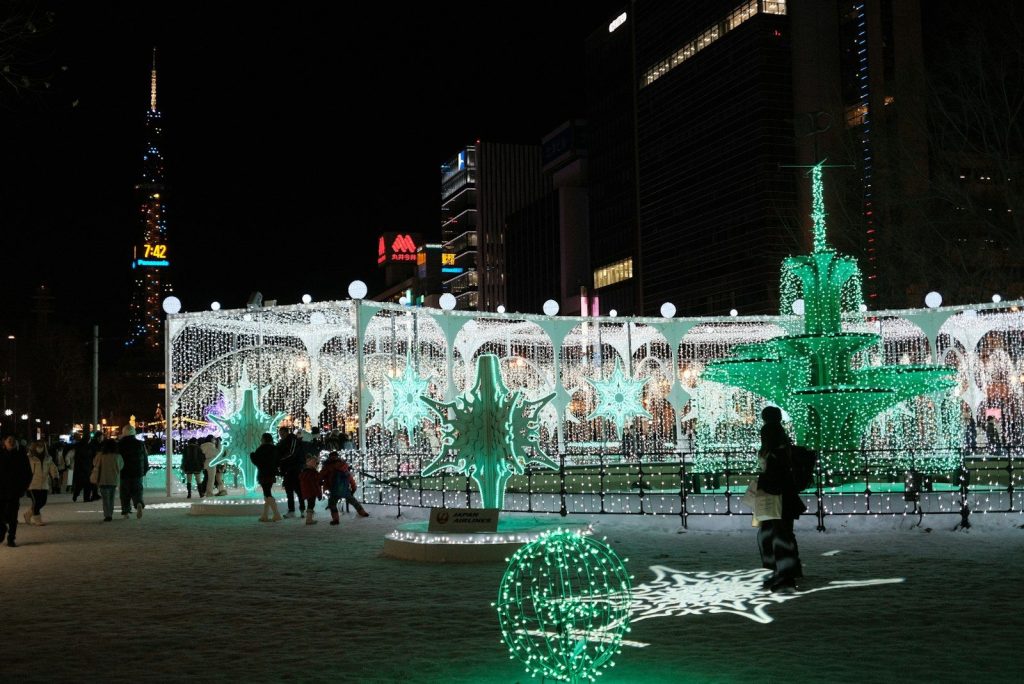
| Sapporo Snow Festival, 77th edition | 4–11 Feb 2027 (Odori, Susukino and Tsudome sites); Snow Sports Park 12–14 Feb 2027 | Sapporo | Confirmed by the organiser |
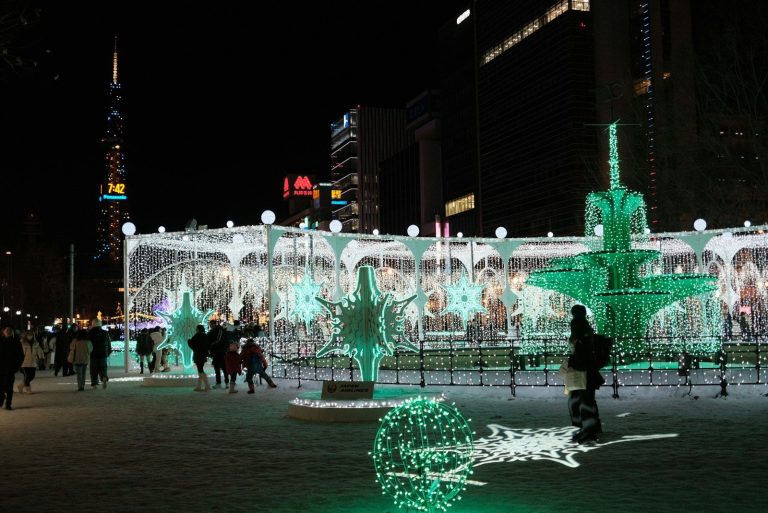
| Lake Shikotsu Ice Festival | 30 Jan – 23 Feb 2027, 10:00–20:00 | Lake Shikotsu, near Chitose | Confirmed; a pre-booked shuttle runs in the same period |
| Sounkyo Ice Waterfall Festival, 52nd edition | 23 Jan – 7 Mar 2027; weekday evenings 17:00–21:30, weekends and holidays from 11:00 | Sounkyo gorge, Daisetsuzan | Confirmed by the organiser |
| Tomamu Ice Village | 20 Dec 2026 – 10 Mar 2027 | Tomamu resort | Published on the resort’s site as tentative |
| Asahiyama Zoo winter season | 11 Nov 2026 – 7 Apr 2027, 10:30–15:30; closed 30 Dec – 1 Jan | Asahikawa | Confirmed by the zoo |
| Asahiyama Zoo penguin walk | Usually late December to mid-March, and only when there is enough snow; route of roughly 500 m, held twice a day in the core months and once a day in March | Asahikawa | Snow-dependent; the zoo publishes the pattern rather than fixed dates |
| Otaru Snow Light Path | Season runs over about a week in early to mid-February, evenings | Otaru | No announcement yet for the 2027 edition |
| Asahikawa Winter Festival | Early to mid-February, with the large snow sculptures | Asahikawa | No announcement yet for the 2027 edition |
| Abashiri Drift Ice Festival | Early to mid-February, tied to the arrival of the ice | Abashiri | No announcement yet for the 2027 edition |
| Sapporo White Illumination and city illuminations | From late November through the winter months | Sapporo and most cities | An annual fixture rather than a dated event |
The reason the unsettled entries matter is practical rather than pedantic. The three festivals without a 2027 announcement cluster in the same fortnight as the Snow Festival, in the same region — so if your trip is built around the first half of February, they will very probably be running in parallel, and the sensible version of your plan is to book the things that are fixed and to check the organisers’ pages in the weeks before you travel for the ones that are not. If a festival is the reason for your trip rather than a bonus, wait for the announcement before you book a non-refundable hotel. And note the one entry on the table that is not a festival at all: the penguin walk is a snow-dependent natural behaviour, not a show, and the zoo is explicit that it is held only when conditions allow — the days it happens cluster in the coldest and snowiest stretch of the season.
The one-week question. The answer depends on what you are willing to pay for it, but the shape is consistent. The first ten days of February collect the most: the Snow Festival is on, the drift-ice season on the Okhotsk coast is at its most reliable, the ice villages and the inland ice festivals are all running, the snowpack is at its deepest, and the daylight is already noticeably better than in January. It is also the most expensive and most crowded week of the winter in the region. If you want the same conditions with fewer people, the last week of January is the compromise: the Sounkyo ice festival opens on 23 January, the Shikotsu ice festival on 30 January, the icebreaker season has started, the cities are empty again after New Year, and accommodation is still bookable at short notice. If your trip is about skiing rather than events, the first half of March gives you the deepest base of the season with almost none of the crowds.
Getting Around Hokkaido in Winter
Hokkaido is bigger than it looks and its winter transport network is thinner than Honshu’s, which makes the order of your trip a transport question before it is a sightseeing one. Four modes matter.
Rail. The backbone is a set of lines rather than a web. The main island route runs from Hakodate up through Sapporo; the northern trunk runs Sapporo to Asahikawa, which is the interchange for everything on the Okhotsk coast — onward to Abashiri and Shiretoko-Shari — and for the branch line into the Furano and Biei valley. A separate line runs east from Sapporo to Kushiro. Outside those corridors, rail coverage thins quickly, and some rural stations see a handful of services a day. Winter punctuality is generally good, but snow-related delays and short-notice cancellations do happen, especially on the coastal and mountain sections, so a connection that matters deserves a buffer.
Shinkansen and the long haul from Honshu. The bullet train reaches Hakodate, which makes a Tokyo-to-Hokkaido rail trip straightforward and the city a natural first stop. The extension of that line north to Sapporo is under construction; we are not printing a completion date, because the published schedule has moved more than once and a traveller cannot book on it today. Until it opens, the practical options between Hakodate and Sapporo are the conventional rail route or a domestic flight.
Buses and flights. Intercity highway buses duplicate the main rail corridors and are often the only public transport to the resorts; airport shuttles are the standard way into the Niseko area and to Tomamu. For the Okhotsk coast, flying to one of the eastern airports turns the longest journey on the island into a short one, and the airlines’ winter schedules are where the real capacity for that coast sits.
Driving. A car transforms the interior — Biei’s hills, the rural onsen, the wetland roads — but it is a genuine winter driving decision rather than a rental formality. Winter tyres are not optional and are normally supplied on winter rentals; four-wheel drive helps; and the things that actually catch people are the ones nobody warns them about: black ice on shaded bends, roads closed after heavy snow without much notice, refuelling points widely spaced in the interior, and the fact that a navigation app will happily route you onto a mountain pass in conditions you do not want. If you drive, plan shorter daily distances than you would in summer, start earlier in the day because the light goes early, and treat any road through a mountain range as weather-dependent.
What this means in practice. Two journeys define a Hokkaido winter itinerary and both are longer than most people expect: reaching the Okhotsk coast from Sapporo takes most of a day unless you fly, and the Niseko resort area is not a casual day trip from the city. Everything else on this island is manageable, but the shape of a good trip is one that moves in a line rather than zigzagging — Sapporo to the interior, then east to the ice coast, then a flight or a long train back, instead of trying to see both sides of the island on consecutive days.
What to Book Before You Fly (and When)
Winter Hokkaido is not a destination where you must reserve everything months in advance, but it is one where a small number of things have a hard capacity and a short season, and those are the items whose lead times differ from everything else. Thinking about bookings by class explains almost all of it.
| Class of booking | Practical lead time | Why it behaves that way |
|---|---|---|
| Icebreaker cruises and guided drift-ice walks | Earliest of all — the season is short and the capacity is fixed | One boat or one guide, a few places per departure, and a window of about two months; one operator’s booking desk is scheduled to open in October for a season starting in mid-January, and the drift-ice walks at Utoro release their places around mid-November |
| Accommodation in Sapporo for the festival week | Months, if your dates are fixed by the festival | The single most concentrated demand event of the Japanese winter, with a limited stock of rooms in the city centre |
| Ski accommodation for the New Year period and the February school weeks | Long for those weeks, much shorter outside them | Resorts sell by number of beds and by week; midweek dates in the quieter stretches of January are far easier |
| Ryokan and onsen stays for weekends in January and February | Weeks to a couple of months | Small room counts and a fixed dinner service make weekends the scarce nights |
| Guided day tours and private guide days | Moderate, and shorter than people fear | Larger fleets and more frequent departures, but good licensed guides are a limited resource in the peak weeks |
| City hotels and standard day tours outside the festival window | Often fine a few weeks out | Large room stock and frequent departures; the exception is New Year and the festival week |
The logic that explains the table is worth holding on to, because it lets you improvise safely. Anything with a boat, a guide or a small number of beds sells out by numbers rather than by price, and it sells out earliest for the best dates. The rest of the market — hotel rooms in Sapporo outside festival week, standard day tours, midweek ski beds in the quieter parts of January — behaves normally and rewards late decisions with lower prices. The two moments when the whole system tightens at once are the New Year holiday and the festival fortnight, and they tighten in the same way for Japanese domestic travellers as for visitors, which is why prices move rather than stock.
The structural evidence that the ice window is the real season. Airlines publish their winter schedules in advance, and the capacity they add tells you where the demand is. For the coming season, one carrier announced that its Tokyo-to-eastern-Hokkaido route would run three round trips a day instead of two for the period that brackets the drift-ice window in February and early March, at the same time as trimming frequency on another eastern Hokkaido route — a scheduling decision reported from the airline’s own winter announcement (trade coverage of the airline’s winter schedule). Read it as a signal rather than a curiosity: the carriers move seats towards the ice coast for exactly the weeks when the ice ships are sailing, which is another way of saying that those weeks are the ones that run out first.
The private-guide option is worth considering for a specific kind of trip. For families and small groups, a licensed guide day removes the language and navigation problems that make the interior harder than it needs to be in winter — someone else drives the snowy road, handles the bookings and knows which farm road is passable after a storm. Private and small-group guided days in Hokkaido are the format to compare against a self-drive plan if you are travelling with children or with people who do not want to deal with winter roads at all.
Practical Winter Tips for Hokkaido
Most of what goes wrong on a Hokkaido winter trip is not the weather itself but the way people prepare for the wrong version of it. The cold is manageable; what is not manageable is being wet, being on ice in smooth soles, or planning a four-hour outdoor day around a five-hour window of light.
Clothing: layer, and keep the layers openable. The effective system is a warm base layer, an insulating mid layer and a windproof outer shell, with everything easy to open and close, because you will move constantly between a −6 °C street and a 24 °C train or shop. There is no need for expedition-grade kit for a city-and-coast trip; the one upgrade that genuinely changes the experience is windproofing, since the coastal wind on the Okhotsk side makes the same temperature feel very different. A hat and gloves matter more in dry cold than an extra sweater, and a spare pair of gloves is worth carrying if you are handling a camera or a phone.
Footwear and city ice. This is the safety item on the list. Hokkaido’s cities are not icy everywhere — the main pavements are cleared and often heated or graveled — but shaded crossings, station approaches, car parks, temple steps and the compacted snow at crossings can be genuinely dangerous, and the accident that ruins a winter trip is usually a fall rather than frostbite. Waterproof boots with a real tread are the minimum; slip-on spikes or grips are cheap, packable and worth having for the days when the temperature has been above freezing and then dropped again. Above the ankle helps in deep snow, and a second, drier pair of socks in your bag is a small luxury on a long day out.
Light and scheduling. The usable light is the constraint on every winter day: build outdoor plans for the morning and early afternoon, put indoor sights, onsen and meals into the second half of the day, and treat sunset as the end of the sightseeing day rather than the start of the evening. This is also why an early start is worth more in Hokkaido than almost anywhere: the first hours after sunrise are the clearest, the emptiest and the most photogenic of the day.
Onsen in winter. A hot spring after a cold day is the single best value experience in Hokkaido, and the etiquette is straightforward: wash before entering the bath, keep the water out of the tub, and take towels back to the changing room rather than leaving them on the poolside. On tattoo policies, establishments differ — some refuse visible tattoos outright, some cover them with a patch, some have no policy at all — so the honest advice is to check the specific onsen rather than assume a national rule, and to look for the ones that advertise themselves as tattoo-friendly if this affects you.
Winter food. The season is the reason to eat here. Crab, seafood markets in the morning, ramen in the interior where the cold is coldest, and the regional soups and hotpots that exist precisely because of the climate. Two practical notes: seafood markets are busiest in the morning and often closed for a day a week, and the most memorable meals are usually in the small places near the station rather than the ones with a translated menu outside.
Small local habits worth knowing. Sapporo’s underground walkways and shopping arcades are the reason locals stay presentable in winter, and they are the fastest way to cross the city centre in bad weather. Vending machines serve hot drinks alongside cold ones across the island, which is a small revelation on a snowy platform. Convenience stores are warm, ubiquitous and open, and are the reliable fallback on New Year’s Day when independent restaurants are shut. And queues are orderly — on a snowy morning, the person behind you is not trying to pass you, so take your time on the ice.
Cold-weather tech. Phone batteries drain noticeably faster in the cold, and a phone that dies at −10 °C will come back to life once it is warm again. Keep the device in an inside pocket close to your body, carry a power bank, and treat photography as the reason to carry a spare battery rather than as an afterthought.
What closes and what is limited. Winter closes more than people expect, and it closes in ways that are not seasonal in the obvious sense. Mountain trails and high passes are shut or unmaintained, some parks and gardens close entirely for the season, rural museums and attractions reduce their hours or shut from December to March, and certain facilities — observation decks, ropeways, boat services — close for maintenance or for ice. The correct habit in Hokkaido is to check the specific place for the specific date rather than to trust a regional opening statement, and to treat any outdoor facility above about a thousand metres as a spring-to-autumn proposition unless it publishes otherwise.
FAQ: Hokkaido in Winter
Is Hokkaido worth visiting in winter?
Yes, and the case is stronger than for most winter destinations precisely because the snow is reliable rather than decorative: Sapporo averages snow on the ground on around thirty days of January, and the interior keeps a base all the way into March. The trade-off is distance and cold — this is not a destination you can see casually in a long weekend — but if you want a winter that looks and behaves like a winter, there is very little in Japan that competes with it.
When can you actually see drift ice in Hokkaido?
The published icebreaker season runs from mid-January to the end of March on the Okhotsk coast, and the greatest concentration of pack ice off Abashiri and Monbetsu is normally in the second half of February and the first days of March. The ice is a natural phenomenon, not a scheduled service: it arrives on current and wind, it can be late, and it can be blown offshore on the day of your cruise. Book the departure, keep a spare day on the coast, and check the operators’ own ice reports in the week before you travel.
How cold does Hokkaido get in winter?
By the Japan Meteorological Agency’s 1991–2020 normals, Sapporo’s January average temperature is −3.2 °C with a mean high of −0.4 °C and a mean low of −6.4 °C; Asahikawa is markedly colder at −7.0 °C, and Furano averages a January low near −14.4 °C. The east coast is milder than the interior — Kushiro and Nemuro sit around −5 °C — and the metric matters: those are monthly averages across a thirty-year period, not the coldest night you might meet, so a night below −15 °C in the interior is entirely normal weather rather than an event.
Do you need a car to enjoy Hokkaido in winter?
No, but you need to accept the constraints of not having one. Rail and buses cover the main corridors — Sapporo, Asahikawa, the Furano valley, the Okhotsk coast and Kushiro are all reachable — and the resort areas are served by shuttles. What a car buys you is the interior: the small onsen, the back roads of Biei, the wetland drives, and the freedom to stop when the light is good. If you are not driving, choose bases that are well connected and treat the rural days as guided or organised rather than improvised.
When should you book for the Sapporo Snow Festival?
Early — the 77th edition runs 4–11 February 2027 with a sports element on 12–14 February, and that fortnight concentrates more demand into Sapporo than any other period of the Japanese winter. Accommodation in the city centre and flights into Hokkaido both tighten months ahead, and the surrounding ski weeks fill with the same families. If the festival is the reason for your trip, fix the beds and the transport first and build everything else around them; if your dates are flexible, the same conditions with fewer crowds sit in the last week of January. Live tour and experience availability for the season is listed here.
Can you enjoy Hokkaido in winter if you don’t ski?
Easily, and a good number of winter trips here never go near a ski lift. The strongest non-skiing reasons to come are the icebreaker cruises and drift-ice walks on the Okhotsk coast, the ice villages and ice festivals, the penguin walk at Asahiyama Zoo, the snow scenery of the Biei and Furano valleys, and Sapporo itself — a city that functions normally in winter and is best seen on foot and by subway. The one planning consequence is that your trip will lean on transport more heavily than a skier’s, since you are moving between towns rather than staying on one mountain.
Related Reads
- Japan in Winter 2026–2027 — the pillar guide to the whole country in the cold months, with climate data for Sapporo, Tokyo, Kyoto, Nagano and more: Japan in Winter 2026–2027: Weather by Month, Where to Go & What to Book
- Japan Winter Itinerary: Tokyo, Kyoto & Osaka — the day-by-day companion for the cities on the main island, in seven, ten or fourteen days: Japan Winter Itinerary: Tokyo, Kyoto & Osaka in 7, 10 or 14 Days
Two cross-references from our own library, because the method behind this guide is the method we use elsewhere. The month-by-month structure and the habit of naming snow metrics come from our Turkey in winter, weather by month guide, and the same approach to crowds, seasons and booking windows drives the best time to visit Turkey.
Hokkaido in winter rewards a decision made in the right order: pick your window first, because the ice coast, the festival fortnight and the deep-snow weeks do not all fall in the same dates; choose the base that suits the window rather than the other way round; and reserve the handful of things with a hard capacity — the ice ship, the walk on the ice, the festival-week bed — before you spend any time on the parts of the trip that can be decided late. Do that, and the rest of it is a matter of walking carefully, eating well and being outside when the light is at its best, which in this season is not a small thing. Booking for the season, live dates and availability included, is listed here.