Japan in Winter 2026–2027: Weather by Month, Where to Go & What to Book
Affiliate disclosure: Some links in this guide are affiliate links. If you book a tour or an experience through one of them, this site may earn a commission at no extra cost to you. Nothing here is paid placement, and no operator has been given the right to review or approve a line of this text.
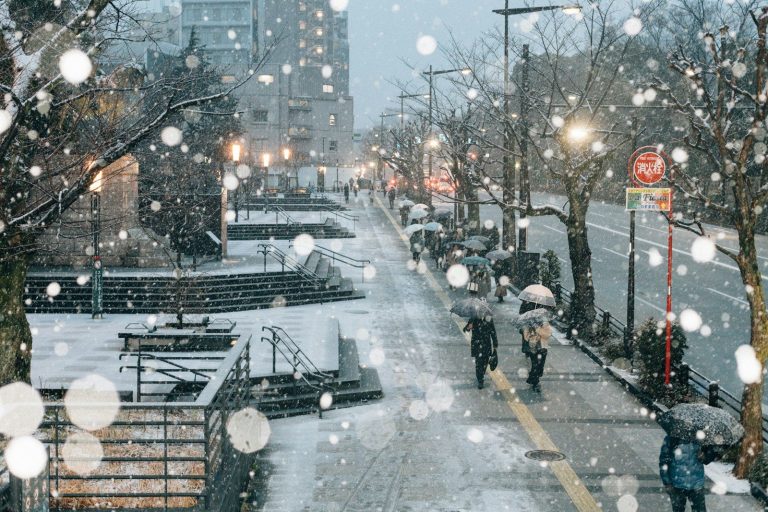
Winter in Japan is three different seasons wearing one name. December is dark early, bright with illuminations and still cheap enough that you can decide late. January is the coldest, clearest and emptiest month almost everywhere except the snow resorts — and the month when the domestic calendar around New Year rearranges what is open. February is the deep-snow month, the festival month, and the one where the best accommodation has already been gone for weeks. Planning japan in winter as a single block is the mistake that produces trips which feel either rushed or empty. This guide maps the three months separately: official climate numbers for the cities you are actually likely to sleep in, a region-by-month decision table, the dated events worth building a trip around, what closes, and what to book before you leave — with the live tour and availability layer kept in one place rather than scattered as prices in the prose.
How We Built This Guide (Methodology)
Three inputs, and one thing we deliberately left out.
1. Official climate data, per city. Every temperature, rainfall and sunshine figure in this guide comes from the Japan Meteorological Agency’s 2020 normals (the 1991–2020 statistics period), pulled from the agency’s AMeDAS monthly normals archive and quoted with the station name. None of it is a forecast, and none of it is copied from another travel blog. Where we give hours of daylight or sunshine, the number is a 30-year average, which is exactly what you want when deciding between two months rather than between two weekends.
2. A verified event calendar. Every date we print is either confirmed by the organiser’s own page at the time of writing (6 October 2026) or described as a seasonal window rather than a date. If an event’s next edition has not been announced, we say so instead of guessing — a wrong date is worse than no date when you are booking flights around it.
3. Live availability, not invented prices. Tour descriptions and the fact that a given experience is bookable on a date come from live Viator catalogue listings; we link out for the numbers. This is also why you will not find a single price in the prose of this article: winter Japan pricing moves with demand, dates and group size, and a figure frozen into text is wrong within a season. The one exception to all of this is judgement — the region-by-month ratings below are ours, and we say so.
What we do not claim. We do not claim to have guided in Japan, and we are not pretending a general winter guide is a substitute for a company operating there. We do not claim this is the only guide that covers the season, and we make no claims about search rankings or about beating anyone. The method is the same one we use for our winter guides elsewhere, including Turkey in winter, month by month: climate first, calendar second, bookings third.
Japan in Winter at a Glance — Region by Month
The table below is the decision instrument for this whole guide. Read it by row if you already know where you want to go; read it by column if your dates are fixed and you are choosing between regions. The ratings are relative to the other two months in the same row, not against other regions.
| Region | December | January | February | Why, in one line |
|---|---|---|---|---|
| Hokkaido (Sapporo, Niseko, Okhotsk coast) | Good — snow arrives early | Best — powder plus drift ice | Peak — festival weeks | The deepest, most reliable snow in the country, and the coldest air; book early because everyone who wants powder already has |
| Tohoku (Aomori, Iwate, Yamagata) | Quiet — cheap, dark, beautiful | Strong — snow-country scenery | Strong — festivals and ice | Snow-country scenery and onsen towns without Hokkaido’s price or queue |
| Tokyo & Kanto | Excellent value — illuminations, mild | Best — driest, clearest skies of the year | Good — cold snaps, plum blossom at the end | The easiest winter city: dry sunny days, late openings, unlimited day trips |
| Kyoto, Osaka & Kansai | Good — fewest crowds of the year | Best — empty temples at dawn | Good — cold, occasional snow on the hills | Temple country with the year’s thinnest crowds outside the New Year holiday |
| Japanese Alps & Nagano | Good — resorts open, snow building | Best — dry powder, snow monkeys | Best — peak ski season | The driest snow in Japan and the classic wildlife day trip, at altitude where cold is the point |
| Kyushu (Fukuoka, Kagoshima, Kurokawa) | Mild — late autumn feel | Mild — quiet onsen season | Mild — inland snow, coastal rain | A warmer, slower winter with great food and hot springs |
| Okinawa | Warmest of the three, wettest | Cool, driest stretch | Cool — whale season | The closest Japan gets to a no-snow winter, plus humpback whale watching in mid-winter |
Two patterns are worth naming before the month-by-month detail. First, January is the best winter month for cities and the worst for improvisation: the weather is the most stable of the three, the crowds are the thinnest outside the New Year holiday, and the trade-off is that a lot of small businesses close for a few days at the start of the month. Second, February is the best month for snow and the worst month for deciding late: the Sapporo Snow Festival pulls the entire country’s demand toward Hokkaido, ski-school weeks fill up, and accommodation that was available in December quietly stops being available.
Japan in Winter Weather by Month (December, January and February)
The tables below are the backbone of this guide: Japan Meteorological Agency 1991–2020 normals for six places you are likely to actually sleep in — Sapporo and Abashiri in the north, Tokyo, Kyoto, Nagano and Lake Kawaguchi in the centre. They are climate averages, not forecasts, and the station names are given so you can check them yourself. Two of the columns are almost impossible to find in travel writing and are the ones that actually answer the question you are asking: sunshine hours (how much of the day is usable) and days with snow depth of 10 cm or more (whether snow is a reliable feature of the month, not a lucky afternoon).
One warning about snow statistics, because this is where most month-by-month guides quietly mislead. Japanese records distinguish total snowfall (how much snow fell during the month) from snow depth on the ground, and a third measure, the number of days with 10 cm or more lying on the ground. Sapporo can record well over a metre of snowfall in January while the ground depth never reaches that figure, because snow compacts. When you read a figure below, the metric is named — do the same with any other guide you compare against.
December in Japan: Short Days, Long Evenings, Best Value of the Winter
Japan in December is the value month of the winter: it has the mildest prices of the three and the most forgiving booking calendar, which is exactly why it is underrated. In Tokyo the mean temperature sits around 7.7 °C with highs near 12 °C and around 174 hours of sunshine across the month — drier and brighter than most people expect from a Japanese winter. Kyoto is a degree or so cooler with noticeably less sunshine, and Sapporo is already a snow city: a mean around −0.9 °C and roughly 20 days of the month with 10 cm or more on the ground.
What changes in December. Daylight is at its shortest, so the practical shape of a day is a bright morning and an early sunset; build outdoor sights before mid-afternoon and keep gardens, temples and viewpoints for the front half of the day. The illumination season is in full swing through the month, which gives the evenings a purpose. This is also the month before the domestic travel peak, so transport is bookable at short notice and accommodation is at its most negotiable of the winter.
What closes or changes. Very little closes specifically because of December, but a large number of small businesses — family restaurants, independent shops, some museum wings — take a short break over the New Year period at the very end of the month, from around 29 December into 3 January. If your trip straddles that window, plan the 1st and 2nd of January around places that are reliably open: major temples and shrines, department stores, chain restaurants and convenience stores. This is also when domestic long-distance travel peaks, so the practical advice for late December is simply to have your intercity legs reserved before you land.
For the December traveller comparing live options rather than averages, the winter tours and day trips that run through the month are worth pricing first — December is the month where a late decision still leaves you a choice. A winter day trip such as Mt Fuji and Hakone from Tokyo is the kind of option that fits that late decision.
January in Japan: The Driest, Clearest and Emptiest Month for Cities
Japan in January is the month to choose if you want cities rather than snow. Tokyo averages 5.4 °C with about 193 hours of sunshine — the sunniest month of the entire winter and one of the driest in terms of rainy days, at roughly four and a half days with meaningful rainfall. Kyoto averages 4.8 °C, and while it is greyer than Tokyo it is at its emptiest: outside the New Year holiday, the famous sites absorb their thinnest crowds of the year, and a dawn start at the big shrines and temple districts is genuinely quiet rather than merely “less busy”.
What changes in January. The first three days are the exception to everything above. Oshogatsu, the New Year holiday, is the single biggest domestic travel movement of the Japanese year: people return to family homes and visit shrines for the first prayers, transport is packed on the main corridors in both directions, and a great many businesses and smaller restaurants close from 1 to 3 January. Slots for the first days of the month are the ones that disappear first, so treat them as the fixed point in an early-January plan rather than the flexible one.
Snow is possible in the cities in January but rarely significant: Tokyo averages a fraction of a day with snow lying, Kyoto about the same, and Nagano — an hour away by train at altitude — around 12 days with 10 cm or more. That contrast is the useful one for planning: January gives you the option of a snow day without committing the whole trip to a snow destination.
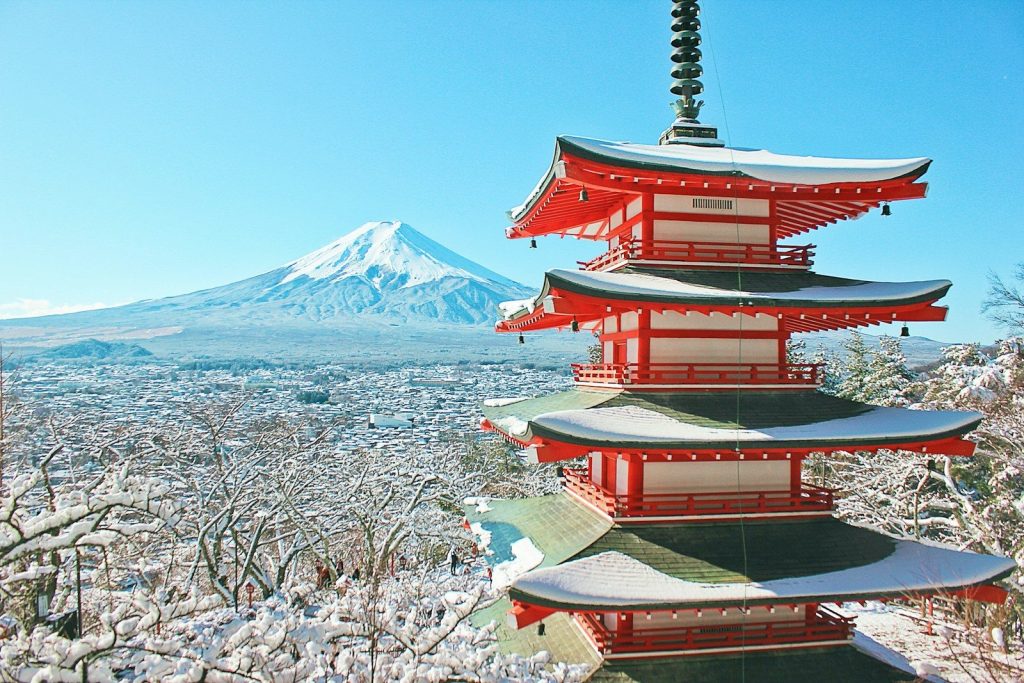
January is also the month when the north and the mountains hit their stride. Sapporo averages −3.2 °C with roughly 30 days of snow on the ground, Abashiri on the Okhotsk coast is colder still and sunnier at the same time, and Kawaguchiko below Mount Fuji runs about 212 sunshine hours — the highest of the three months and the reason a winter morning beside the lakes can be spectacular when the air is clear. If you want both city winters in one day, a Tokyo to Kyoto day trip by bullet train is the straightforward way to do it.
February in Japan: Deep Snow, Festivals and the Compressed Booking Window
Japan in February is the deepest-snow month of the winter. Sapporo’s ground snow depth averages around 95 cm at its seasonal maximum, the Okhotsk drift ice is at its most reliable, and the Alps and Nagano resorts are at peak season. It is also the month when the country’s demand is most concentrated: the Sapporo Snow Festival occupies a fixed window in the first half of the month, school and ski weeks cluster around it, and the accommodation and rail seats that were comfortable in December are gone.
In the cities February is the odd middle ground: Tokyo averages 6.1 °C, dry and often brilliantly clear, with plum blossom beginning at the very end of the month; Kyoto averages 5.4 °C with about 122 hours of sunshine, its greyest of the three months, and the occasional dusting on the surrounding hills. Nagano and Kawaguchiko both hold their snow, so day trips into real winter remain possible from either city.
What changes in February. Two things matter more than weather. First, the festival calendar: if the snow festival or an ice festival is the reason for the trip, you are booking against everyone else who had the same idea, and the lead time is measured in months. Second, the price mechanism: February combines the highest demand of the winter with the lowest flexibility, so the same experience that could be arranged a fortnight ahead in December needs to be arranged well ahead in February. The compensation is that February is the month where the north of Japan is at its most spectacular — dry powder in Hokkaido and the Alps, drift ice on the Okhotsk coast, and ice-sculpture festivals inland.
Japan Winter Weather by City — the Numbers, Month by Month
Source: Japan Meteorological Agency, 2020年平年値 (1991–2020 normals), AMeDAS monthly normals, accessed 6 October 2026. Climate averages — not a forecast.
December
| City (station) | Mean | High / Low | Sunshine | Days with snow depth 10 cm or more |
|---|---|---|---|---|
| Sapporo (14163) | −0.9 °C | 2.0 / −4.0 °C | 82.7 h | 19.6 |
| Abashiri (17341) | −2.4 °C | 0.7 / −6.0 °C | 117.4 h | 14.6 |
| Tokyo (44132) | 7.7 °C | 12.0 / 3.8 °C | 174.4 h | 0.0 |
| Kyoto (61286) | 7.2 °C | 11.6 / 3.5 °C | 134.4 h | 0.1 |
| Nagano (48156) | 2.3 °C | 6.9 / −1.5 °C | 131.1 h | 3.2 |
| Lake Kawaguchi (49251) | 2.3 °C | 8.5 / −2.9 °C | 199.9 h | 0.7 |
January
| City (station) | Mean | High / Low | Sunshine | Days with snow depth 10 cm or more |
|---|---|---|---|---|
| Sapporo (14163) | −3.2 °C | −0.4 / −6.4 °C | 90.4 h | 30.5 |
| Abashiri (17341) | −5.1 °C | −2.2 / −8.9 °C | 111.5 h | 28.5 |
| Tokyo (44132) | 5.4 °C | 9.8 / 1.2 °C | 192.6 h | 0.2 |
| Kyoto (61286) | 4.8 °C | 9.1 / 1.5 °C | 123.5 h | 0.2 |
| Nagano (48156) | −0.4 °C | 3.8 / −3.9 °C | 128.4 h | 11.6 |
| Lake Kawaguchi (49251) | −0.4 °C | 5.5 / −5.7 °C | 212.3 h | 7.4 |
February
| City (station) | Mean | High / Low | Sunshine | Days with snow depth 10 cm or more |
|---|---|---|---|---|
| Sapporo (14163) | −2.7 °C | 0.4 / −6.2 °C | 103.5 h | 28.3 |
| Abashiri (17341) | −5.4 °C | −2.0 / −9.6 °C | 137.9 h | 27.6 |
| Tokyo (44132) | 6.1 °C | 10.9 / 2.1 °C | 170.4 h | 0.4 |
| Kyoto (61286) | 5.4 °C | 10.0 / 1.6 °C | 122.2 h | 0.1 |
| Nagano (48156) | 0.4 °C | 5.3 / −3.7 °C | 140.2 h | 8.6 |
| Lake Kawaguchi (49251) | 0.6 °C | 6.6 / −4.8 °C | 190.7 h | 7.1 |
Read the sunshine column first if you are deciding between two months for the same place: Tokyo gains roughly 18 hours of sunshine from December to January, Lake Kawaguchi is bright in all three months, and Sapporo’s darkest stretch is December, before the snow season even peaks. Read the snow-days column first if snow is the point of the trip: Sapporo and Abashiri sit above 27 days in both of the deep months, Nagano gives you a snow day without a snow trip, and Tokyo and Kyoto are essentially snow-free.
Where to Go in Winter — Region by Region
Five regions, in the order most people consider them. Each one ends with a pointer to the deeper guide we are publishing next, so that this page stays the map rather than the manual.
Hokkaido — The Reliable Snow Destination
The Hokkaido winter is the season at its most dependable: if there is one version of the Japanese winter that is not a gamble, it is this one. Sapporo gives you a large, walkable city with snow on the ground from December into March; Niseko and Rusutsu to the south-west are the international ski names, with dry powder and a resort infrastructure built for visitors who do not speak Japanese; and on the Okhotsk coast, Abashiri is the base for the drift ice that arrives from the Sea of Okhotsk in the deep winter months, when you can stand on a shore and watch the sea turn into a broken white plain.
The region is also the most exposed to cold: the numbers above put Sapporo’s January mean at −3.2 °C with a mean minimum of −6.4 °C, and Abashiri colder still at −5.1 °C, with a mean minimum below −8 °C. That is a manageable cold if you dress for it and an unpleasant one if you treat it as an afterthought. Winter in Hokkaido rewards early starts, because the light goes early and the roads and pavements need attention after heavy snow.
This page keeps Hokkaido deliberately short: the detailed Hokkaido guide covers the resorts, the drift-ice season, the inland ice festivals and the logistics of getting around in the snow.
Tokyo & Kanto — The Easiest Winter City in Japan
Tokyo in January is one of the most comfortable winter cities in the developed world: dry, bright, rarely below freezing during the day, and with about 193 hours of sunshine in the month. The city’s winter identity is its evenings — the illumination season runs from November into February — and its day trips, which are quicker and more pleasant than in the humid months. Kamakura’s temples and the coast, Nikko’s shrines under snow, and Hakone with its views of Mount Fuji are all day-return material from the city.
For travellers who want a guided day rather than a self-built itinerary, the licensed private guide option is what makes a Tokyo winter day work in the cold months, particularly for families who want a flexible pace and an indoors-heavy plan. It also answers the question most first-time visitors face in a Japanese winter — whether to hand one day to someone who builds it around that morning’s weather rather than around a fixed itinerary.
Traditional market mornings such as Tsukiji’s outer market are at their best in winter: fewer people, hot food, and no humidity. The trade-off is that early mornings are cold and many smaller stalls still open before dawn.
Kyoto, Osaka & Kansai — Temple Country Without the Crowds
January and early February are when Kansai becomes a different destination: the same temples and shrine districts that are shoulder-to-shoulder in spring and autumn can be walked at dawn with almost nobody there. Kyoto averages 4.8 °C in January with about 124 hours of sunshine; the cold is a dry, bracing kind, and the payoff is the light on the temple gates and the quiet on the walking routes that are normally a queue.
The region’s winter logic is simple. Start before sunrise at the big shrine walks, where the crowds are minimal and the light is best; spend the middle of the day on interiors — temples, museums, covered markets; and treat the afternoon as your second outdoor window, because the sun goes early. Nara, about 45 minutes from Kyoto, is a half-day of deer, parkland and temple halls. Osaka is the evening half of the day, with the food culture that carries a winter trip.
Sake country is a genuine winter advantage: the brewing towns around Kobe and Kyoto work in the cold months, and a winter visit is when the industry is actually active rather than dormant.
Tohoku — Snow Country Without the Hokkaido Price
Tohoku, the northern part of the main island, is the region most travellers skip and the one that delivers the most classic image of a Japanese winter: deep snow on wooden towns, onsen villages steaming in the cold, and a coastline that turns bleak and beautiful. It is colder and snowier than Tokyo without Hokkaido’s international resort prices, and its size means you can build a slow trip rather than a checklist.
The practical bases are the castle towns and hot spring villages inland, with rail connections that make a loop possible without a car in the milder months and slower once the snow is heavy. Snow country scenery and the winter festivals of the smaller cities are the reasons to come; the trade-off is that English is less widely spoken and the days are short, so this is a region to travel with a plan and a little patience rather than an itinerary built on improvisation.
Japanese Alps & Nagano — Dry Powder and the Snow Monkeys
Nagano and the Alps are the winter answer for anyone who wants real snow without leaving the main island. Nagano city averages −0.4 °C in January with around 12 days of the month carrying 10 cm or more of snow on the ground, and the resorts above it — Hakuba, Shiga Kogen, Nozawa Onsen — sit in the dry-powder belt that makes central Japan’s skiing internationally known. The altitude is also what makes the cold here a feature rather than a problem: at this height the snow is lighter and the views clearer.
The other reason this region is on the shortlist is the Japanese macaques that bathe in the hot springs in the valley near Nagano — a winter-only sight, and one of the few genuinely cold-weather wildlife experiences in the country. It is usually combined with a resort day rather than being a trip in itself.
A practical note for anyone coming from Tokyo: this is the region where a winter day trip stops being a good idea and a two-night stay starts being the reasonable plan, because the travel time eats an out-and-back day.
Kyushu & Okinawa — The No-Snow Options
Not everyone wants snow, and the honest version of a winter Japan guide has to say so. Kyushu — Fukuoka, Kagoshima, and the onsen towns inland — has a mild winter, with the coastal cities noticeably warmer than Tokyo and the hot spring resorts at their most pleasant when the air is cool. The food culture alone justifies the detour.
Okinawa goes further: the cool, driest stretch of its year falls in the winter months, and the mid-winter weeks are also humpback whale season, when the animals migrate through the waters around the islands and boat trips go out to watch them. It is not a beach holiday in the tropical sense — the sea is cool and the weather can turn — but it is the closest thing Japan has to a no-snow winter, and for a family with small children or a traveller who dislikes cold it changes the whole shape of a trip.
Winter Highlights & Events — a Dated Calendar
Beyond the cities, the answer to what to do in japan in winter is the dated calendar below — events that exist only in this season. Two rules govern it. Every date is either confirmed by the organiser’s own page at the time of writing (6 October 2026) or given as a seasonal window rather than a date. Where an event’s next edition has not been announced, we say so rather than guess, because a wrong date is worse than no date when you are booking flights around it.
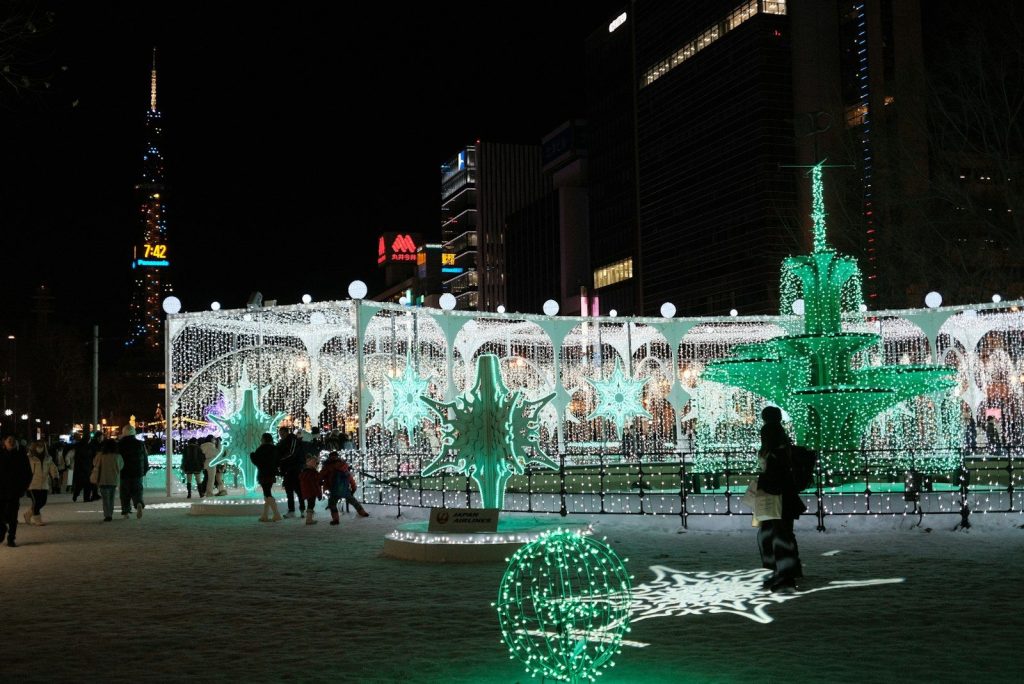
Illumination season (November to February). The winter illuminations are not a single event but a national habit: parks, commercial streets and shopping districts across the country run light displays through the darkest months, and the biggest city installations generally run from November into February. They are free to walk, which makes them the cheapest way to give a short winter day an evening. Because installations change annually, treat any specific display’s dates as something to check locally when you arrive — the season as a whole is dependable, individual installations less so.
Oshogatsu, the New Year period (1 to 3 January). The most important date on the Japanese domestic calendar. Shrines fill with people making their first visit of the year, and the country effectively closes for a few days: many shops, restaurants and smaller museums shut, while temples, shrines, department stores and convenience stores stay open. Transport on the main corridors is crowded in both directions around the period. If your trip includes these dates, plan them as a fixed block rather than a flexible one, and reserve intercity travel early.
Sapporo Snow Festival 2027. The 77th edition is confirmed by the organiser for 4 to 11 February 2027, an eight-day run in Sapporo, with the Snow Sports Park element announced for 12 to 14 February 2027 on the same page. This is the single most date-sensitive event in the Japanese winter calendar: the city’s accommodation and the seats into Hokkaido compress around that window, and the festival itself is free to walk. The dedicated guide below covers which sites to visit, in what order, and how to see it without spending the whole trip in a queue.
Regional snow and ice festivals (late January into February). Beyond Sapporo, the winter calendar is carried by smaller festivals: the ice-sculpture events around Lake Shikotsu and in the Sounkyo gorge, the ice village built on the frozen surface at Lake Shikaribetsu, and a scatter of snow festivals across Tohoku and the mountains. Their dates shift with the ice each year, and organisers typically announce them in the weeks before they run. Build these into a trip as windows — “late January into February” — and confirm the exact nights locally, rather than treating a date you found in an old post as fixed. The pattern to rely on is that the deep-winter festivals need reliably frozen conditions, which is why they sit in the coldest weeks rather than at the start of the season.
Drift ice on the Okhotsk coast (icebreaker season 20 January to 31 March). The sea ice that forms off the Russian coast and drifts south is the reason Abashiri exists as a winter destination. The icebreaker Aurora, the coast’s main drift-ice cruise, runs from 20 January to 31 March, and the operator’s own guidance is that a typical year gives the highest chance of actually meeting the ice from mid-February to early March — the floes arrive late and keep moving with wind and current, so they do not sit in one place waiting for a boat. Inside that window a given sailing can still come back without ice, which makes this the one highlight on the list that is genuinely weather-dependent rather than date-dependent. The north of Hokkaido around it is where you see the coldest version of a Japanese winter. Source: Abashiri Drift Ice Sightseeing Icebreaker Aurora — official operation period and FAQ pages (ms-aurora.com), accessed 6 October 2026.
The snow monkeys (December to March). The macaques that bathe in the hot springs near Nagano use the pools most in the coldest months, which is why the winter visit is the one that photographs so well. It is a half-day rather than a day, and it pairs naturally with a resort stay or with a Nagano city base.
What to Book in Advance (and When)
Winter Japan is not a destination where you can improvise the important parts, but it is also not a destination where everything must be reserved months out. The useful way to think about it is by class of booking, because the lead times differ enormously and most wasted money in a winter trip comes from reserving the wrong class too early or too late.
| Class of booking | Practical lead time | Why it behaves that way |
|---|---|---|
| Multi-day winter packages and guided snow tours | Longest — weeks to a few months | Departures are capacity-limited: one guide, one vehicle, a fixed number of places, and a season that only exists for a few weeks |
| Ryokan and onsen stays with dinner in the deep months | Long — the popular ones go first | Small room counts, a fixed dinner service, and demand concentrated into January and February weekends |
| Ski accommodation, lift passes and lessons | Long for peak weeks, short otherwise | School and festival weeks fill early; mid-week dates outside those windows often stay open late |
| Long-distance rail seats and flights into Hokkaido | Moderate — earlier around New Year and the snow festival | The domestic calendar, not tourism, drives the peaks: 1 to 3 January and the February festival window both compress capacity |
| City hotels and day tours in Tokyo and Kyoto | Short — often fine a few weeks out | Large room stock and frequent departures; the exception is the New Year period |
| Small-group wildlife and nature days (snow monkeys, drift ice, snowshoe walks) | Moderate to long | Weather-dependent departures with a hard cap on numbers, so the good dates go quiet early |
Two rhythms explain almost all of it. The first is capacity: anything with a guide, a vehicle or a small room count sells out by numbers, not by price, and it sells out in order of date — the best dates first. The second is the domestic calendar: New Year and the February festival weeks are the two moments when Japan’s own travellers and its international visitors want the same seats, and those dates behave differently from the rest of the season.
The practical sequence for a winter trip, then, is: fix your dates, then reserve the capacity-limited experiences and the special stays first, then the intercity transport around them, and leave city hotels and standard day tours until you have a clearer picture of the weather you are likely to get. For the winter packages that combine transport, guides and accommodation into a single multi-day product, respect the same lead time for the same reason — capped departures, a short season, and Viator dates that move faster than anything else in this guide.
One related item deserves a single line here and a fuller answer later: the Mount Fuji area. In winter the summit trails are closed, so a winter “Fuji day” is a different product from a summer one — the details are in the seasonal closures part of the practical section below.
A 7–10 Day Winter Route (Outline)
One route, two variants. The detail — hour by hour, with the winter timings, the contingency for snow disruption and the specific bookings — belongs in the dedicated Japan winter itinerary guide for Tokyo, Kyoto and Osaka, which we publish as the companion to this one. What follows is the shape.
Variant A — the classic loop (8 to 10 days, no north). Tokyo for three nights, then the train west to Kyoto with a stop for the Fuji lakes area on the way, Kyoto for four nights with a day in Nara and an evening or two in Osaka, then back to Tokyo for the final night. This is the route for a first visit and for anyone who wants the winter cities with a snow day as an option rather than the theme.
| Days | Base | Winter shape of the day |
|---|---|---|
| 1–3 | Tokyo | Illumination evenings; one early market morning; one day trip (Kamakura, Nikko or Hakone) |
| 4 | Fuji lakes | Lake Kawaguchi for the clearest winter views; sleep in the area or continue west |
| 5–7 | Kyoto | Dawn starts at the shrine walks; interiors at midday; Nara as a half-day; Osaka in the evening |
| 8 | Osaka / Kyoto | Sake country or a second-day Osaka, then the return leg |
Variant B — the snow version (10 days, with the north). The same spine, with three or four nights in Hokkaido replacing three of the Kansai nights, using a domestic flight in each direction. It is the route for travellers whose winter needs snow rather than a chance of it, and it works best either side of the peak festival weeks rather than inside them.
| Segment | Nights | What it delivers |
|---|---|---|
| Tokyo | 2–3 | The city days and the easiest winter walking |
| Hokkaido (Sapporo, Niseko or the Okhotsk coast) | 3–4 | Reliable snow, powder or drift ice, and the coldest air of the trip |
| Kyoto / Osaka | 3 | Temple country at its emptiest, plus the food evenings |
| Tokyo (departure) | 1 | A buffer night before the flight home |
Three rules make either variant work in winter. Keep the first and last nights in the city you fly into or out of, because snow disruption to domestic flights and trains is a real winter risk and a buffer night absorbs it. Put the longest outdoor day in the middle of the trip rather than on arrival. And fix the capacity-limited experiences before you fix the hotels around them.
Practical Winter Tips
These japan winter travel tips are the ones that change how a trip feels rather than the ones that fill a packing list. Winter in Japan is cold but orderly, and the things that go wrong are usually about timing and footwear rather than about weather.
Clothing and footwear. The single most important decision is your shoes. Snow and slush in the cities, ice on temple steps and long walks on stone pavements are all manageable in waterproof boots with a real grip and unmanageable in fashion trainers. Above the ankle is worth it in Hokkaido. For clothing, the Japanese approach works better than a heavy single coat: layers you can open and close, a warm base, and a windproof outer shell. Indoors are heated aggressively, so you will be taking layers off every time you enter a train, a shop or a museum. Gloves and a hat matter more than a thick sweater in the dry cold of the north and the mountains.
Transport. Winter is the season when long-distance travel needs a plan rather than improvisation, but the rail network is built for snow and disruption is usually short-lived. Reserve the intercity legs that matter, particularly in the New Year window and around the February festival weeks, and keep the day of your outbound flight free of a same-day connection to the airport. Regional buses and mountain roads are the first things to be affected; allow a longer window when a day depends on a road.
Getting around. The rail network is the reliable spine of a winter trip, and a rail pass is worth pricing against your route if you are covering several cities — the arithmetic changes with the number of long legs, not with the season. Inside the cities, metro and bus networks run normally in snow, but buses are the first to be affected in the mountains and on rural routes, and taxi supply in resort areas is thin on the busiest evenings. If your plan depends on a particular bus or a mountain road, keep a rail-based alternative in mind: the trains rarely stop for long, whereas a closed pass can end a day.
Cash and payments. Japan is more card-friendly than it used to be, but small towns, older restaurants, temple stalls, rural buses and some ticket machines still work on cash. Carry a modest amount for the days you leave the cities, and keep coins for lockers and small purchases.
Opening hours and closures. Two seasonal patterns to know. Around the New Year, a large number of independent businesses close for several days, while temples, shrines, department stores and convenience stores stay open. And in the coldest inland regions, small museums and some rural attractions run reduced winter hours or close entirely for the season. Check the specific place rather than the season: a winter closure is a property of the site, not of the month.
Snow, delays and the flexible day. Build at least one day of your trip that has no fixed booking, and use it for whatever the weather does. That flex day is what turns a snow-disrupted mountain day trip from a loss into a swap.
Photography. The low winter sun means the useful light is concentrated: the best window of a winter day is from first light to mid-morning and the last hour before sunset, with the middle of the day flat and often hazy. Winter also gives you the two things other seasons do not: snow on ordinary streets, and clear air on the days when the distant mountains actually appear.
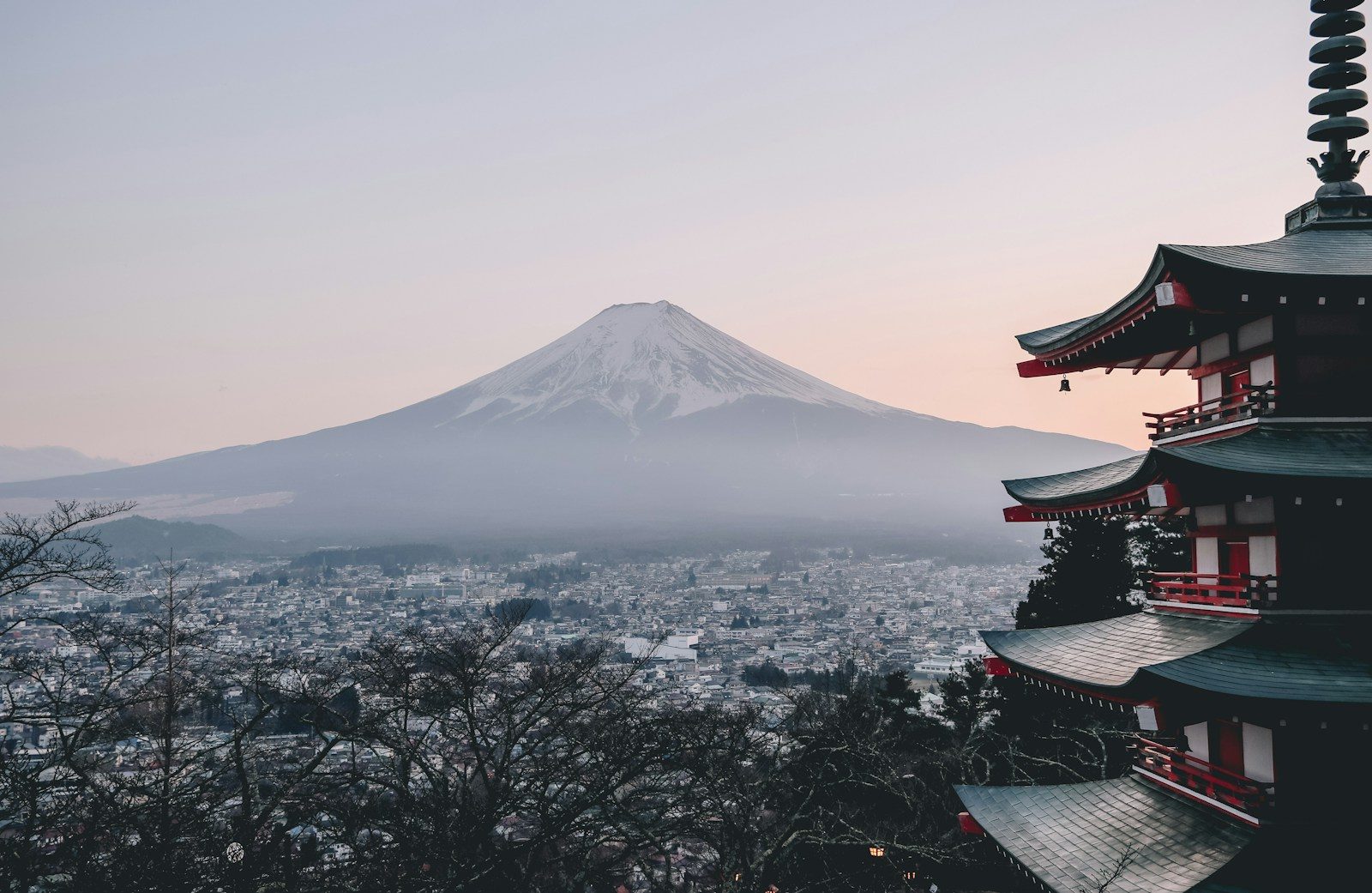
Seasonal closures: the Mount Fuji case. The most important closure to understand is the Fuji one, because it is widely misdescribed. What closes in winter is the mountain above the fifth station: the trails from the fifth station to the summit are closed and that section is prohibited from use in the off-season (Yamanashi and Shizuoka prefectural rules, with the Road Traffic Act cited in the official notice). Road access up to the fifth station is a separate question, and one that depends on weather and on which approach road you are using — it is not a year-round guarantee, and it is not the same thing as the trail closure. The practical consequence for a winter trip is that a “Mount Fuji day” in the cold months is not a climbing day and should not be sold to you as one. Winter itineraries in the area are built around what stays legally accessible and open, most often the lakes and viewpoints of the Fuji Five Lakes area, where the reward on a clear morning is the mountain itself. Before you book any winter Fuji tour, read how the operator describes the winter route rather than assuming from a summer description, and treat the fifth station as a viewpoint that may or may not be reachable on the day, not as a destination you are buying.
FAQ: Winter in Japan
Is Japan worth visiting in winter?
Yes, and for most travellers it is undervalued rather than risky. The cities are dry, bright and quiet outside the New Year holiday, the snow destinations are at their best, and accommodation outside the peak weeks is easier and cheaper than in spring or autumn. The one thing to accept is that winter is three different months, not one season: December is value, January is clarity and quiet, February is snow and festivals.
How cold does Tokyo get in winter?
Tokyo averages 7.7 °C in December, 5.4 °C in January and 6.1 °C in February, with typical daytime highs between 9 °C and 12 °C and only a handful of nights near freezing. Snow lying on the ground is rare — a fraction of a day per month on average — so Tokyo is a coat-and-layers winter rather than a snow-boots one.
Is Japan in winter better in Hokkaido or Tokyo?
They are different products, not better and worse. Hokkaido (Sapporo and Abashiri) gives reliable snow, colder air and about 30 days a month with snow on the ground in mid-winter; Tokyo gives the most sunshine of the winter months, easy transport and day trips. Choose Hokkaido if snow is the point; choose Tokyo if comfort, food and city time are.
When is the Sapporo Snow Festival 2027?
The organiser confirms the 77th edition for 4 to 11 February 2027, with the Snow Sports Park element on 12 to 14 February 2027. It is the most date-sensitive week of the Japanese winter, so book Hokkaido accommodation and flights before anything else if it is your reason for travelling.
Do I need to book winter tours in Japan in advance?
Not all of them, but the capacity-limited ones yes. Anything with a guide, a vehicle or a small number of places — guided snow days, wildlife tours, drift-ice trips, ryokan stays in January and February — sells out by numbers rather than price, and the best dates go first. City hotels and standard day tours can usually be arranged much later. Where a tour is referenced in this guide, the live dates and availability sit on Viator rather than in the text. For the multi-day winter packages specifically, the current Japan winter packages with live availability are here.
What should I pack for a winter trip to Japan?
Waterproof boots with grip, layers rather than one heavy coat, and a hat and gloves. Add a compact umbrella for the wetter cities, a power bank for long days out in the cold, and cash for rural areas and small restaurants. If you are going north, add thermal base layers and a second pair of gloves — the difference between Sapporo and Tokyo is roughly ten degrees on the same day.
Will it snow in Tokyo or Kyoto in winter?
Not in any way you can plan a trip around. Tokyo averages a fraction of a day per winter month with snow lying on the ground, and Kyoto about the same, so does it snow in japan in january is a question whose honest answer is “rarely, and never for long” in the two big cities. Snow that lasts is a mountain and northern-Japan phenomenon: Nagano, the Alps and Hokkaido.
What is the best month to visit Japan overall in winter?
For a first trip built around cities, January: the driest and sunniest of the three months in Tokyo, the emptiest outside the New Year holiday, and the most flexible for late bookings. For snow and festivals, February. For the best balance of value and availability, December.
Is December or January cheaper for a Japan trip?
December is the softer of the two on demand and therefore the easier one to arrange late, while January concentrates the domestic travel peak into its first few days and then goes quiet. The trade-off is not really price against comfort, it is flexibility against daylight: December gives you holiday evenings and short days, January gives you clearer skies.
Do Japan’s winter festivals run every year?
The large ones do, and they are annual fixtures: the Sapporo Snow Festival, the regional ice and snow festivals and the illumination displays all return each winter. What changes is the date and, for the ice festivals, whether the ice arrives in time. Treat the big city illuminations as dependable and the ice events as conditions-dependent, and confirm the current edition with the organiser before you build a trip around it.
Related Reads
Two cross-references from our own library, because the method behind this guide is the method we use elsewhere. The month-by-month logic that drives the region table above follows the same structure as our Turkey in winter, weather by month guide, and the crowds-and-prices reasoning behind the ratings is the one we published for the best time to visit Turkey. If what you actually want is the guided-day format described in the Tokyo section, our licensed private guide days in Istanbul show what that product looks like in practice on another of our destinations.
japan in winter is the season with the fewest excuses left: the climate data is public, the festivals are dated, the closures are documented and the bookings follow a pattern you can plan around. Pick your month first — that single decision settles the region, the packing list and most of what you need to reserve — and let the rest of the trip follow the weather you have chosen rather than the weather you are hoping for.