The Ultimate Pamukkale Travel Guide: Turkey’s Cotton Castle Wonder
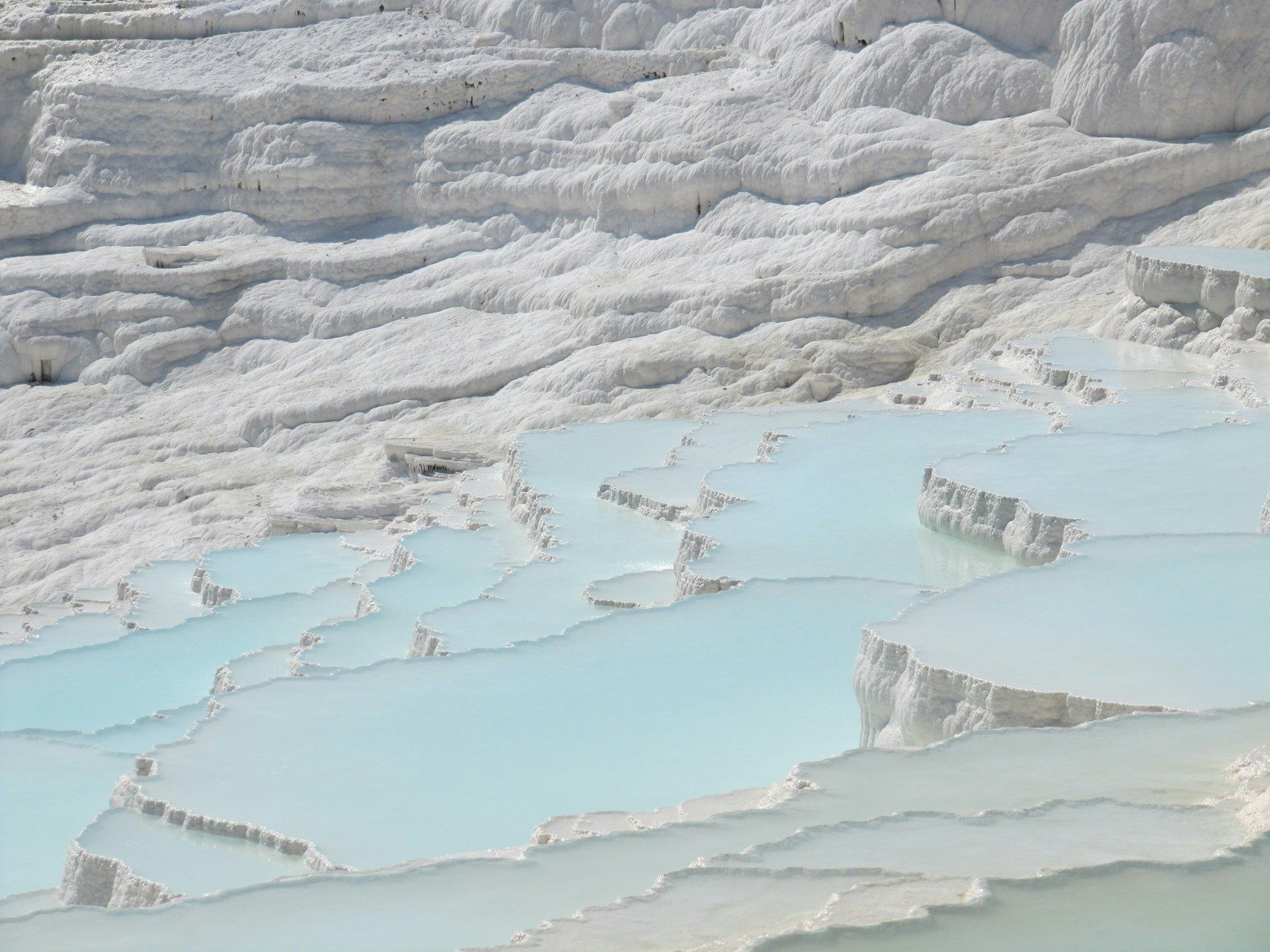
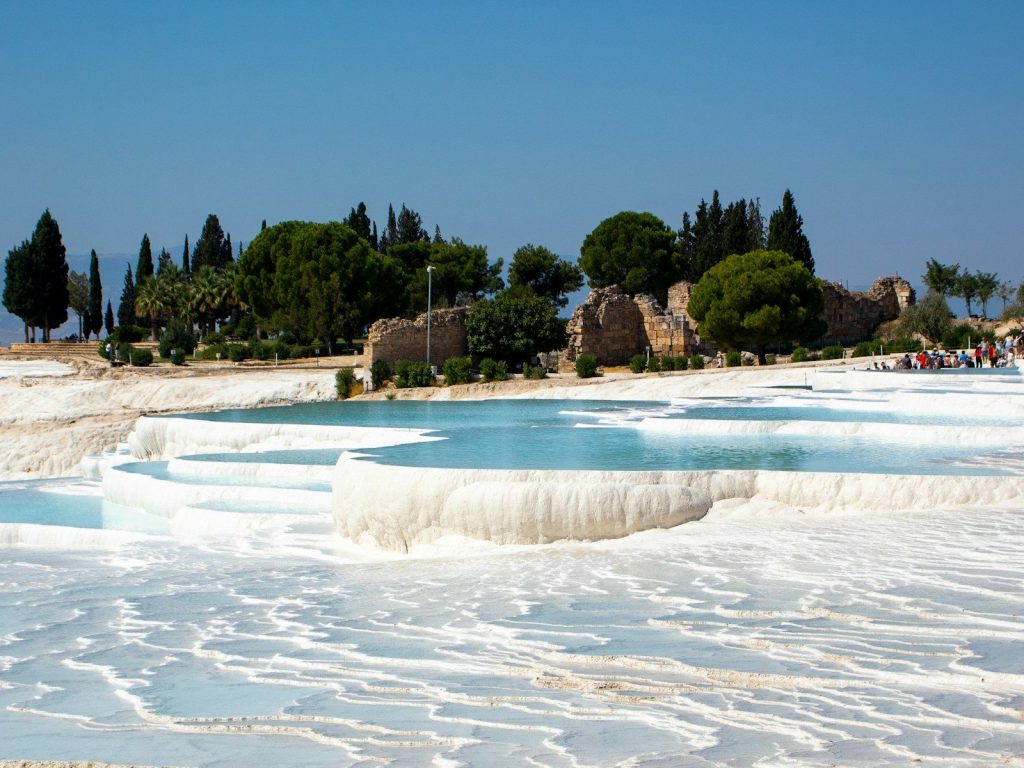
Welcome to our Pamukkale travel guide — we’ll share everything we learned visiting Turkey’s famous cotton castle. When we first glimpsed Pamukkale from a distance, we thought someone had draped an entire mountainside in fresh snow. But this wasn’t winter magic; it was something far more extraordinary. This cotton castle is one of Turkey’s most surreal natural wonders, where brilliant white terraces cascade down a hillside like a frozen waterfall.
This UNESCO World Heritage Site draws visitors from around the globe, and for good reason. The dazzling travertine formations, created over millennia by calcium-rich thermal springs, offer an otherworldly landscape unlike anything else on Earth. We’re talking about pools of turquoise water perched on blindingly white platforms, where you can wade barefoot through warm mineral waters while surrounded by views that belong on another planet.
Affiliate Disclosure: This post contains affiliate links to Viator. As an affiliate, we may earn a small commission from qualifying purchases at no extra cost to you — it funds our independent travel research and never changes what you pay. The tour options shown in this guide are served by Viator; their availability and pricing are set by the operators, not by us.
Why Pamukkale Deserves a Spot on Your Turkey Itinerary
Pamukkale isn’t just about the famous white terraces, though they alone would justify the trip. Perched atop these natural formations sits Hierapolis, an ancient Greco-Roman city with a remarkably well-preserved theater, sprawling necropolis, and fascinating archaeological museum. In one visit, you’re experiencing both geological wonder and historical treasure.
The site offers something we rarely find in our travels: a place where you can actively engage with the landscape. We walked barefoot across the travertines, soaked in Cleopatra’s Pool where ancient Romans once bathed, and explored temple ruins with the white terraces as our backdrop. It’s hands-on history and geology combined.
What Makes Pamukkale Unique
We’ve visited hot springs around the world, from Iceland’s Blue Lagoon to New Zealand’s thermal parks, but Pamukkale stands apart. The calcium carbonate deposits have built up over 14,000 years, creating a landscape that seems sculpted by an artist rather than formed by nature. The contrast between the white terraces and the green valley below is simply stunning.
The thermal waters that created this wonder maintain a constant temperature of around 35°C (95°F), and they’re still actively building new formations today. We’re not just looking at a frozen moment in time—we’re witnessing an ongoing geological process. The springs produce 250 liters of water per second, depositing calcium carbonate with every drop.
Pamukkale’s Recognition and Protection
UNESCO designated Pamukkale and Hierapolis as a World Heritage Site in 1988, recognizing both the natural phenomenon and the archaeological significance. This protection came just in time. By the 1980s, hotels built directly on the travertines were causing serious damage, and roads cut across the formations allowed vehicles to drive on them.
Thankfully, Turkish authorities took action. They demolished the hotels, removed the roads, and implemented strict preservation measures. Today, we can only walk on designated travertine areas, and we must go barefoot to protect the delicate formations. The terraces are slowly recovering their original brilliance.
What to Expect at Pamukkale: An Honest Look
Before we dive into the details, let’s be clear about what to expect. Pamukkale is stunning, but it’s also heavily visited. During peak summer months and midday hours, the travertines can get crowded. The famous photos you’ve seen often show pristine white terraces, but years of foot traffic and environmental factors mean some areas appear more cream or grey than brilliant white.
That said, the experience is still magical if you plan it right. Visit at sunrise or sunset when the light transforms the terraces into something ethereal, and you’ll understand why this place has captivated travelers for centuries. The combination of natural beauty, historical significance, and the unique experience of walking through warm pools on white stone makes Pamukkale an essential stop on any Turkey journey.
We spent a full day exploring Pamukkale, and we wish we’d allocated even more time. There’s so much to see and experience that rushing through feels like a disservice to this remarkable place. In this pamukkale travel guide, we’ll share everything we learned to help you make the most of your visit, from the best times to visit to practical tips that will enhance your experience.
The History and Geology Behind Pamukkale’s Magic
How Nature Built a Cotton Castle
Understanding how Pamukkale formed makes the experience even more remarkable. The story begins deep underground, where calcium-rich water heated by geothermal activity rises to the surface. As this water emerges from the springs and flows down the mountainside, it cools and releases carbon dioxide. When CO2 escapes, calcium carbonate precipitates out and deposits on the slope.
We’re essentially looking at limestone being built layer by layer, drop by drop, over thousands of years. Each terrace represents countless years of mineral deposits hardening into travertine rock. The process continues today—if you visit, you’ll see water still flowing over the formations, leaving fresh white deposits in its wake.
The Numbers Behind the Natural Wonder
The plateau where the springs emerge sits about 200 meters above the plain, and the white travertines stretch approximately 2,700 meters long and 600 meters wide. The thermal water maintains a temperature between 35°C and 100°C at various spring outlets, though by the time it flows over the terraces where visitors walk, it’s comfortably warm rather than hot.
The water’s mineral content is what creates the magic. It contains high concentrations of calcium bicarbonate, along with sulfate, magnesium, and other minerals. Scientists estimate the travertine deposits have been forming for at least 14,000 years, though some research suggests the process may have begun even earlier.
Ancient Hierapolis: The City That Knew Gold When It Saw It
The ancient Greeks weren’t fools. When they founded Hierapolis in 190 BC, they recognized the therapeutic value of these thermal waters. The city’s name comes from Hiera, the wife of Telephus, the legendary founder. Under Roman rule, Hierapolis flourished as a spa city where Romans came to soak in the healing waters and, eventually, to retire.
The Romans built elaborate bath complexes, temples, and a massive theater overlooking the white terraces. The city became so prosperous that it grew to house between 50,000 and 100,000 inhabitants at its peak. People traveled from across the empire seeking relief from ailments, believing the mineral waters held healing properties.
The Waters of Life and Death
Hierapolis became famous not just as a healing destination but also as a place where people came to die. The city’s enormous necropolis—one of the largest ancient graveyards in Anatolia—contains over 1,200 tombs. Wealthy Romans who came for treatment built elaborate tombs for themselves, planning to be buried in this sacred place if the healing waters couldn’t save them.
We found this duality fascinating: Pamukkale represented both life-giving healing waters and a final resting place. The ancients believed the thermal springs connected to the underworld, particularly a cave called the Plutonium, where toxic gases emerged. Priests would demonstrate their power by entering the cave and emerging unharmed—they knew how to avoid the carbon dioxide that pooled at ground level while appearing to breathe deadly fumes.
From Glory to Rediscovery
Hierapolis suffered numerous earthquakes throughout its history. Major quakes in 60 AD and 1354 AD caused significant damage, and eventually the city was abandoned. The ruins lay largely forgotten until archaeological excavations began in earnest in the 20th century. Italian archaeologists have been conducting systematic excavations since 1957, uncovering theaters, temples, baths, and streets.
The travertines, meanwhile, continued doing what they’d done for millennia—growing, changing, and waiting for the modern world to rediscover them. When tourism exploded in the late 20th century, it nearly destroyed what nature had spent thousands of years creating, leading to the preservation efforts we benefit from today.
Walking the White Terraces: The Pamukkale Experience
Your First Steps on the Travertines
The moment we removed our shoes and stepped onto the travertines remains one of our most vivid travel memories. The white calcium carbonate feels smooth under bare feet, almost soapy, and the warm water flowing over it creates an unexpectedly sensual experience. It’s not just about what you see—it’s what you feel, hear, and experience with your whole body.
Shoes aren’t allowed on the designated walking areas, and we understood why immediately. The formations are fragile, built up over millennia by patient mineral deposits. Every footstep has an impact, so protecting the travertines means going barefoot. The surface isn’t uncomfortable—it’s smooth from water flow and countless feet—but bring a towel to dry off and clean your feet before putting shoes back on.
As promised in this Pamukkale travel guide, the first step is removing your shoes. The moment we stepped onto the travertines remains one of our most vivid travel memories. The white calcium carbonate feels smooth under bare feet, almost soapy, and the warm water flowing over it creates an unexpectedly sensual experience. It’s not just about what you see—it’s what you feel, hear, and experience with your whole body.
The main tourist route runs up the slope of the white terraces, following designated channels where water still flows. We walked slowly, stopping frequently to stand in the pools and take in the surreal landscape. Some pools reach ankle-deep, others just cover your feet. The water temperature hovers around 35°C (95°F)—warm enough to feel soothing but not hot enough to be uncomfortable.
The path isn’t difficult, but it’s uneven and can be slippery. We watched several people lose their footing, so take your time and watch where you step. The entire route up the travertines takes about 20-30 minutes if you’re moving steadily, but we recommend allowing at least an hour to truly experience it and take photos.
Finding the Perfect Pools for Photos
Let’s talk about those iconic Pamukkale photos we’ve all seen on Instagram. The brilliant white terraces with turquoise pools and mountains in the background—they’re real, but getting that shot requires some strategy. We learned that not all terraces are accessible, and some of the most photogenic pools are roped off to allow nature to restore them.
The best photo opportunities we found were about two-thirds of the way up the slope. Here, several larger pools still fill with water, creating those mirror-like reflections against white stone. Early morning light or late afternoon creates the most dramatic effect, when the sun isn’t directly overhead washing out the colors.

Managing Reality vs. Instagram Expectations
Here’s the honest truth: the travertines aren’t uniformly brilliant white everywhere. Years of foot traffic, environmental factors, and algae growth have left some areas looking grey or cream-colored. Turkish authorities rotate which sections are open to visitors, allowing closed areas to recover and regain their whiteness—a process that can take years.
We noticed the most pristine white sections were those recently treated or opened. The areas with constant water flow maintained their color better than drier sections. Don’t let this disappoint you—the overall effect is still breathtaking. Understanding that you’re seeing an active, living geological formation makes it more impressive, not less.
Sunrise and Sunset: Timing Your Visit
We visited the travertines three times during our stay: mid-morning, late afternoon, and at sunrise — the Pamukkale travel guide insider tip is sunrise. Without question, sunrise offered the most magical experience. The site opens at 6:30 AM in summer (8:00 AM in winter), and arriving right at opening meant we had the terraces nearly to ourselves for the first hour.
The soft morning light turned the white formations pink and gold, and mist rose from the warm pools into the cool air. By 9:00 AM, tour buses started arriving, and the peaceful atmosphere shifted to something busier. If you can only visit once, make it sunrise.
Sunset is also beautiful, though the site gets more crowded as the day progresses. The advantage is watching the sun set over the valley while soaking in the warm pools—a memorable way to end a day. The terraces face west, so you’ll get dramatic golden light in the late afternoon.
The View from the Top
When we reached the top of the travertines, we understood why the ancients chose this spot for their city. The view back down the white terraces to the valley below is spectacular. From here, you can see how the formations cascade down the mountainside like a frozen waterfall, with the green agricultural valley stretching into the distance.
Several pools at the top are deeper and perfect for sitting and soaking while taking in the panorama. These pools see less traffic than the ones on the path up, making them good spots for a peaceful moment. We spent 20 minutes just sitting in warm water, watching new arrivals make their way up the white stone below us.
Water Flow and Pool Levels
The amount of water flowing over the terraces varies seasonally and depends on which channels authorities have opened. Some years, certain areas receive more water flow; other years, they’re allowed to dry out as part of the restoration rotation. We learned this is intentional—too much traffic in constantly wet areas causes damage, so they manage water flow to distribute visitors.
When we visited in May, water flowed abundantly through most channels. Friends who visited in August found some areas drier, which made walking easier but meant fewer filled pools for photos. There’s no “perfect” time when everything is optimal, but spring and fall generally offer the best balance of water flow, comfortable temperatures, and manageable crowds.
Protecting What Remains
We noticed signs everywhere reminding visitors to stay on marked paths and avoid stepping in roped-off areas. These restrictions aren’t arbitrary—they’re essential for preserving Pamukkale for future generations. The damage done in the 1980s, when hotels and roads sat directly on the formations, took decades to partially reverse.
By following the rules, visiting during off-peak times, and treating the formations with care, we can all help protect this natural wonder. The travertines are surprisingly fragile despite their stone appearance. Each of us plays a role in their preservation simply by being mindful visitors.
Exploring Hierapolis: The Ancient City Above the Terraces

Why Hierapolis Deserves Equal Billing
This Pamukkale travel guide covers Hierapolis in detail because it’s equally remarkable. Most visitors come to Pamukkale for the white terraces and treat Hierapolis as an afterthought. We almost made the same mistake, but we’re glad we didn’t. The ancient ruins spread across the plateau above the travertines offer a fascinating glimpse into Roman spa culture and city planning. Combined with the natural wonder below, you’re getting two UNESCO World Heritage sites for one admission fee.
The archaeological site is extensive—much larger than we expected. We spent three hours exploring and still didn’t see everything. If you’re interested in ancient history, allocate at least half a day for Hierapolis alone.
The Theater: Hierapolis’s Crown Jewel
The theater dominates the site, and it’s one of the best-preserved Roman theaters we’ve encountered in Turkey. Built during the reign of Hadrian and renovated under Septimius Severus, it seated approximately 12,000 spectators. The stage building still stands remarkably intact, with its elaborate decorative friezes depicting scenes from Greek mythology.
We climbed to the upper rows for the view, and it was worth every step. From the top, you look down on the entire archaeological site with the white terraces visible beyond and the valley stretching to distant mountains. It’s easy to imagine Roman audiences sitting in these same seats, watching performances while enjoying the spectacular natural backdrop.
The theater’s acoustics remain impressive. When we spoke from the stage area, our voices carried clearly to the upper rows. Several tour guides were demonstrating this to their groups, creating an amusing multilingual echo effect across the ancient stone.
The Necropolis: A City of the Dead
Hierapolis’s necropolis stretches for over two kilometers, making it one of the largest ancient graveyards in Anatolia. Over 1,200 tombs line the ancient road leading to the city, ranging from simple graves to elaborate house-shaped tombs and massive sarcophagi. Walking this road feels like stepping into another world.
What struck us most was the variety of tomb styles, reflecting the diverse population of this ancient spa city. We saw Greek temple-style tombs, Roman sarcophagi with detailed carvings, and circular tumuli reminiscent of Anatolian traditions. Wealthy citizens built elaborate monuments ensuring they’d be remembered; ordinary people made do with simpler markers.
Many inscriptions remain legible, offering glimpses into individual lives from two millennia ago. We spotted epitaphs in Greek and Latin, some describing the deceased’s profession, others cursing anyone who would disturb their rest. It’s sobering and humanizing—these weren’t just ancient Romans, they were people with jobs, families, and concerns about their legacy.
The Archaeological Museum
The Hierapolis Archaeological Museum occupies a restored Roman bath building, which seems fitting for a city built around thermal waters. We spent an hour here and wish we’d allocated more time. The collection includes artifacts from both Hierapolis and nearby ancient sites, displayed in what was once the changing rooms, warm room, and hot room of the original bath.
The museum’s highlight is its collection of statues and reliefs from the theater’s stage building. Seeing these pieces up close reveals incredible detail—carved fabric folds, emotional expressions, and mythological scenes executed by skilled Roman craftsmen. The Sarcophagi Hall displays elaborately carved sarcophagi that would have belonged to Hierapolis’s wealthiest citizens.
We particularly appreciated the museum’s explanatory panels, which helped us understand daily life in ancient Hierapolis. Displays covered everything from the textile industry that made the city wealthy to the religious practices centered around the thermal springs.
The Sacred Pool Complex and Plutonium
The remains of the Temple of Apollo sit near the ancient Plutonium—the cave that ancient writers described as an entrance to the underworld. Deadly carbon dioxide still seeps from this underground chamber, just as it did when priests demonstrated their supposed supernatural powers by entering unharmed.
Modern visitors can’t enter the Plutonium itself (for obvious safety reasons), but we could peer in and see the warning signs. The thermal water complex around the temple shows how central these springs were to both religious life and daily bathing culture in Hierapolis.
Walking the Ancient Streets
Beyond the major monuments, we enjoyed simply wandering Hierapolis’s ancient streets. The main colonnade still shows ruts worn by cart wheels, and you can trace the city’s grid layout. We walked past the remains of shops, fountains, and public buildings, imagining the bustling spa city this once was.
The Domitian Gate at the site’s north entrance is impressively intact, with its three arches still standing. The Frontinus Gate on the east side, though less complete, offers insight into Roman gate architecture. We found these smaller details—gates, fountains, column bases—as interesting as the major monuments because they made the ancient city feel real and lived-in.
Practical Tips for Exploring Hierapolis
Wear comfortable walking shoes—you’ll cover several kilometers on uneven ancient stones. Bring a hat and sunscreen; there’s virtually no shade across most of the site. We visited in May when temperatures were moderate and still felt the sun’s intensity by midday.
Download a site map or hire a guide if you want comprehensive historical context. The site is large enough that you could wander aimlessly and miss significant monuments. We used a combination of our guidebook and information panels to navigate, which worked well but meant some backtracking.
The site connects to Pamukkale village and the travertines at multiple points, so you can plan your route strategically. We entered through the village, explored Hierapolis, walked down the travertines, and exited at the bottom entrance. This downhill route felt easier than climbing up the travertines first, then exploring the ruins.
Cleopatra’s Pool: Swimming Among Ancient Ruins
The Most Famous Thermal Pool in Turkey
Cleopatra’s Pool (also called the Antique Pool) sits within the Hierapolis archaeological site, and it’s unlike any swimming experience we’ve ever had — which is why this Pamukkale travel guide dedicates a full section to it. Imagine floating in warm, mineral-rich water while submerged ancient columns and carved stones from a Roman temple lie beneath you. It’s surreal, historical, and utterly unique.
The name “Cleopatra’s Pool” is more marketing than history—there’s no evidence the famous Egyptian queen ever visited Pamukkale. Local legend claims she bathed here, gifted the springs by Mark Antony, but this is romantic fiction. That said, Romans certainly did swim here, and the pool has been a bathing destination for over two thousand years.

What to Expect When You Swim
The pool measures about 40 meters long and varies in depth from shallow edges to areas over two meters deep. The water maintains a constant 35-36°C (95-97°F), heated by the same geothermal springs that created the travertines. It’s pleasantly warm rather than hot, like a perfectly heated pool where you can comfortably spend an extended time.
Bubbles rise continuously from the spring sources at the bottom, creating a gentle effervescence. Swimming feels slightly different than in regular water due to the high mineral content—you’re more buoyant, and your skin feels unusually soft afterward. The minerals include calcium, magnesium, sulfate, and bicarbonate, the same composition that builds the white terraces.
Swimming Among Marble Columns
The pool’s main attraction, beyond the warm thermal water itself, is the ancient debris scattered across the bottom and sides. Fluted column sections, carved capitals, and large stone blocks from a Temple of Apollo that collapsed in an earthquake now rest underwater. We swam around and over these Roman artifacts, an experience that felt both strange and privileged.
The water is crystal clear—we could see straight to the bottom even in the deepest sections. Underwater, the ancient stones are covered with a thin layer of white calcium carbonate deposits, the same process that builds the travertines continuing silently beneath us. It’s a tangible connection to the geological forces that shaped this entire landscape.
Entry Fee and Facilities
Cleopatra’s Pool requires a separate entrance fee beyond the main site admission. It is charged in Turkish Lira and revised almost every season, so treat it as a modest add-on to the main ticket rather than a fixed figure. The fee feels worth it for such a unique experience, though budget travelers debate whether it’s necessary.
The facility includes changing rooms, showers, and lockers for your belongings. There’s also a café where we grabbed drinks after swimming. The pool area gets crowded during peak afternoon hours, with every available space in the water occupied. We found visiting in the late afternoon, after tour groups departed, offered a more relaxed experience.
How Long to Spend and What to Bring
We spent about 90 minutes at Cleopatra’s Pool, which felt right. The first 30 minutes were pure enjoyment—swimming, floating, taking photos. The next hour we spent alternating between swimming and sitting on the pool’s edge, soaking in the atmosphere and watching the constant flow of visitors.
Bring a swimsuit, towel, and waterproof phone case or camera if you want photos. The pool provides life vests for non-swimmers or anyone who wants extra buoyancy in the deeper sections. Underwater shoes aren’t necessary—the bottom is smooth stone rather than rough or muddy.
Is It Worth the Extra Cost?
We’ve debated this among ourselves and with other travelers. If you’re in Pamukkale for just a few hours and on a tight budget, you could skip Cleopatra’s Pool without feeling you missed the essence of Pamukkale. The travertines and Hierapolis ruins are the main attractions.
However, if you have time and enjoy thermal waters, we’d recommend including it. There’s something special about swimming in the same waters ancient Romans enjoyed, surrounded by ruins that fell 1,600 years ago. It’s a multi-sensory historical experience you can’t replicate elsewhere.
Plus, after walking the travertines barefoot and exploring Hierapolis under the sun, soaking in warm water while gazing up at ancient columns felt like the perfect way to rest and reflect on everything we’d experienced. It punctuated our visit with a moment of peace and connection to the site’s ancient spa culture.
Practical Tips for Your Pamukkale Visit
Best Time to Visit: Seasons and Times of Day
We visited Pamukkale in May, and the timing proved ideal. Spring (April-May) and fall (September-October) offer the best combination of pleasant weather, manageable crowds, and good water flow over the travertines. Temperatures range from 20-28°C (68-82°F), warm enough to enjoy the thermal waters but cool enough for comfortable walking.
Summer (June-August) is peak season, and it shows. Temperatures regularly exceed 35°C (95°F), and the site becomes crowded with tour groups, particularly between 11 AM and 3 PM. If you visit in summer, arrive at opening time or late afternoon to avoid the worst crowds and heat. The extended daylight hours do allow more time for exploration.
Winter (November-March) sees fewer tourists and occasional snow, which creates striking contrasts against the white terraces. However, shorter days limit your time, and morning temperatures can be quite cold despite the warm pools. Some hotels and restaurants in Pamukkale village operate on reduced hours or close entirely.
Time of Day Strategy
We can’t stress this enough: visit the travertines at sunrise or sunset if at all possible. The site opens at 6:30 AM in summer (April-October) and 8:00 AM in winter (November-March). We set our alarm and arrived 15 minutes before opening, and we were rewarded with nearly empty terraces for the first hour.
The difference between sunrise and midday is dramatic. Early morning offered soft light, cooler temperatures, mist rising from the warm pools, and peaceful atmosphere. By 10 AM, tour buses filled the parking lots and the terraces became crowded. If you’re not a morning person, late afternoon (after 4 PM) is your second-best option.
Entry Fees, Hours, and Tickets
The site is ticketed as one combined Pamukkale-Hierapolis admission, charged per person in Turkish Lira. Prices increase annually, so check the official rates before you travel. The ticket covers both the travertines and the Hierapolis archaeological site.
There are three entrances: the main entrance near Pamukkale village (south entrance), the middle entrance through the museum, and the north entrance. This Pamukkale travel guide recommends the south entrance. We used the south entrance, explored Hierapolis, walked down the travertines, and exited at the north entrance—a logical one-way route that felt natural.
Cleopatra’s Pool requires a separate admission fee on top of the main site ticket. The Museum of Hierapolis also charges separately, though it’s included if you purchase a Museum Pass Turkey, which can be cost-effective if you’re visiting multiple museums across the country.
Getting There: Transportation Options
Pamukkale sits about 20 kilometers from Denizli, the nearest major city with an airport and long-distance bus connections. Most visitors base themselves either in Pamukkale village (walking distance to the site) or in Denizli (larger city with more services).
From Denizli, frequent minibuses (dolmuş) run to Pamukkale village throughout the day, taking about 30-40 minutes for a small cash fare that tracks the lira. Taxis cost several times the minibus fare for the same trip. Many hotels offer free or paid shuttle services. We used the public minibus without problems—they depart from Denizli’s otogar (bus station) when full.
Denizli’s Çardak Airport (DNZ) receives domestic flights from Istanbul, Ankara, and Izmir. From the airport, you can take a Havaş shuttle to Denizli city center, then transfer to a Pamukkale-bound minibus. A direct taxi from the airport to Pamukkale is the priciest option, so expect a multiple of the combined shuttle-and-minibus fare.
If you’re coming from elsewhere in Turkey, overnight buses are popular. We took a comfortable overnight bus from Cappadocia to Denizli, arriving early morning and proceeding directly to Pamukkale. Major bus companies like Metro, Pamukkale, and Kamil Koç serve Denizli well.
Day trips from Izmir, Kuşadası and Antalya, plus the multi-day routes through the region, are listed together.
How Much Time to Allocate
This is crucial for planning: allocate a full day for Pamukkale if you want to see everything properly. We spent about six hours total and felt we gave each component appropriate attention. Here’s how our time broke down:
- Travertines: 1.5 hours (walking up slowly, taking photos, soaking in pools)
- Hierapolis ruins: 2.5 hours (theater, necropolis, walking the site)
- Cleopatra’s Pool: 1.5 hours (swimming and relaxing)
- Museum: 45 minutes
- Breaks and transitions: 1 hour
If you only have half a day, prioritize the travertines and the theater at Hierapolis. You can see these highlights in 3-4 hours, though it will feel rushed. Tour groups typically spend 2-3 hours total, which we think is too brief to truly experience the site.
Plan to stay overnight in Pamukkale village or nearby. Day trips from distant cities like Izmir or Antalya involve long drives that eat up most of your day, leaving insufficient time for exploration.
Not every visit needs a night in the village, and the day trips that start from the coast are listed by departure point.
What to Bring: Essential Items
Based on our experience, here’s what we recommend bringing:
Essential:
- Towel (for drying feet after the travertines)
- Sunscreen (high SPF—there’s minimal shade)
- Sunglasses and hat
- Water bottle (several liters—you’ll get dehydrated)
- Comfortable walking shoes (for Hierapolis)
- Bag for carrying shoes while on travertines
- Swimsuit (if you plan to swim in Cleopatra’s Pool)
Useful:
- Camera or phone with full battery
- Portable power bank
- Light snack (though there are cafés on site)
- Small backpack for carrying everything
- Bandana or small towel for wiping sweat
- Cash (for Cleopatra’s Pool, museum, cafés)
Don’t bother bringing:
- Water shoes or sandals for the travertines (barefoot is mandatory)
- Umbrella for shade (not allowed on the travertines)
- Heavy camera equipment (unless you’re serious about photography)
Dealing with Crowds
Tour groups arrive between 10 AM and 2 PM, creating the worst crowding. We noticed most groups follow a similar pattern: enter at the main gate, rush through the travertines, briefly visit the theater, and leave. Understanding this helps you plan counter-intuitively.
Our strategy: we visited the travertines at sunrise when they were nearly empty, then explored Hierapolis mid-morning while tour groups were still on the terraces. By early afternoon, we swam in Cleopatra’s Pool while many visitors were departing. This kept us mostly ahead of or behind the main crowds.
Solo travelers and independent visitors have a significant advantage over tour groups. We could linger where we wanted, adjust our schedule based on crowd flow, and visit sections of Hierapolis that tour groups skip. If you have flexibility, use it.
Dress Code and Cultural Considerations
Turkey is a predominantly Muslim country, though Pamukkale is a tourist site where dress codes are relaxed. For walking the travertines and swimming in Cleopatra’s Pool, swimsuits are completely acceptable—we saw everything from bikinis to full-coverage swimwear.
For exploring Hierapolis ruins, wear whatever is comfortable for you. We saw shorts, tank tops, and sundresses alongside more conservative clothing. The sun is intense, so covering up often makes sense for practical reasons rather than cultural ones.
If you plan to visit Pamukkale village or Denizli’s city center, slightly more modest dress (covering shoulders and knees) shows respect, though it’s not strictly required. We found Turks welcoming and non-judgmental regardless of what visitors wore.
Photography Tips
The travertines are photogenic but tricky to photograph. The bright white surfaces cause exposure problems—your camera or phone may underexpose to protect the highlights, making shadows too dark. We had best results shooting in the early morning or late afternoon when contrast was lower.
Bring a phone or camera you can use with wet hands, or bring a waterproof case. You’ll want photos while standing in the pools, and the water will splash your device. We saw several tourists with water-damaged phones who got too enthusiastic.
For the best compositional shots, position yourself with the valley and mountains in the background rather than shooting straight into the terraces. The layers of white stone against green valley and blue sky create more interesting images than the white formations alone.
Health and Safety Notes
The thermal water contains minerals that are generally considered beneficial, but don’t drink it—stick to bottled water. People with certain health conditions should consult doctors before soaking in mineral waters, though the waters at Pamukkale are mild compared to some thermal springs.
The sun is intense and reflects off the white travertines, increasing exposure. We reapplied sunscreen three times during our visit and still got slightly pink. Don’t underestimate how quickly you can burn.
Watch your footing on the travertines—the smooth calcium carbonate can be slippery when wet. We saw several people slip and fall. Walk slowly and deliberately, especially if you’re carrying camera equipment or bags.
Stay hydrated. The combination of sun exposure, physical activity, and soaking in warm water can dehydrate you faster than you realize. We went through four liters of water between the two of us during our six-hour visit.
Where to Stay: Pamukkale Village vs Denizli
Pamukkale Village: Walking Distance to the Terraces
We stayed in Pamukkale village, and for us, it was the right choice. The village sits literally at the entrance to the travertines—we walked from our hotel to the site in five minutes. This proximity proved invaluable for our sunrise visit and allowed us to easily return to our room to rest during the hottest part of the day before heading back for sunset.
Pamukkale village is small, purpose-built for tourism, and completely focused on visitors to the site. The main street is lined with hotels, pensions, restaurants, and tour agencies. It’s not particularly charming or authentic, but it’s convenient and everything you need is within walking distance.
Hotel Options in Pamukkale Village
Accommodation ranges from budget pensions to mid-range hotels, most with thermal pools fed by the same springs that created the terraces. We stayed at a mid-range hotel with a thermal pool; a double room with breakfast included sits comfortably in the middle of what the village charges.
Many hotels offer rooms with views of the travertines, though you’ll pay a premium for this. Our room faced the courtyard and pool, which suited us fine—we spent minimal time in the room anyway. The thermal pool at our hotel was a nice perk after a long day exploring.
Budget travelers can find clean, simple pensions priced well below the mid-range hotels. These often include breakfast and sometimes have small thermal pools. We met travelers staying at pension-style guesthouses who were perfectly happy with their choice. The accommodations are basic but adequate.
Denizli: More Options, Less Convenience
Denizli, the nearest city, offers more diverse accommodation options, better restaurants, and a more authentic Turkish city experience. It’s where locals actually live rather than a tourism-dependent village. If you’re spending several days in the area and want to experience more of regional Turkish life, Denizli makes sense.
The trade-off is transportation. You’ll need to arrange transport to Pamukkale each day, whether by dolmuş (minibus), taxi, or rental car. The 20-kilometer distance takes 30-40 minutes, and early morning or late evening visits become more complicated. We would have found it frustrating to stay in Denizli and try to reach the travertines for sunrise.
Denizli has everything from budget hotels to international chains. Prices are comparable to Pamukkale village for similar quality, though you get more amenities and services. The city has excellent restaurants serving regional cuisine beyond the tourist-focused menus in Pamukkale village.
Our Recommendation
For most travelers, especially first-time visitors spending 1-2 days at Pamukkale, stay in the village. According to this Pamukkale travel guide, convenience wins over city amenities. The convenience of walking to the site, especially for optimal sunrise and sunset visits, outweighs any drawbacks. You’re here to experience the travertines and Hierapolis, not to have an authentic urban Turkish experience.
If you’re spending 3+ days in the region and plan to explore beyond Pamukkale itself—visiting nearby ancient cities like Aphrodisias or Laodicea, or exploring Denizli’s city center—then staying in Denizli becomes more practical. You’ll have better restaurant options and won’t feel trapped in a tiny tourist village.
Booking Considerations
Book accommodation in advance during peak season (June-August) and shoulder season (April-May, September-October). Pamukkale village has limited options, and popular hotels fill up. We booked two weeks ahead in May and had good choices; friends who tried to book last-minute in July struggled to find availability.
Many hotels offer half-board (breakfast and dinner) packages. We found these reasonable value since restaurant options in Pamukkale village are limited and somewhat overpriced. Having dinner at our hotel meant we could relax after a full day rather than searching for restaurants.
Look for hotels with thermal pools if that appeals to you. Most pools are small compared to Cleopatra’s Pool at the archaeological site, but they’re convenient for a late-evening soak. The thermal water is the real deal—same mineral content as the famous springs, just channeled to hotel pools.
Frequently Asked Questions
-
What is Pamukkale, and why do travellers visit it?
Pamukkale is a hillside of white calcium terraces filled with warm mineral water. The name means cotton castle, and the sight explains why. Travellers come for two things in one place: the gleaming travertines and the Roman spa city of Hierapolis above them. UNESCO protects the whole site as a single World Heritage property. You walk barefoot on the terraces to protect the fragile surface. Most visits combine the pools, the ancient ruins, and Cleopatra’s Pool in a single day.
-
Is Pamukkale in Turkey worth the detour from the coast?
Yes, if you give it a full day and start early. Pamukkale sits inland from the Aegean coast, roughly three hours from Izmir and two from Selcuk. The detour works best between Ephesus and Antalya, so the route stays linear. Arrive at opening time to enjoy the terraces before tour groups appear. Stay overnight in the village if you want sunrise photographs without a bus ride. Combined with Hierapolis, the stop justifies the extra travel.
-
How long should a Pamukkale visit take?
Set aside a full day, and stay the night if sunrise appeals to you. Four to six hours covers the terraces, Hierapolis, and the amphitheatre at an easy pace. Add an hour for Cleopatra’s Pool if you plan to swim. Half-day tours from the coast exist, but they arrive at the busiest hours. Two nights in the village suit photographers and slow travellers. Anything shorter still works, though you will leave something unseen.
-
When is the best time to travel to Pamukkale?
Spring and autumn give the best mix of comfortable weather, strong water flow, and thinner crowds. April, May, September, and October are the strongest months for a Pamukkale trip. Summer afternoons are hot and crowded, so visit at opening or late in the day. Winter is quiet and the terraces keep their colour, though some pools feel cold. Early morning light is best in every season. Check sunrise times before you book, since the gates open early. Our month-by-month Turkey weather guide helps you pick a window.
-
Can you swim at Pamukkale?
You cannot swim in the protected white terraces, and rangers enforce that rule. Swimming happens in Cleopatra’s Pool, also called the Antique Pool, inside the Hierapolis site. The water is warm, mineral-rich, and scattered with fallen Roman columns. Swimming there needs a separate ticket, which you buy at the pool itself. Some village hotels also pipe thermal water into their own pools. Bring a swimsuit and a towel if the pool is on your list.
-
Do you need a guided tour for Pamukkale and Hierapolis?
No, the site is easy to explore independently, and signage covers the main monuments. A guide helps most if you want the mythology, geology, and Roman history woven together. Group tours from the coast solve transport but compress your time on the terraces. Private guides suit photographers who want flexible hours and quiet corners. Audio guides and printed maps are available at the entrance. Pairing the site with Ephesus makes a strong two-day ancient-history loop.
Final Thoughts: Making the Most of Your Pamukkale Visit
Pamukkale delivered everything we hoped for and surprised us with what we didn’t expect. Yes, the white terraces are as stunning as the photos suggest—walking barefoot through warm pools on brilliant white stone while the sun sets over distant mountains is genuinely magical. But what we didn’t anticipate was how much we’d enjoy Hierapolis, or how swimming among ancient Roman columns would feel, or how a sunrise visit could transform our entire experience.
Key Takeaways from Our Visit
Visit at sunrise or sunset—this single decision will dramatically improve your experience. The difference in light, temperature, and crowd levels transforms Pamukkale from a beautiful tourist site to something genuinely transcendent. We can’t emphasize this enough.
Allocate a full day if possible. Pamukkale rewards slow exploration. Rushing through in three hours means you’ll miss the details, the quiet moments, and the full scope of what this UNESCO site offers. Give yourself time to soak in pools, climb to the top of the theater, swim in Cleopatra’s Pool, and simply sit and absorb the landscape.
Bottom Line: Is Pamukkale Worth It?
Is Pamukkale worth visiting? Absolutely. Despite the crowds, despite areas of the terraces that aren’t pristine white, despite the commercialization of the village—Pamukkale remains extraordinary. There’s nowhere else on Earth quite like it, and experiencing it firsthand creates memories that photos can’t capture.
The combination of natural wonder and ancient history makes Pamukkale more than just a scenic stop. You’re walking through warm pools that flow over formations 14,000 years in the making, exploring ruins of a city where Romans came to heal and retire, swimming in waters that ancient civilizations considered sacred. That’s powerful stuff.
How to Plan Your Pamukkale Trip
Remember that Pamukkale is an active, living geological site that requires protection. Follow the rules about where you can walk, go barefoot where required, and treat the formations with care. The restoration efforts over the past decades are working, but only if visitors cooperate.
Use this pamukkale travel guide to plan strategically: arrive early or late, stay overnight in the village, bring appropriate supplies, and give yourself enough time. These simple decisions separate a good visit from a great one.
We left Pamukkale understanding why it’s become one of Turkey’s most visited destinations. The white terraces earn their fame honestly, and the experience of engaging with this landscape—walking on it, soaking in it, photographing it from every angle—is something you’ll carry with you long after you’ve dried your feet and moved on to your next destination.
Don’t miss our companion guide to Ephesus: Turkey’s Best-Preserved Ancient City — perfect for planning a combined Western Turkey itinerary.