Japan Trip Cost: What a Trip to Japan Actually Costs
Affiliate disclosure: Some links in this guide are affiliate links. If you book a tour or an experience through one of them, this site may earn a commission at no extra cost to you. Nothing here is paid placement, and no operator has been given the right to review or approve a line of this text.
Ask ten travellers what a trip to Japan cost them and you will get ten answers that differ by more than the price of the flights: one stayed in hostels and ate konbini dinners, another slept in a ryokan with two meals included and hired a guide for three days. Both went to Japan. Both were telling the truth. That is the honest starting point for any Japan trip cost question — the country is not uniformly expensive, it is unusually elastic: the same two-week route can be travelled at several completely different price levels, and the gap between them is mostly decided by five or six choices, not by a hundred.
This guide gives you those choices in order. It starts with the rough daily bands, then breaks them into the five buckets that actually absorb the money, then shows what ten days costs at each of three travel styles, and finally adjusts for the things most published budgets skip: trip length, who you are travelling with, which cities you include, and which weeks you pick. Every figure is a labelled range in US dollars for a category — accommodation nights, meals, local transport, activities — never a quoted rate for a named product or operator.
Two things worth saying before the numbers. First, prices in Japan have been more restless than usual lately: the exchange rate has moved sharply, and several transport and attraction tariffs have been revised in the past few years, so any specific figure quoted in an article has a short shelf life. Rather than freeze those numbers into text, this guide leaves fast-moving tariffs to the live widgets embedded on this page, which pull current rates at the moment you read them. Second, we do not claim first-hand experience of Japan: this site’s Japan cluster went live only days ago and publishes no performance data for these pages, so everything here is built from official sources — the national tourism organisation, transport operators, government entry and tax procedures — plus editorial arithmetic you can repeat yourself. The method is set out in the next section, so you can decide how much weight to give it.
Quick Answer: How Much Does a Trip to Japan Cost?
For a trip on the ground in Japan — accommodation, food, local and intercity transport, and paid activities, but excluding international flights — three broad daily bands cover most travellers:
- Saver: roughly $70 to $120 per person per day. Hostel or capsule beds, konbini and casual noodle-shop meals, city trains and subway day passes, mostly free or low-cost sights.
- Comfort: roughly $160 to $280 per person per day. A three-star hotel room shared by two, a mix of casual and sit-down dining, occasional long-distance rail legs, and a paid attraction or guided half-day most days.
- Boutique and ryokan: roughly $350 to $650 per person per day. Four-star or design hotels, a ryokan night with dinner and breakfast, restaurant-led eating, private transfers, and guided days.
Stretched over ten days, those bands land at roughly $700 to $1,200 for the saver, $1,600 to $2,800 for the comfort traveller, and $3,500 to $6,500 for the boutique route. Add the flight to those totals. A one-week trip lands at roughly seven-tenths of the ten-day figure and a two-week trip at roughly three-tenths above it — the arithmetic is set out in full later, and it is simple enough to redo for your own dates.
The single most useful thing to understand about Japan trip cost is that the difference between the saver and the comfort bands is rarely one big decision. It is a room type, two meals a day, and whether the long-distance legs happen by high-speed rail or by night bus. Change those three and you move an entire band without touching anything else.
📋 A note on the numbers: every figure in this guide is a hand-researched editorial estimate, last reviewed October 2026 — given as planning ranges, not quoted prices. Operator rates, entrance fees and seasonal surcharges move constantly, so treat these as a starting point and confirm live rates before you commit.
How This Guide Is Priced (and What We Won’t Publish)
Most pages about Japan trip cost do one of two things: they quote operator prices that will be wrong within a season, or they refuse to name any figure at all and leave you with adjectives. This one takes a third route, and it is worth being explicit about it, because it decides how you should read every number below.
Every figure here is a category range with a stamp. When this guide says accommodation for a comfort traveller runs from one amount to another per night, that is an editorial estimate for the category “three-star hotel room in a major city”, built from the official budget framework published by Japan’s national tourism organisation plus our own reasoning about how a two-person room, a city centre and a peak week move the figure. It is labelled as an estimate, it carries the month and year it was reviewed, and it is given as a planning range. It is not a rate you can book, and it is not lifted from any operator’s page.
What we deliberately do not publish. No live tariff for a named transport product, attraction or operator appears in this text. That covers rail passes, individual high-speed train fares, entrance fees for named temples and observation decks, and package prices for named tours. These are exactly the numbers that change fastest and hurt most when they are wrong, so this guide describes their direction — what has moved recently, what pushes them up, what makes one choice better than another — and leaves the live rate to the widgets on this page, which pull current prices when the page loads. That is also why you will find no seasonal discount claims here: a price-cut figure from last season is one you cannot verify today.
Where our numbers come from. Three sources, in this order. First, official material: the national tourism organisation’s own budget guidance for the categories of spending, government pages for entry procedures and visitor tax-free shopping, and transport operators for how their pricing works. Second, arithmetic: fixed costs divided across days, additional days priced at the marginal rate, and city differences expressed as a relative index rather than a second set of figures. Third, comparison against a sibling page on this site, our Turkey trip cost guide, which follows the same method for a very different country — useful mainly as a sanity check on structure.
What we cannot tell you. There is no first-hand travel data behind this page, and we are not going to dress up an estimate as experience. This site has published nothing about Japan until this week, and no article on it can yet claim to be based on our own measured results. What we do have is a method that is written down, ranges that are labelled, and a habit of saying so when the answer depends on you.
The Five Cost Buckets: Where Your Money Goes
Almost every Japan trip cost breakdown, however it is dressed up, moves money through the same five buckets. Two of them are decided before you leave home, three of them are decided day by day, and the second group is where a trip quietly gains or loses a few hundred dollars.
| Bucket | What moves the price | Where you can push back |
|---|---|---|
| International flights | season, how far ahead you book, routing and connections | fly into one city and home from another; accept a connection |
| Accommodation | room type, city, and how peak your week is | stay two or three stops from the centre; share a twin room |
| Food and drink | how many sit-down meals a day, and where you eat them | set lunches, konbini breakfasts, department-store food halls |
| Transport | city rides versus long intercity legs | night buses, conventional rail, or fewer bases overall |
| Activities | guided time and paid entrances | alternate free days with ticket-heavy days; one guided half-day |
Each bucket is worth a short look, because the mechanism inside it matters more than the number attached to it.
1. International flights
The single largest fixed cost, and the one least affected by what you do once you land. Fares for the same route can vary by two or three times depending on when you buy, which week you fly, and how many carriers compete on that city pair. The practical ranges below are per person for a round trip in economy, booked a few months ahead rather than in the final weeks.
| Flying from | Round-trip economy, planned ahead | Peak-week range | What moves it |
|---|---|---|---|
| North America (US and Canada) | $650 to $1,200 | $1,000 to $1,600 | route competition, holiday weeks, whether you accept one stop |
| Europe | $600 to $1,100 | $900 to $1,500 | number of connections, school holidays, how far ahead you book |
| Australia and New Zealand | $500 to $1,000 | $800 to $1,400 | ski-season demand, school holidays, seat sales |
| East and Southeast Asia | $200 to $550 | $350 to $750 | low-cost carriers on short routes, seat sales, luggage rules |
Two structural points matter more than the exact band. First, flying into one city and out of another usually costs little more than a return to the same airport, and it can save a whole internal leg of travel — that is one of the few places where you can cut cost and effort at the same time. Second, a connecting flight through another Asian hub is often cheaper than a direct long-haul, at the cost of several hours. Whether that trade is worth it depends on your holiday length, not on the money alone.
2. Accommodation
Accommodation is the bucket that most reliably decides which band your trip lands in, because the spread inside it is enormous: a bed in a hostel dorm and a ryokan night with two meals are both legitimate ways to sleep in the same country, and the difference between them is typically a factor of ten.
| Category of room | Typical range per night | Notes |
|---|---|---|
| Hostel dorm bed | $25 to $45 | per person; shared bathroom is the norm |
| Capsule or business hotel, single | $50 to $90 | small but private; the classic solo-traveller base |
| Three-star hotel, double room | $110 to $200 | the workhorse of a comfort trip; price splits between two |
| Four-star or design hotel | $200 to $350 | location inside the city centre is what you are buying |
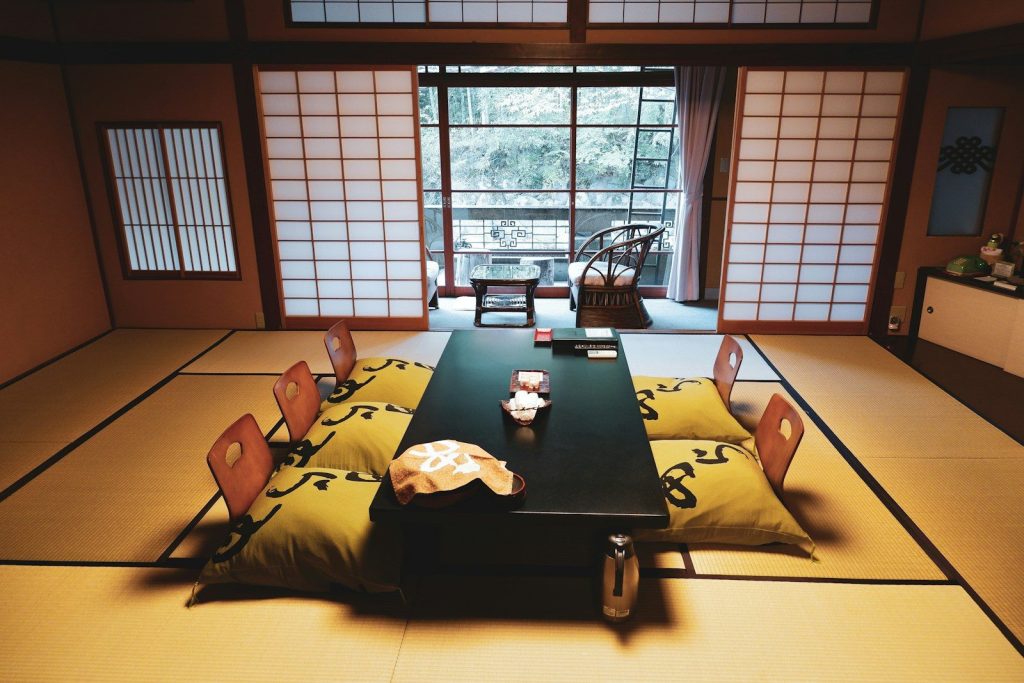
| Ryokan with dinner and breakfast | $250 to $600 | per person, meals included; the high point of many trips |
Three details change the arithmetic more than the headline rate. Room type: twin and double rooms usually cost the same, but a solo traveller pays close to the full rate — often half again the per-person cost a couple would pay, which is why solo budgets are examined separately later in this guide. Timing: the same room in a peak week can run half again to double its quiet-week rate, and the peak is not only cherry blossom season. Location: an address two or three stations outside the centre typically costs visibly less per night and adds only minutes to each day, provided the walk to the station is short.
3. Food and drink
Japan is a rare destination where the cheapest food is genuinely good. Konbini counters, station noodle bars, curry and rice chains, and the prepared-food floors of department stores all produce a decent meal at a price that would be modest almost anywhere in the world. Daily food ranges are therefore unusually wide:
| Eating style | Range per person per day | What it looks like |
|---|---|---|
| Konbini and casual | $20 to $35 | prepared breakfast, a set lunch, a noodle or curry dinner |
| Mixed | $45 to $75 | one proper sit-down meal a day, the rest casual |
| Restaurant-led | $90 to $180 | restaurant dinners, sake or beer with meals, a splurge night |
The mechanism worth knowing is that tipping is not practised in Japan, so the price on the menu is the price you pay — there is no service charge to add mentally. Set meals, sold as a tray of several small dishes, are the standard way locals eat lunch, and they cost less than ordering the same dishes separately. The cheapest hour to buy excellent food is the last hour before a department-store food hall closes, when prepared dishes are marked down; the most expensive mistake is deciding dinner at eight in a tourist district without looking one street further.
4. Transport
Transport splits into two very different costs: getting around a city, and getting between cities. City transport is one of the least expensive parts of a Japan trip, and it rarely decides anything — a day of subway and bus riding lands in the band of a single cheap meal. City-to-city transport is the opposite: it is the largest cost that you actually control, because the choice between high-speed rail, conventional rail and a long-distance bus changes the total by more than the choice of hotel does.
| Transport layer | Typical range | How the cost behaves |
|---|---|---|
| City transit, per day | $6 to $12 | flat, predictable; day passes help on heavy sightseeing days |
| Intercity rail, per long leg | significant; varies with distance and train type | the biggest controllable line item on a multi-city trip |
| Long-distance bus, per leg | well below the rail equivalent | cheaper, slower, often overnight — saves a hotel night too |
| Airport transfer | fixed, per arrival | one of the costs first-timers forget entirely |
The mechanism to understand is that rail pricing in Japan is distance-based with a premium for the fastest services, and the national rail pass is a single product that has to be weighed against the sum of the individual legs you would actually ride. For a one-city trip it rarely pays; for a fast circuit of three or four distant cities it can. This guide does not quote its tariff — the pass price has been revised substantially in recent years and the operator’s own page is the only source worth trusting on the day you buy. What we can say is directional: the pass has become harder to justify than it once was, so decide with arithmetic rather than habit. The arithmetic is set out in the section on trains and passes below, and the live options we track are linked further down this page.
5. Activities and entrance fees
This is the bucket travellers under-budget most often, because Japan’s most famous sights are cheap or free: the grounds of most major shrines and temples cost nothing to walk, and many of the country’s best days — a market street, a riverbank, a city park, a neighbourhood of small bars — are simply public space.
| Activity type | Typical range | Notes |
|---|---|---|
| Free sights | $0 | shrine and temple grounds, parks, markets, neighbourhood walks |
| Paid attractions | $5 to $25 each | enter the inner hall, the tower or the garden you came for |
| Guided half-day | $60 to $150 per person | walking tours, food tours, small-group city tours |
| Hands-on class | $50 to $120 per person | cooking, craft or a cultural lesson |
| Private day with a guide | premium band | priced per group or per day, not per person |
Two patterns are worth planning around. Ticket-heavy days and free days alternate naturally in most itineraries, so a paid-attraction budget spread across the trip is more accurate than a per-day figure. And guided time is the expense that most often gets cut first and regretted most: a single well-chosen half-day with a guide in a city you have never visited usually does more for the rest of the trip than any upgrade to your room.
Japan Travel Budget Tiers: Which Traveller Are You?
Bands are more useful than averages, because an average Japan trip cost describes a traveller who does not exist. What follows are the three levels most independent budgets land on, described by what you actually get for the money. All of them are per person, per day, on the ground in Japan, and all of them exclude international flights.
| Line item, per person per day | Saver | Comfort | Boutique and ryokan |
|---|---|---|---|
| Accommodation | $25 to $45 | $55 to $100 | $175 to $320 |
| Food and drink | $20 to $35 | $45 to $75 | $85 to $160 |
| Local transport | $6 to $12 | $8 to $15 | $20 to $50 |
| Activities and entrances | $5 to $15 | $20 to $45 | $70 to $120 |
| Planning band | $70 to $120 | $160 to $280 | $350 to $650 |
The planning band is deliberately set a little wider than the sum of its rows. Real days do not line up: one day you take a taxi in the rain, the next you spend nothing, and a small buffer at the top of the band absorbs both without a mid-trip recalculation.
Saver: about $70 to $120 per day
The saver tier is not a compromised trip, which is worth stating plainly — it is a trip organised around the parts of Japan that are cheap by design. You sleep in a hostel dorm bed or a capsule, you eat the way students and office workers eat: konbini breakfast, a set lunch, noodles or curry for dinner. You ride the subway and city buses, and on heavy sightseeing days you buy a day pass. You lean on the free half of the country — shrine grounds, market streets, riverbanks, city parks — and pay for the one or two attractions per city that you genuinely came for. Kitchens and coin laundries replace some restaurant meals and all hotel-services costs. The savings come from three places, in order: the bed, the two cheap meals a day, and the refusal to take high-speed rail for every intercity hop.
Comfort: about $160 to $280 per day
This is where most first-time visitors land and where most published budgets are aimed, and it buys a noticeably easier trip without anything extravagant. Accommodation is a three-star hotel room or a good business hotel, normally a double shared by two people, which is what brings the per-person figure down sharply compared with travelling alone. Food is mixed: a proper sit-down meal most days, casual the rest, with coffee stops and the occasional evening of izakaya-style small plates. Local transport is an IC card you tap without thinking about it; intercity legs are taken by rail when the distance justifies it. Activities include a couple of paid entrances a day and at least one guided half-day. The tier is defined less by luxury than by flexibility: you can change plan in the afternoon without it costing anything.
Boutique and ryokan: about $350 to $650 per day
At the top tier the money goes to space, service and time. A four-star or design hotel in the city centre, or a traditional ryokan where dinner and breakfast are part of the price, with the highest-value ryokan nights concentrated in a hot-spring town or a quiet valley rather than in a big city. Restaurant-led eating, sake or wine with meals, and at least one meal treated as the point of the evening. Private transfers and taxis replace some train rides, guided days replace guided half-days, and craft or cooking experiences are booked rather than improvised. Two cautions belong here. Ryokan nights are priced per person with meals included, so they can cost more than a night in a far more famous city hotel. And the tier is not uniformly worth it: a first trip that spends its luxury budget on three ryokan nights and nothing else tends to be remembered more fondly than one that spreads the same money thinly across every day.
What 10 Days Actually Costs: Three Sample Budgets
Ten days is the length most first-time visitors choose, and it is long enough for the arithmetic to be honest: short trips hide fixed costs, long trips hide slow days. Here is the same trip built three ways, per person, on the ground, excluding international flights.
10 days at the saver level: about $700 to $1,200
| Line item | Ten days | Notes |
|---|---|---|
| Accommodation, 10 nights | $250 to $450 | dorm bed or capsule, booked early |
| Food and drink | $200 to $350 | konbini, set lunches, casual dinners |
| Local transport | $60 to $120 | subway and bus, day passes on heavy days |
| Intercity legs | $80 to $200 | one or two long hops, conventional rail or night bus |
| Activities and entrances | $50 to $150 | mostly free sights, a few paid ones |
| Total | $640 to $1,270 | slightly outside the $700 to $1,200 planning band at both ends, because the rows are unrounded category ranges |
At this level the plan itself does the work. Two bases instead of four, one long-distance leg instead of three, breakfast bought the night before. The total is close to what a fortnight of ordinary living costs in many Western cities — which is the point worth taking away: Japan is not the expensive country the reputation suggests if you eat and sleep the way locals do.
10 days at the comfort level: about $1,600 to $2,800
| Line item | Ten days | Notes |
|---|---|---|
| Accommodation, 10 nights | $550 to $1,000 | three-star double, split between two |
| Food and drink | $450 to $750 | one sit-down meal most days |
| Local transport | $80 to $150 | IC card, no planning needed |
| Intercity legs | $200 to $450 | high-speed rail where distance justifies it |
| Activities and entrances | $200 to $450 | paid attractions plus a guided half-day or two |
| Total | $1,480 to $2,800 | lines up with the $160 to $280 per-day band at the top end, slightly below it at the bottom |
This is the tier where the intercity line becomes the one to watch. Two long high-speed legs can cost more than five nights of hotel, and every additional city adds both a fare and half a day of travel. A comfort trip that visits three well-placed cities generally beats one that visits five, at a lower total cost.
10 days at the boutique and ryokan level: about $3,500 to $6,500
| Line item | Ten days | Notes |
|---|---|---|
| Accommodation, 10 nights | $1,750 to $3,000 | city design hotels plus two or three ryokan nights |
| Food and drink | $850 to $1,600 | restaurant-led, with drinks |
| Local transport and transfers | $200 to $450 | taxis and private transfers where they save time |
| Intercity legs | $250 to $600 | rail, including reserved and premium classes |
| Activities and entrances | $450 to $850 | guided days and bookable experiences |
| Total | $3,500 to $6,500 | lands inside the $350 to $650 per-day band |
Two or three ryokan nights are usually the best-value part of this budget and the easiest to overdo: the rate includes two meals and the evening is the experience, so the marginal day in a hot-spring town is cheaper than the marginal day in a city. The most common way to spend this budget badly is to pay city-hotel prices for the whole trip and then add luxury activities on top.
Cost by Trip Length: One Week, Ten Days, Two Weeks
The per-day figure falls as the trip lengthens, but not for the reason most people assume. Flights are the same whether you stay seven days or fourteen, and so is the cost of arriving at your first base, so short trips carry a heavier fixed load. Extra days, by contrast, are bought at the margin, and the marginal day is cheaper than the average one: you are already paying for the room, you rarely add another intercity leg, and your pace slows.
| Trip length | Saver | Comfort | Boutique and ryokan |
|---|---|---|---|
| About one week (7 days) | $500 to $850 | $1,150 to $1,950 | $2,450 to $4,550 |
| Ten days | $700 to $1,200 | $1,600 to $2,800 | $3,500 to $6,500 |
| Two weeks (14 days) | $900 to $1,550 | $2,100 to $3,600 | $4,550 to $8,450 |
The rule behind the table is simple enough to reuse. A week costs about seven times your daily band, because almost nothing is shared yet. Ten days costs about ten times the band. Beyond ten days, each additional day can be budgeted at roughly three-quarters of your band, because accommodation is the only bucket that grows at full rate while meals, local transport and the occasional ticket grow more slowly. A two-week trip therefore costs noticeably less than fourteen times the daily figure — the saving is real, but it is a saving of about a fourteenth of the total, not a half.
Length is not the only lever, and it is not even the strongest one. Adding a city costs more than adding a day. Each new base means a fare, a transfer and a half-day that cannot be spent anywhere else, and the third city in a week usually costs more per hour of enjoyment than the first. If you are choosing between a fourteen-day trip through five cities and a ten-day trip through three, the shorter one will not feel shorter — and it will cost less than you expect. The same logic runs in reverse for day trips: a city with good rail links can act as a base for three or four places, which replaces the cost of moving hotels with the much smaller cost of a return leg.
Where the length of the trip does change qualitatively is in what you can afford to skip. On a week, you tend to buy convenience — a taxi here, a guided half-day there — because time is the scarce resource. On a fortnight, you can wait: for a cheaper room, for a quieter train, for the market to close and the food to be marked down. Longer trips do not just divide the cost over more days; they hand you the option to be patient, and that option is worth money.
Cost by Travel Party: Solo, Couple, Family of Four
The number of people travelling changes the per-person cost more than almost any other variable, and it does so in both directions. Two people sharing a room bring each other’s accommodation cost down; a solo traveller pays a premium for the same bed; a family of four pays more in total but often less per head, because children travel and enter attractions at reduced rates on many networks. The table below uses the comfort band as its reference and asks what happens to the per-person daily figure.
| Traveller setup | Per person per day | What changes |
|---|---|---|
| Solo | $190 to $320 | one person carries the whole room rate — the solo premium |
| Couple sharing a double room | $160 to $280 | the reference band; room cost splits in two |
| Two friends, twin room | $150 to $260 | same split, usually more paid activities per head |
| Group of four adults, two rooms | $150 to $270 | room split, bigger dinner bills shared, taxis become sensible |
| Family of four (two adults, two children) | $120 to $230 | family rooms, children’s fares and children’s portions |
Travelling alone
Solo travel in Japan is easier than in most countries — business hotels, capsule hotels and hostels with private rooms are built for exactly this — but it is not cheaper. The reason is structural: room rates are set for the room, not the head, so a solo traveller pays close to double the per-person accommodation of a couple. Two adjustments recover much of the gap. The first is to shift the mix toward categories priced per person: capsule or business-hotel rooms, hostel private rooms, and ryokan where the rate already includes two meals. The second is to accept a smaller room rather than a cheaper city: a compact business-hotel room in a central district usually beats a larger room far out, once you count the time you would spend travelling.
Two people
For a couple, the arithmetic is kind: accommodation is the largest bucket, and it is the one you halve. A ten-day comfort trip for two people on the ground lands at roughly $3,200 to $5,600 for the pair, or $1,600 to $2,800 each — the same per-person band as before, without any change of lifestyle. Two further points matter. Twin and double rooms are usually priced the same in Japan, so nothing is lost by choosing twins. And when one of you wants the ryokan night and the other wants a capsule, the ryokan is priced per person with meals included, which makes a single splurge night far easier to justify than it sounds.
Families
A family of four travelling with children usually spends less per person than a couple, for three reasons that have nothing to do with cutting corners. Family rooms and connecting rooms exist and are priced below two separate rooms. Children travel at reduced fares or free on many city transport networks and at a great many attractions, with the threshold often tied to school age. And children simply eat less. The catch is supply: family rooms are limited in number, especially in Kyoto and in the popular hot-spring towns, so the room configuration has to be booked earlier than a couple would ever need to book. The bucket that does not shrink is flights, which are per person regardless of age. For families, then, the practical rule is to protect the room budget and be relaxed about everything else — the meals and tickets that make the daily band move are the smallest part of a four-person total.
Cost by City: Tokyo, Kyoto, Osaka, and Beyond
Japan is often described as uniformly expensive, but the difference between a city-centre night in Tokyo and the same night two hours away by train is large enough to change an itinerary. The table expresses each city as a relative index, with the national average set at one, so it can be read against whichever daily band applies to you. It covers accommodation and day-to-day spending together, not flights.
| Destination | Relative index | What drives the difference |
|---|---|---|
| Tokyo | 1.15 to 1.35 | the widest hotel range in the country, and the highest peak rates |
| Kyoto | 1.10 to 1.35 | limited room supply against very heavy demand, worst in spring and autumn |
| Osaka | 0.95 to 1.10 | large hotel supply and a famously cheap eating scene |
| Sapporo and Hokkaido | 0.85 to 1.00 | cheaper rooms, but a short and expensive winter peak |
| Fukuoka | 0.85 to 0.95 | compact, well-supplied, cheap to move around |
| Kanazawa and other regional cities | 0.80 to 0.95 | less demand, fewer luxury rooms, excellent food at lower prices |
| Naha and Okinawa | 0.90 to 1.05 | resort pricing in summer, quiet and cheap outside it |
What sits above the average, and why. Tokyo is expensive for one reason: the top of its hotel market. Its cheap food is the cheapest of any major city in the country and its transport is flat-rate and modest, so a saver-level traveller barely notices the index. What Tokyo charges for is space in the centre, and it charges a great deal for it in peak weeks. Kyoto’s problem is supply. The city has a small stock of hotel rooms relative to the number of people who want to sleep in it, and the two peak seasons concentrate that demand into a few weeks. Staying outside the centre, or moving Kyoto to the middle of a trip rather than its beginning, both help more than any other single decision. Resort towns are seasonal, not expensive. A hot-spring town or a mountain village can be modest in a quiet month and expensive in the two weeks everyone wants; the index there is a calendar question more than a place question.
What sits below the average. Regional cities are the most underrated part of a Japanese budget. Fukuoka, Kanazawa and the smaller cities along the rail corridor offer the same standard of rooms, food and manners at indices well below the big three, and they are where a longer trip gets cheaper without getting worse. Winter changes this picture in a specific way: Hokkaido’s snow season concentrates demand into a short window, so the same island is a value destination in the shoulder months and a premium one in the peak of the ski and festival period — a pattern worth understanding before you plan that leg, and one we cover separately in our guides to a winter trip through Hokkaido and to planning a Japan winter itinerary.
Day trips: adding a destination without adding a hotel
The cheapest way to see more of Japan is not to move. A day trip from a city base replaces a hotel change, a luggage transfer and an intercity fare with a single return leg, and it keeps you in a room you have already paid for. From Tokyo, the classic is a full day out toward Mount Fuji and Hakone, usually by coach or a combination of rail and lake crossing — a fixed-cost day with a guide that removes the whole question of how to connect the pieces (current Mount Fuji and Hakone day tours). In Kyoto, the equivalent does not need transport at all: an evening walking tour of the Gion district adds a guide to streets you would otherwise walk unaccompanied, and it answers the questions a guidebook cannot (Gion and geisha-district walking tours in Kyoto). Both are examples of the same principle — buy the day, not the move.
The Season Question: When Is the Cheapest Time to Visit Japan?
The most common question about Japan trip cost is really two questions wearing one coat: is the country expensive, and is it expensive now? The second one has a clean answer, because the cheapest and most expensive weeks of the Japanese year are not close to each other. The same room, the same route and the same meals can cost half again as much, or a fifth less, depending on the calendar — and no other single decision moves a Japan budget as much as the week you choose.
| Period | Hotel rates against a quiet week | What drives it |
|---|---|---|
| Late March to mid-April | half again to double | cherry blossom, and it is the busiest window of the year |
| Late April to early May | half again to double | consecutive public holidays, whole-country travel |
| Mid-August | half again to double | the summer holiday week, plus peak heat in the cities |
| Late June to early July | near average, sometimes below | the rainy season, which many travellers avoid |
| Mid-January to late February | below average outside ski areas | the quietest stretch of the winter |
| Late September to late October | near average | the lull before autumn colour |
Two patterns follow. First, the peaks are not just spring: the spring blossom window, the run of public holidays at the end of April, and the mid-August holiday week all push hotel rates well above average, and they do it in different ways. The blossom and autumn-colour weeks are international demand; the holiday weeks are domestic demand, and they fill the transport network as much as the hotels. Second, the quiet windows are real and generous. Late June into early July and the deep winter weeks outside the ski resorts are when a mid-range budget starts behaving like a saver budget without any change of standard. If your dates are flexible at all, this is the lever to pull first.
There is a live measure of how much demand is moving through the country. Japan’s national tourism organisation reported 3,098,900 visitor arrivals in August 2026 in its release of 16 September 2026 — a figure down by about a tenth on the same month a year earlier, though fourteen markets still set records for the month. That matters to your budget in a direct way: when national arrivals dip, the pressure comes off city hotels first, and shoulder-season prices soften before peak ones do. It is one of the few official statistics a traveller can use without reading it as a forecast.
Winter is the season where this arithmetic gets most interesting — and most misread. A snow trip is not automatically the expensive option: outside the two weeks everyone wants, Hokkaido’s rooms are cheaper than Tokyo’s, and the winter cities of the main island are quiet. What costs money is the narrow peak, not the season. We look at both sides of that in our guide to what a Japan winter trip is actually like and in the dates and booking rhythm for the Sapporo snow festival.
Trains, Passes and Getting Around Without Overspending
Intercity transport is the largest avoidable cost on most Japan itineraries, and it is avoidable in only one direction: you cannot make a long journey cheap by choosing a cheaper seat, but you can decide not to make the journey at all, or to make it once instead of three times.
The pricing mechanism is worth understanding because it explains almost every surprise on a rail receipt. Japanese rail fares are charged by distance, and the fastest services carry a premium on top of that distance charge. The result is that the difference between the quickest train and the next-fastest on the same route is a matter of time saved, not of distance covered — and time saved on a short leg rarely buys you a whole extra day. The practical consequence: on routes under an hour or so, take whatever leaves next; save the premium services for the long legs where the hours actually matter.
The national rail pass inverts that logic, and it is the single most over-thought purchase in Japanese travel. A pass is not a discount on your transport — it is a bet that the sum of the long legs you would ride exceeds its own tariff. Three conditions make it worth re-examining: a circuit that touches three or more distant cities, a trip of a week or more, and a willingness to ride on consecutive days rather than lingering. A one-city trip, a slow itinerary, or a plan built around short hops all point the other way. And the pass has become harder to justify than it once was: its tariff has been revised substantially in recent years, so the decision has to be made with current numbers rather than with advice from the era when it was an obvious bargain. We deliberately quote no tariff here; the operator’s own fare page is the only source worth trusting, and the live options we track sit here if you want to price the choice yourself.
Three alternatives are worth weighing against each other rather than against a pass. Long-distance buses trade hours for money and sometimes a hotel night, because the overnight services arrive in the morning — useful on a long leg, punishing on a short one. Domestic flights make sense only when the distance is very large; on the main island, the train usually wins once you count the trip to the airport. Fewer bases beat every option in this section, because each move carries a fare and half a day, and half a day is the most expensive thing on the trip. If you want the shape of a fast rail day without committing to the whole pass question, the Tokyo–Kyoto corridor in a single day is the classic test case, and the operator-run day trips on that route are the version most travellers end up buying (Tokyo to Kyoto day trips by rail).
City transport is the opposite story and needs almost no planning. An IC card is the whole strategy: you charge it once, tap it on trains, buses and convenience stores, and stop thinking about fares. Day passes are worth buying only on days with heavy sightseeing, when four or five separate rides would otherwise stack up. Japan’s transport is punctual enough that you can leave the calculator at the hotel.
Eating Well Without Blowing the Budget
Food is the bucket where Japan’s reputation is furthest from the truth. The country has some of the most expensive restaurants in the world and some of the best cheap food in the world, often on the same street, and the cheap end is not a compromise: a set lunch of several small dishes is how office workers eat, and the prepared-food floor of a department store outperforms most mid-range restaurants at a fraction of the price.
| Where the money goes | How it behaves |
|---|---|
| Set meals at lunch | the same kitchen, the same dishes, a lower price than dinner |
| Department-store food halls | excellent prepared food, marked down in the final hour |
| Konbini | reliable, fast, and good enough that locals use it daily |
| Standing bars and casual chains | quick meals at the low end of the day’s band |
| Restaurant dinners | the line that decides whether the day sits low or high in its band |
| Drinks | the quiet multiplier — a long evening can cost more than the meal |
Three habits keep the food line in the middle of its band. Eat your main meal at lunch, when the same kitchens charge less for the same food. Buy dinner late, when food halls discount the dishes they will not sell tomorrow. And treat drinks as a budget line rather than an afterthought: in Japan, as in most places, the third round is where a modest day becomes an expensive one. Tipping is not practised, so the menu price is the final price — an unusually clean arrangement for a traveller trying to keep a daily tally in their head.
Three Costs First-Timers Forget
Published budgets are usually a list of the things you expect to pay for. The money that actually surprises people is in the seams of the trip — the day you arrive, the luggage you move, and the small local charges that never appear in an itinerary.
1. Arrival day. Journeys to Japan land in the morning and end in the evening of a day that has already cost you a night’s room, an airport transfer and three meals you did not plan. A late-afternoon arrival is worse: it adds a hotel night in an airport-adjacent area and pushes the real start of the trip to tomorrow. The fix is arithmetic rather than thrift — count your arrival day as a full day of the daily band, and decide in advance whether the airport transfer is a train or a bus, because choosing on the spot at the end of a long flight is the most reliable way to overspend on the first hour of a holiday.
2. Moving your luggage. Japan’s luggage-forwarding services exist precisely because the country’s travellers move between cities with more than they want to carry, and first-timers rarely budget for them. They are priced per bag by distance, they take a day to arrive, and they are the single best-value purchase in this section: a forwarded bag lets you take a fast train to the next city in the morning and check in that evening, rather than sacrificing half a day to a hotel-to-hotel haul. The related cost that nobody mentions is the coin locker network at major stations, which is what most travellers use when they arrive before check-in time.
3. Small local charges. Three items sit just under the visible surface of every Japanese day. City accommodation taxes exist in some destinations and are collected on arrival rather than in the booking price. Reservation fees attach to seat-reserved trains and popular seasonal services, so a “cheap” leg can carry an extra charge. And refundable deposits appear on bicycles, lockers and some cultural experiences. None of these is large on its own, and together they are the difference between an estimate and a real total — which is why a modest buffer at the top of your daily band is not pessimism but accuracy.
Package vs Independent: Where a Booking Actually Saves Money
The argument between booking a package and building a trip yourself is usually framed as a personality question — planners versus wanderers. It is more useful to treat it as arithmetic, because the answer changes with the itinerary rather than with the traveller.
A package or an organised day is priced as a single number covering several things you would otherwise buy separately: transport, a guide, sometimes entry fees or a meal. On a day with awkward connections, that number is genuinely competitive with doing it yourself, and it comes with two benefits that do not appear in the price: the planning hours you do not spend, and the risk you do not carry. A multi-day package works the same way at a larger scale — a circuit built by an operator usually includes the intercity legs and the nights, at a rate that is hard to beat if you would have bought those same legs anyway.
The honest test is not “package or independent” but what the package replaces. Compare its price against the marginal cost of the days it covers, not against zero. If you would have spent those days riding the same trains and taking the same guided time, the package is a fair trade and sometimes a saving. If your plan for those days was a slow city morning and a cheap lunch, you are not replacing anything — you are adding. That distinction explains most of the arguments about packages, and it is why families and first-time visitors tend to get more out of them than experienced independent travellers: the days being replaced are days they would have paid for anyway.
- Package wins when the itinerary is a multi-city circuit, when the day involves several awkward connections, and when your time in the country is short.
- Independent wins when the trip is slow, when you are based in a large city with a deep budget sector, when you are four or more adults who can split the cost of a private guide or a car, and when the trip is food-led rather than sight-led.
- The trap is buying a package for the days that were never expensive, and doing the expensive days yourself.
Because organised tours and multi-day packages are exactly the kind of product whose tariffs move fastest, we do not quote them in text. The live options are below.
If you would rather compare multi-day structures before committing to a single day out, the current multi-day options are collected here. Read them the way this section suggests: what the days replace, not what the headline discount claims.
Money, Cards and Cash: The Mechanics
How you pay affects what you pay, and Japan has a few specifics worth knowing before you land.
Cards are widely accepted, cash is not obsolete. Hotels, larger restaurants, chain stores and station complexes take international cards without drama. Small restaurants, market stalls, rural buses and some shrines work in cash, which is why carrying a modest amount of yen at all times is practical rather than old-fashioned. Convenience stores and post offices are the dependable places to withdraw.
Withdraw in yen, not in your own currency. A card machine that offers to charge you in your home currency is offering to choose the exchange rate on your behalf, and it will choose one that favours the machine. Declining the offer and letting your bank convert is the cheaper of the two options almost every time.
Tax-free shopping is a procedure, not a discount. Japan’s visitor tax-free scheme applies at participating shops above a threshold, and it requires your passport to be shown at the counter. Treat it as a reason to keep receipts together, not as a plan for cutting the trip’s cost — the savings accrue on purchases you were going to make anyway, and the airport refund process is not instantaneous.
The transit card is a wallet. An IC card pays for trains, buses, lockers, vending machines and convenience stores, and the balance is what most travellers end up tracking more closely than their bank account. Top it up in modest amounts; there is no advantage to carrying a large balance, and no penalty for tapping a second top-up when it runs low.
FAQ: Japan Trip Cost, Answered
How much does a trip to Japan cost for 10 days?
On the ground in Japan — accommodation, food, local and intercity transport and paid activities, but not international flights — ten days runs from roughly $700 to $1,200 per person at the saver level, $1,600 to $2,800 at the comfort level, and $3,500 to $6,500 at the boutique and ryokan level. Three choices set the level more than any other: the room, the number of sit-down meals a day, and whether the long intercity legs happen by high-speed rail or by night bus. Add the flight to those totals; a comfortable return in economy is the largest single fixed cost of the trip.
How much does a week in Japan cost?
About seven-tenths of the ten-day figure, but with a higher cost per day, because flights and any rail pass are spread across fewer days. As a planning range: roughly $500 to $850 per person on the ground for a week at the saver level, $1,150 to $1,950 at the comfort level, and $2,450 to $4,550 at the boutique level. Note the phrasing — a week does not save you a week’s worth of money. It saves you the difference between the ten-day total and the seven-day total, which is smaller than most people expect.
How much should I budget per day in Japan?
Three daily planning bands cover most trips: $70 to $120 per person per day as a saver, $160 to $280 as a comfort traveller, and $350 to $650 at the boutique and ryokan level. These are deliberately set a little wider than the sum of their parts, so a splurge day or a taxi in the rain does not break the plan. The bands are editorial estimates for categories of spending, reviewed in October 2026 — not quotes from any operator.
Is Japan expensive for a first-time visitor?
Less expensive than its reputation and harder to predict than most destinations. Japan is unusual in that its cheapest food, its transport and its most famous sights are all inexpensive or free, so a first-time visitor who eats the way locals do and sleeps in a capsule or business hotel can travel on a modest daily band. What makes a first trip cost more is not the country but the itinerary: too many cities, too many moves, and a pace that forces convenience spending. Slow down, pick two or three bases, and Japan behaves like a mid-priced destination rather than a premium one.
How much does a trip to Japan cost for two people (or a family of four)?
For two people sharing a room, a ten-day comfort trip lands at roughly $3,200 to $5,600 for the pair on the ground, or $1,600 to $2,800 each. Sharing is the whole story: a solo traveller pays close to the full room rate, which pushes their per-person figure up to roughly $190 to $320 a day at the same standard. A family of four travelling with children usually lands lower per person — around $120 to $230 — because family rooms cost less than two separate rooms and children travel at reduced fares or free on many city networks and at many attractions. Flights, however, are per person whatever the age.
Is the Japan Rail Pass worth it in 2026?
It depends less on the pass than on your itinerary, and the bar has risen: the pass tariff has been revised substantially in recent years, so it is no longer the automatic bargain it is often described as. Treat it as a bet that the long legs you would genuinely ride add up to more than the pass costs. A fast circuit of three or more distant cities with consecutive travel days can justify it; a one-city trip, a slow itinerary, or a plan built on short hops usually does not. We quote no tariff here — the operator’s fare page is the only current source — and the live options we track are linked on this page so you can price the comparison yourself.
Japan Trip Cost: What to Decide First
Three bands, one decision — and a Japan trip cost is decided by two of them more than by any other choice. Work out which level you are actually travelling at — saver, comfort, or boutique — then check the two things that move a Japan trip cost most: how many cities you will move between, and which weeks you will be there. Those two answers change the total more than any other choice in this guide.
The costs that move fastest — rail passes, guided days, multi-day packages and entrance fees — are deliberately left to the live listings on this page rather than frozen into text, so that what you see is current. A good next step is to price one fixed day against the alternative: a Nara day trip from Kyoto or Osaka is the classic example of a day that replaces a hotel move, and it is a useful test of whether buying the day beats moving the base. If your dates are still open, read what a Japan winter trip is actually like before you fix them — the season you choose is worth more than any of the trims in this article.